• Recent Posts

  • Recent Videos

  • Recent Comments

  • Tags

  • Site Archives

  • Main Content

    Archive for July 2009


    News

    Gertrude Berg Documentary

    There's a new documentary about Gertrude Berg in theaters this month titled Yoo Hoo, Mrs. Goldberg. I read about it in Friday's edition The Hartford Courant in which Susan Dunne reviewed the film, directed by Aviva Kempner. You can read here review here. Dunne calls the documentary "a charming meander down memory lane" and refers to footage from the series as "priceless, more well-preserved than many TV shows of that era." She does point out that it "falls into the common bio-documentary trap of overcooking every small fact." But overall the review is positive and Yoo Hoo, Mrs. Goldberg is given three stars (out of a possible four).

    The official website for the documentary can be found here and includes a trailer, photo albums, a list of theaters and more. You can also watch the trailer at Apple's website. And here is the documentary's IMDb entry.

    TV's Lost & Found

    Aliens Have Our Early Television Broadcasts

    The Strange Maps website has an interesting chart showing where in the galaxy television broadcasts from the United States currently are floating about starting with President Roosevelt's speech opening the 1939 New York World's Fair (on April 30th, 1939) and the first televised baseball game (on May 17th, 1939). Both programs were broadcast by NBC's experimental W2XBS station from New York City. The opening of the 1939 New York World's Fair kicked of regular television broadcast in the United States (read more about that here).

    The question on my mind is whether the signal strength of television broadcasts today, let alone during the 1940s, is sufficient to actually reach even the closest star (Alpha Centauri). Strange Maps notes that this may not be possible and some of the comments suggest that past Pluto television broadcasts will have degraded into nothingness. But there's always the chance that some alien civilization has received, recorded and enjoyed programs like Mary Kay and Johnny or Hour Glass. Now we just have to wait until they come visit Earth, bringing with them these no-longer-lost shows.

    Q & A

    Q & A: Supertrain, Snowfire

    I get a lot of e-mails from people asking me about television shows, made-for-TV movies or miniseries they remember from years or decades past. I try to answer each question as best I can. Every now and then I like to dig through my inbox and pull out a few choice e-mails to answer here at Television Obscurities for everyone to read. Keep reading for today's questions and answers.

    I'm starting to think I imagined it, but wasn't there a short-lived tv show about a passenger train with a disco on board? I remember lots of neon, and episodes would end with everyone dancing. Thanks for any help. Peter

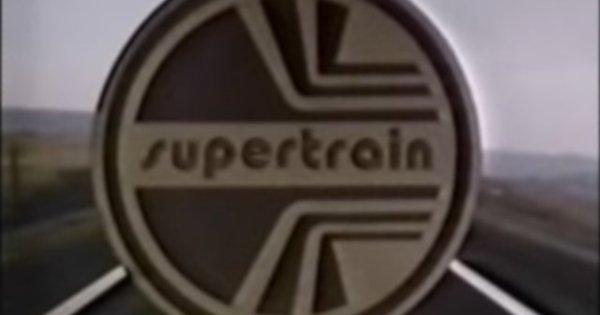
    Supertrain was a costly and embarrassment flop for NBC and especially for Fred Silverman, who championed the series after joining the network in 1978. According to Cecil Smith, the idea for Supertrain came from NBC programming chief Paul Klein. He brought it to the attention of Silverman who, in turn, contacted producer Dan Curtis (best known for his work on Dark Shadows) [1]. Said Curtis:

    Like everything in television, they wanted it yesterday. My first reaction was who needs it? Why bust my gut doing a series? I don't need the money. I've got all the work I can handle. But I said yes, dropped "Coffeyville" [The Raid on Coffeyville was the working title for a made-for-TV movie that would air on NBC as The Last Ride of the Dalton Gang in November of 1979] and got started.

    I don't know why. Maybe the challenge. I'm a train buff -- who isn't? I remember as a kid watching the trains pull into Bridgeport, Conn., my hometown--thrilling to the locomotives when that great whoosh of steam poured out. That's why I insisted on a steam turbine driven by atomic power. [2]

    That's right, the eponymous train in Supertrain was nuclear powered. It could travel from Los Angeles to New York City in just 36 hours and included elegant dining rooms, swimming pools, large suites and a disco. It reportedly cost NBC $10 million to build the sets for the series (they were spread over three sound stages at the MGM studios) as well as two models of the entire train [3].

    The production values may have been flashy but according to critics Supertrain had no substance. Tom Buckley, after comparing the series to The Love Boat, wrote that the "major problem with [the premiere] was an absolutely incoherent story" and complained that the directing was slow (Curtis directed the premiere) [4. He also pointed out that the interior of the train was larger than the exterior. Howard Rosenberg noted the size discrepancies in his review as well:

    We've seen from ABC's [Battlestar] "Galactica" that a series does not live by sets and special effects along. But even the sets of "Supertrain" though breathtaking at first viewing, were not enough to hold a viewer's interest for two hours and, in fact, were anything but flawless. The spacious interiors of the train for example, did not square with the exterior shots.

    Besides, after the big buildup, one expected something more. Maybe if Supertrain could fly... [5]

    The two-hour premiere of Supertrain aired from 8-10PM on Wednesday, February 7th, 1979. It delivered a 32 share of the audience, second in the time slot behind ABC's Charlie's Angels, and ranked 17th for the week [6, 7]. The following week's episode, which was only an hour long, fell to 48th [8]. NBC pulled the series for "retooling" after five episodes; it returned on Sunday, April 7th.

    A total of nine episodes were broadcast with the final first-run episode airing on May 5th. Repeats were shown in June and July.

    I am looking for a movie, from 1958 called "Snowfire" the wild white horse. It starred several actors named McGowan, Molly and Dan. The Director was another McGowan named Darrell.

    I think the Movie studio was one called Allied Artists.

    I have tried myself searching the Internet, and have had no luck at all. I am not even sure the movie ever made it to VHS. I understand that a TV pilot was made of this movie.

    And help is greatly appreciated.

    Thank you again

    David Wright

    The relationship between Snowfire the 1958 feature film and a television pilot for a potential series is bizarre, to say the least. A television version appears to have been attached to two networks for use during the 1957-1958 season neither actually picked up the series. The movie, despite minor cult popularity, has never been commercially released on VHS or DVD.

    On March 26th, 1956 Edwin Schallert wrote in The Los Angeles Times that brothers Stuart and Dorrell McGowan would be directing a film called Snowfire at the Talley Ranch in Hidden Valley, with Don Megowan set to star [9]. On April 28th, Walter Ames suggested in the same paper that filming had already been finished, writing that the McGowans had "fulfilled a lifetime ambition by writing, producing, casting and completing a picture to their own standards [10].

    Furthermore, Ames wrote that the brothers "revealed yesterday they also made a TV pilot film during the shooting. It wasn't hard because they already had Death Valley Days, The Sheriff and Sky King under their wing" [11]. (The brothers were involved in the production of both Death Valley Days and Sky King, which were syndicated.) Thus, it seems the pilot was either filmed simultaneously with the movie or was simply edited from footage for the movie.

    On July 7th, Schallert reported that the McGowans had signed Don Megowan to star in another film for them (The Wreath) and wrote that "the McGowans starred Megowan in Snowfire on TV and have also finished a feature picture version of that subject, as yet unreleased" [12]. Had the television pilot been broadcast or did Schallert mean only that a pilot had been completed?

    Philip K. Scheuer, also writing for The Los Angeles Times, reported in an August 26th article that he had visited the McGowan Brothers studio in North La Brea and chatted with Dorrell after wondering why four people named McGowan (plus Don Megowan) were involved in one movie [13]. Dorrell explained that he and his brother were both writers and that he typically produced while Stuart directed. Mollie and Melodie McGowan were Dorrell's daughters and made their acting debuts in Snowfire.

    Billboard reported on November 3rd that CBS had purchased a half-hour adventure series called Snowfire from ABC Film Syndication and McGowan Brothers about a white stallion that talks to a little girl and helps her family [14]. On February 6th, 1957, however, Val Adams wrote that Snowfire would debut on ABC in the fall and would star Dolly McGowan (likely a mistake) as the daughter of a widowed rancher who talks to a white stallion named Snowfire. The show would be filmed at Bryce Canyon in Utah [15].

    According to the March 2nd issue of Billboard, ABC had given Snowfire the Wednesday 8:30-9PM time slot [16] following Disneyland. Two months later, however, in the May 6th issue, Billboard reported that ABC had turned down Snowfire; thus, production company ABC Film Syndication was planning on trying to sell it into first-run syndication [17].

    The New York Times reported on May 23rd that Snowfire was one of several Western pilots still uncommitted for the 1957-1958 season [18]. Why the television series failed to materialize is a mystery. So, too, is the reason behind both CBS and later ABC dropping it after expressing interest. Snowfire, the movie, eventually came out in theaters in 1958.

    Works Cited:

    1 Smith, Cecil. "'Supertrain' -- All Aboard for Primetime." Los Angeles Times. 31 Jan. 1979: G1.
    2 Ibid.
    3 Ibid.
    4 Buckley, Tom. "TV: 'Supertrain' Chugs." New York Times. 8 Feb. 1979: C18.
    5 Rosenberg, Howard. "TV Review: Supertrain Makes Her Maiden Run." Los Angeles Times. 9 Feb. 1979: G26.
    6 Brown, Les. "3 Competing Films on TV Among Top 15 for Week." New York Times. 14 Feb. 1979: C22.
    7 "The TV Column." Washington Post. 12 Feb. 1979: D13.
    8 "The TV Column." Washington Post. 21 Feb. 1979: B8.
    9 Schallert, Edwin. "Don Murray's Fiancee Wins Studio Pact; War Saga Bids for Nielsen." Los Angeles Times. 26 Mar. 1956: 21.
    10 Ames, Walter. "TV Radio: NBC Foots Bill for Esther's Swim Show; Bragan's Gang on Video." Los Angeles Times. 28 Apr. 1956: A5.
    11 Ibid.
    12 Schallert, Edwin. "Studio Starts Drive for New Talent; 'Wreath' Beckons South Sea Find." Los Angeles Times. 7 Jun. 1956: A7.
    13 Scheuer, Philip K. "A Town Called Hollywood: Studio Has 4 McGowans, Not to Mention a Megowan." Los Angeles Times. 26 Aug. 1956: D2.
    14 "CBS-TV Buys ABC's Hoss." Billboard. 3 Nov. 1956: 3. Read at Google Books (Opens in new window).
    15 Adams, Val. "Studio Asks C.B.S. to Put Off Show." New York Times. 6 Feb. 1957: 51.
    16 "Upsets for Fall: Webs' Changes Turn Night Programming Topsy-Turvy." Billboard. 2 Mar. 1957: 2. Read at Google Books (Opens in new window).
    17 "ABC Film to Syndicate 'Snowfire' With Net Nix." Billboard. 6 May 1957: 10. Read at Google Books (Opens in new window).
    18 "New Western TV Series, 'Gunfire Pass,' Sold to A.B.C. Sponsor for Next Season." New York Times. 23 May 1957: 50.
    Historical TV Ratings

    New York City Hooper Ratings, October 1948

    I actually can't say definitively that these Hooper rankings are for October of 1948 because the article they're included in doesn't specify. The New York Times published a list of the Top Ten programs in New York City on October 29th, 1948, noting that six were on NBC and two each on CBS and DuMont [1]. Topping the list was NBC's Texaco Star Theatre, later known as The Milton Berle Show. It was broadcast in New York City over station WNBT.

    Here's the list:

    1. Texaco Star Theatre (The Milton Berle Show) (WNBT)
    2. Toast of the Town (WCBS)
    3. We, the People (WCBS)
    4. Amateur Hour (WABD)
    5. The Bigelow Show (WNBT)
    6. Small Fry Club (WABD)
    7. Kraft Television Theatre (WNBT)
    8. The Chevrolet Tele-Theatre (Chevrolet on Broadway) (WNBT)
    9. The Gulf Road Show (The Bob Smith Show) (WNBT)
    10. Stop Me, If You've Heard This One (WNBT)

    The following day, The New York Times published another article pointing out that the above list only included commercial programs, not those broadcast on a sustaining basis [2]. Here's the Top Ten with sustaining programs mixed in:

    1. Texaco Star Theatre (The Milton Berle Show) (WNBT)
    2. Toast of the Town (WCBS)
    3. We, the People (WCBS)
    4. Amateur Hour (WABD)
    5. Winner Take All (WCBS)
    6. The Bigelow Show (WNBT)
    7. The CBS Film Theatre (WCBS)
    8. Small Fry Club (WABD)
    9. Howdy Doody (WNBT)
    10. Alexander Korda Films (WPIX)

    The article noted that on radio sustaining programs rarely manage to compete with commercial programs.

    Works Cited:

    1 "Radio and Television." New York Times. 29 Oct. 1948: 50.
    2 "Radio and Television." New York Times. 30 Oct. 1948: 30.
    Television Firsts

    Television's First Act of Censorship

    The first regularly scheduled, commercial television relay opened on Thursday, May 24th, 1944 between station WNBT in New York City and station WPTZ in Philadelphia. The broadcast was sponsored by the Philco Corporation, which owned WPTZ [1]. For some unknown reason the broadcast wasn't included in television listings published in The New York Times so I don't know when it began or how long it lasted. Watching the broadcast were members of the Poor Richard Club at the Franklin Institute, and anyone in New York City who may have turned on their sets at the right time (and likely any viewers able to receive WPTZ's signal)

    In addition to being the first program aired over the first regularly scheduled, commercial television relay, the broadcast was also the source of television's first controversy over censorship. It involved entertainer Eddie Cantor who, along with Nora Martin, provided the evening's entertainment from NBC's studios in New York City [2].

    In a May 27th article, The New York Times referred to the incident as "television's first controversy over censorship" [3]. NBC cut the audio while Cantor and Martin were performing a song called "We're Having a Baby, My Baby and Me" with Nora Martin and also moved the camera up while Cantor began to "illustrate the song with a modified hula-hula dance in the tradition of the Broadway stage" [4]. What were the objectionable lyrics?

    Martin: "Thanks to you, life is bright. You've brought me joy beyond measure."
    Cantor: "Don't thank me. Quite all right. Honestly, it was a pleasure."
    Martin: "Just think, it's my first one."
    Cantor: "The next one's on me." [5]

    NBC's vice president in charge of programs, Clarence L. Menser, told The New York Times that the audio was cut due to "the obligation of NBC to the public to make certain that its facilities do not bring into American homes material which the audience would find objectionable" [6]. Menser also stated that it was the second time Cantor had to be censored (he didn't clarify whether the first time took place on radio or television).

    According to Cantor, he was only told of NBC's objections some 40 minutes prior to the start of the broadcast, meaning there was no time to rehearse a new number. Menser said that Cantor insisted on dropping the entire routine if the lyrics were to be cut but Menser and NBC decided to simply cut them out. That didn't sit well with Cantor:

    I'm blazing mad at fellows who tell you it's all right and then sneak around and cut you off. Of course, NBC has the right to say we don't use the lyrics, but when little Hitlers tell you you can't do it just as you're going on, that's tough.

    There must have been dialogue on the air that has to do about marriage and people having a child. No man can be in the business for thirty-five years and do any vulgarity and last. I've been at it longer than NBC or television. [7]

    Cantor also stated that he couldn't remember being cut off by NBC before. TIME reported on the controversy in early June but chose to focus on the technology behind the relay, explaining that in order for the broadcast to make it from New York City to Philadelphia, a relay was situated halfway between the cities and WNBT boosted its power [8]. TIME also pointed out that while the relay worked, "on prewar television receivers Eddie Cantor's stifled image was anything but clear" [9].

    It's unfortunate that no recording of this broadcast exists. Maybe then I could begin to understand why NBC felt some of the lyrics were objectionable. Was it the line "Honestly, it was a pleasure," which suggests the act of making a baby is somehow enjoyable? Or perhaps "The next one's on me," indicating that payment for babies may somehow be acceptable? And just what was Cantor's "modified hula-hula dance" that NBC wouldn't show?

    Works Cited:

    1 "Philadelphia Linked to New York in First Television Hook-Up." Chicago Daily Tribune. 26 May 1944: 25.
    2 Ibid.
    3 "Cantor Censored in Televised Act." New York Times. 27 May 1944: 17.
    4 Ibid.
    5 Ibid.
    6 Ibid.
    7 Ibid.
    8 "Radio: Belligerent First." TIME. 5 Jun. 1944: Page Unknown. Read at Time.com (Opens in new window).
    9 Ibid.

    Content Copyright (©) 2003-2013 TVObscurities.com. Copying from this site is strictly prohibited. No ownership of television shows intended or implied.
    About | Site Map | FAQ | Press | Disclaimers