
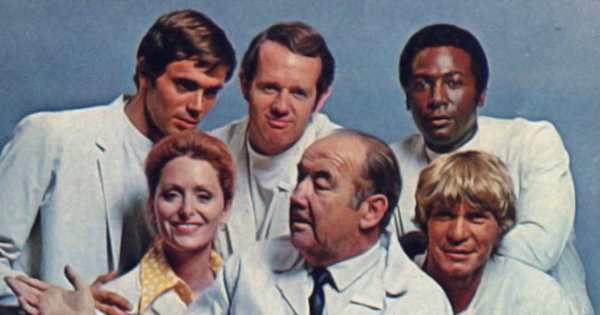
Critics savaged this “relevant” medical drama that ran for 24 episodes on CBS during the 1970-1971 season. Broderick Crawford starred as the surly supervisor of five fresh-faced interns played by Stephen Brooks, Christopher Stone, Hal Frederick, Mike Farrell, and Sandra Smith.
From Book To Film To Television
In April 1960, Random House published Richard Frede’s novel The Interns, which followed the intertwining personal and professional lives of a group of interns at New North Hospital as they fought to save lives and stay sane. A film adaptation starring Michael Callan and Cliff Robertson and directed by David Swift was released in August 1962. A sequel, The New Interns, was released in June 1964. Several cast members from the first movie returned for the second. Both were produced by Robert Cohn Productions and distributed by Columbia Pictures.
The Interns made its television debut on Thursday, March 10th, 1966 on CBS; The New Interns was broadcast by ABC on Sunday, November 12th, 1967. Joyce Haber reported in a September 19th, 1968 article in The Los Angeles Times that Screen Gems was planning on adapting two feature films for television, both of which had been directed by David Swift: Under the Yum-Yum Tree and The Interns (Haber gave the title of the latter as The Young Interns) [1]. An “Under The Yum-Yum Tree” pilot from Screen Gems was filmed but went unsold and was broadcast by ABC on September 2nd, 1969. It would take a little longer for The Interns to translate to the small screen.
On November 17th, 1969 Broadcasting published a list of the comedy and drama pilots under consideration by the networks for the 1970-1971 season. An hour-long drama pilot for “The Interns” was one of the ten pilots CBS was looking at (others including “Crisis Clinic,” “The Mary Tyler Moore Show,” “The Pursuer,” “Lady Broker” and “The Storefront Lawyers”). Screen Gems would produce the pilot which was developed for television by William Blinn and Bob Claver [2]. When CBS announced its 1970-1971 fall schedule on February 19th, 1970 The Interns had been given the 7:30-8:30PM time slot on Fridays, replacing Get Smart and The Good Guys [3].
The closing credits to the series noted it was based upon Richard Frede’s novel and adapted from the movie. But the series had very little in common with either the novel or the movie. The series was set in Los Angeles, like the movie, while the original novel took place in New York. The hospital in all three versions was the same: New North Hospital. But none of the characters in the series were in either novel or the movie.
The Doctors Of The Interns
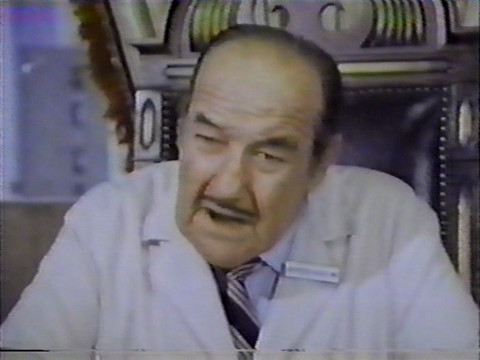
The Interns starred Broderick Crawford as Dr. Peter Goldstone, chief of staff at New North Hospital, a large metropolitan medical complex. In the premiere episode, he considers quitting but eventually decides to stay on. Crawford explained that he took the role because he “liked the script and there were six kids knocking their browns out in the show, so I thought it couldn’t be too tough” [4]. But it was.
“It’s more work now. You’ve got to keep too many people happy–CBS, the sponsor, and the people. You get a script now and you wait for the changes. After the censor get it, it’s five days before you shoot. In the old days, no one drove you out of your mind. But still, I love to act. I like the series and I hope I entertain a few people. I have fun–life’s been a ball for me” [5].
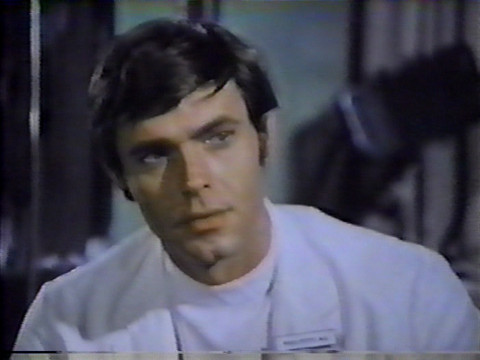
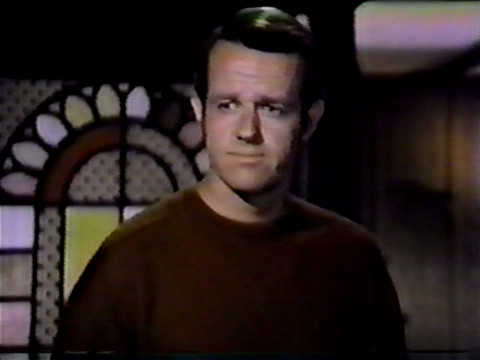
The interns were Greg Pettit (played by Stephen Brooks), Pooch Hardin (played by Christopher Stone), Cal Barrin (played by Hal Frederick), Sam Marsh (played by Mike Farrell) and Lydia Thorpe (played by Sandra Smith). Both Barrin and Thorpe faced unique problems as doctors; Barrin was African-American and Thorpe was a woman. Elaine Giftos co-starred as Bobbe Marsh, Sam’s wife, and Skip Homeier had a recurring role as Dr. Hugh Jacoby.
Scheduling Realities
The 1970-1971 season saw the network’s striving to attract younger viewers. The word of the moment was “reality” and The Interns was just one of many new shows attempting to be relevant and contemporary. CBS had two problems coming out of the 1969-1970 season: the network ranked second in the Nielsen ratings (behind NBC) and executives were beginning to worry about its reliance on rural programming [6].
Of the CBS schedule for the 1970-1971 season, Cecil Smith wrote in The Los Angeles Times on February 21st that “the emphasis at CBS seemed to be on contemporary urban drama to counteract the network’s rube-tube image of recent years” [7]. Jack Gould, in a March 1st article for The New York Times, noted that the networks and advertisers were focusing on the 18-49 demographic. He also explained that CBS president Robert D. Wood felt “TV’s major mission in the coming years is to give a better reflection of the contemporary scene in urban centers” [8].
In a February 24th article, Smith wondered why CBS was scheduling two of its “strongest dramatic efforts” at an early hour. “Traditionally,” Smith wrote, “drama, if it had any guts at all, was slotted late at night, usually at 10 p.m.” [9]. But CBS planned to air The Interns at 7:30PM on Fridays and another new drama series called The Storefront Lawyers at 7:30PM on Wednesdays. And a third series, Mission: Impossible, was being shifted to 7:30PM on Saturdays for the 1970-1971 season where it would compete with The Andy Williams Show on NBC.
Smith called 7:30PM “kiddie time” when children controlled television. Why was CBS scheduling its new, powerful, socially relevant dramas at a time when the youngest demographic with the least amount of buying power was calling the shots?
In early March, CBS held a press conference for television critics in which producers for several of its new fall shows spoke about how “reality and social awareness” would be addressed. Regarding The Interns, executive producer Bob Claver explained that the characters would be “in the establishment but trying to change it from within” while at the same time living their own lives [10]. “They’ll all be self-centered people like everyone else” who “just happen to be interns” and, he stressed, “there will be no scene in which the old doctor tells the young doctor what’s wrong with the world” [11].
Critics Not Fond Of These Interns
Television critics were invited to Los Angeles in early June by CBS for press interviews only to instead screen episodes Arnie, The Storefront Lawyers and The Interns. Clarence Petersen revealed that CBS had asked the critics not to review any specifics about the episodes because they were rough cuts that might be pilot episodes or might not [12]. Petersen was not impressed with the episode of The Interns that was shown:
[The Interns] is pretty much like all the other doctor shows except maybe a bit more relevant because the doctors are a bit more hip. They are dedicated after the fashion of Ben Casey, of course, but unlike Ben, they also smile and laugh. In one scene, moreover, they all run down the street, as if they were doing a Pepsi commercial or auditioning for Mod Squad, but they aren’t. They are trying to catch a bearded orderly who has slipped poison to a dying patient who wanted to end it quickly. [13]
A second plot, he said, involved Broderick Crawford’s character “giving lots of tough and wise and terse, mainly terse, advice to the younger doctors” [14]. The problem with the episode, Petersen felt, was that it “could have been written by a computer” and was “conceived as glib, fashionable, and predictable TV drama, which is not real drama at all, but inadvertent comedy” [15]. He also wrote negatively about The Storefront Lawyers while praising Arnie.
When it came time for critics to review the premiere episode, broadcast on Friday, September 18th, they were not kind. Jack Gould of The New York Times called it “one more hospital drama of scant distinction” [6]. The Boston Globe‘s Percy Shain wrote that it” limped into view with an untidy mess about stolen drugs, a false accusation, a black-monk confrontation, a go-go dancer’s disruption of routine and various other heroics woven into a pattern that leaked at every point.” And Morton Moss of the Los Angeles Herald-Examiner stated that “we felt no temptation to think we hadn’t seen it all before.”
And Clarence Petersen? If anything, he was even more brutal this time around:
If you can stomach another medical melodrama with a disease and/or a personality conflict for everyone and if you can stand another cast of hip young people who hold hands and drive too fast, and if you can stand another hard-boiled, growling, top-sergeant housemother of a chief of staff, then you’ll love The Interns at 6:30 Friday nights. I will be torn between avoiding it and The Brady Bunch. [17]
One kind review came courtesy of Don Page in The Los Angeles Times who wrote “everything about The Interns looks favorable. Young people, good production, heavy scripts. Lots of grief” (he also explained the formula behind the series: “the best of Dr. Kildare, a dose of Ben Casey and an injection of Peyton Place”) [18].
Plague, Explosions, Murders and Lawsuits
Each episode of The Interns featured multiple story lines. In the premiere, for example, in addition to the plot point concerning Dr. Goldstone thinking about quitting, there were also two medical stories: Dr. Barrin worked with a Southern monk who hasn’t had much interaction with African-Americans while a friend of Dr. Pettit’s, upon learning that he had only months to live, convinced an orderly to let him overdose. Furthermore, Dr. Hardin’s girlfriend, a go-go dancer played by Sherry Jackson, had a painful bone spur.
The series attempted to tackle serious issues, including abortion, drugs, rioting, mental illness and doping. Several episodes involved story lines focusing on Dr. Marsh’s marriage. In one, a jealous husband files for divorce after assuming his wife is having an affair with Marsh. In another, Marsh must set his personal life aside and treat the man who attacked Bobbe. Basically, Marsh had rotten luck. He saves a life and a murderer nearly kills him and Bobbe. He comes down with the bubonic plague. He goes on a walkabout after a teenage girl dies of an overdose. A librarian with two personalities falls in love with Marsh and he is suspected of fathering her child.
To be fair, Marsh wasn’t the only doctor with problems. Dr. Pettit is in an car accident and must both fight to keep the injured alive and somehow get help; Dr. Thorpe must contend with a sexist surgeon; Dr. Hardin is accused of murder after drinking spiked punch at a party (he can’t remember anything); Dr. Barrin is injured in a bombing; Dr. Pettit is forced to amputate a man’s hand only to discover he’s a champion billiards player; Dr. Thorpe has to chose between her career and her fiance; Dr. Pettit finds himself in the midst of a riot at a a prison; Dr. Goldstone is attacked by a man in need of dialysis; Dr. Hardin won’t believe a sick girl is a heroin addict (until she runs away).
Additionally, there were several lawsuits filed against the doctors (one from the aforementioned billiards player, another from a clown who hurts herself on hospital property and later believes her injury was made worse by one of the doctors).
Guest stars who appeared in various episodes included Billy Dee Williams, Lew Ayres, Lois Nettleton, Martin Sheen, Albert Salmi, Pete Duel, Georg Stanford Brown and Robert Lansing.
Viewers Don’t Tune In
The first episode of The Interns ranked 45th out of 80 programs; other new shows fared little better, leading Clarence Petersen to declare that “it does not look like a very good year” for relevance [19]. Its first eight episodes averaged a 15.4/30 Nielsen rating, the second-lowest of the new CBS programs (only The Tim Conway Comedy Hour performed worse; it was canceled in November, going off the air in mid-December) [20].
The series did well enough for CBS to pick it up for the remainder of the 1970-1971 season, however, but that was it. CBS cancelled the series on March 16th, 1971. It was one of fourteen shows the network dropped [21]. The last first-run episode aired on March 26th; the final repeat on September 3rd. A total of 24 episodes were produced.
Episodes of The Interns later aired on cable channel Nostalgia Television in the early 1990s.
Works Cited:
2 “Network program development for 1970-1971.” Broadcasting. 17 Nov. 1969: 54.
3 Petersen, Clarence. “TV Today: NBC Picks Up Skelton Show; Other Format Changes Told.” Chicago Tribune. 20 Feb. 1970: A13.
4 Page, Don. “A Legend Ends: Brod Crawford Comes in Clear.” Los Angeles Times. 30 Oct. 1970: I25.
5 Ibid.
6 Ferretti, Fred.” “TV Fall Programming Puts Accent on Reality.” New York Times. 20 Feb. 1970: 54.
7 Smith, Cecil. “New Shows, Reshuffling: CBS, NBC Set Fall Slates.” Los Angeles Times. 21 Feb. 1970: A3.
8 Gould, Jack. “Here’s to Relevance-But Will It Sell?” New York Times. 1 Mar. 1970: 109.
9 Smith, Cecil. “Strange Things in World of TV.” Los Angeles Times. 24 Feb. 1970: C12.
10 Kramer, Carol. “TV Today: CBS Lifts Curtain on ‘Reality and Social Awareness’.” Chicago Tribune. 11 Mar. 1970: B19.
11 Ibid.
12 Petersen, Clarence. “TV Today: 3 Previews Hold Scant Fall Promise.” Chicago Tribune. 9 Jun. 1970: A15.
13 Ibid.
14 Ibid.
15 Ibid.
16 Unless otherwise noted, review excerpts are taken from the September 28th, 1970 issue of Broadcasting (“Better reviews for latest shows,” Pages 44-46).
17 Petersen, Clarence. “One Yes, Two Maybes and a Giant Size No-no.” Chicago Tribune. 20 Sep. 1970: G6.
18 Page, Don. “TV Review: Interns Best-of-3 Formula.” Los Angeles Times. 19 Sep. 1970: B3.
19 Petersen, Clarence. “TV Today: ‘Relevance’ Eludes Nets; Viewing Off.” Chicago Tribune. 30 Sep 1970: E7.
20 “A midpoint recap of the TV season.” Broadcasting. 21 Dec. 1970: 44-45.
21 “CBS Plans Extensive Shakeup in Fall Lineup.” Los Angeles Times. 18 Mar. 1971: G16.
Originally Published October 15th, 2009
Last Updated May 7th, 2018


The success of MGM-TV’s “MEDICAL CENTER” the previous season was certainly a factor in CBS ordering “THE INTERNS” for the fall of 1970. As for dramas beginning at 7:30pm(et) on the network’s schedule, CBS executives had previously decided that hour-long series [with the exception of “THE BEVERLY HILLBILLIES” on Tuesdays, “FAMILY AFFAIR” on Thursdays and “HOGAN’S HEROES” on Sundays] were the key to “grabbing” viewers and keeping them there the entire evening- and they were right, as CBS was #1 in overall ratings {again} in 1970-’71. But some of those hours didn’t quite work out…and “THE INTERNS” was one of them. And the network, along with NBC and ABC, were forced to return the 7:30-8pm time periods (except for Sundays and Tuesdays) to local affiliates for the fall of 1971 so they could present their own programming [mostly syndicated series]. That meant one less-half hour per evening to worry about…and paying for another season of a drama like “THE INTERNS”, that delivered so-so ratings, ultimately wasn’t worth it. And the “relevance” cycle that spawned the series, as well as “THE YOUNG LAWYERS”, “THE STOREFRONT LAWYERS” and “THE YOUNG REBELS” (another Screen Gems-produced series), had quickly fizzled out as well. So, after 24 episodes and repeats in the spring and summer, “THE INTERNS” was gone.
Note Broderick Crawford’s declaration, “In the old days, no one drove you out of your mind”. He was referring to the fact that “HIGHWAY PATROL”, the syndicated series that MADE him a TV star in the mid-’50s, had no network or sponsor interference whatsover. He was accountable only to Ziv Television and the show’s producer. He could accomplish more without “the suits” in attendance, and, by 1970, he missed that freedom.
Since the series lasted only 24 episodes, it was sporadically seen in syndication on a few stations over the years (including Screen Gems’ “HERE COME THE BRIDES”, which lasted two seasons), but not many. The fact there weren’t any paperback “adaptations” of the series proves it wasn’t reallly THAT popular enough to warrant any. If Sony ever releases “THE INTERNS” on DVD, Mike {“M*A*S*H”} Farrell will definitely be their “selling point” [“See ‘BJ’ BEFORE he became ‘BJ’!”]. The reason there’s no “fan base” is because hardly anyone these days KNOWS about the show.
I remember this series well! I was a preteen girl in 1970, I swooned over Christopher Stone. I didn’t miss a Friday night a ready to watch “The Interns.” I had a hip Mom that watched with me just because I wanted to watch it and we only had a color set in the livingroom. Of course, a girl of that age was not really the audience CBS was shooting for. Sad I can’t seem to locate it on any streaming channel. The biggest mistake is the confusion in the name with a few other closely named series/movies.
I agree with your statement, “The reason there’s no “fan base” is because hardly anyone these days KNOWS about the show.”
Wow, am I really that old??
Thanks for posting the video clips. I always liked the opening credits and haven’t seen them for years! I googled and wound up here! Thanks again!
Unfortunately, I did not know about The Interns” was on the air many years ago. Wonder if the series will be on DVD’ at some point. Admirer of Stephen Brooks who was mostly overlooked by Hollywood. Hope others feel the same.
CBS had not had a Screen Gems produced series since HAZEL was cancelled in 1966. Judging by the failure of this series, CBS would not take another Screen Gems series until 1972 when it picked up another SCREEN GEMS one season wonder BRIDGET LOVES BERNIE.
SInce Route 66 ran its course in 1964, every Screen Gems weekly series to have aired on CBS tanked badly: Hazel (1965-6; which was inherited from NBC for its 5th season), The Interns (1970-1) and Bridget Loves Bernie (1972-3). These were the last SG series to run on CBS before it converted to Columbia Pictures TV in 1974.
And even then CPT struggled to gain footing on The Eye Network (The American Girls [1978], Bring’Em Back Alive [1982-83]). It wouldn’t be until 1984 when Columbia Pictures TV finally hit big on CBS with Crazy Like A Fox (1984-86) and Mickey Spillane’s Mike Hammer (1984-87).
Thank you for this page and the website. I was wondering if The Interns exists anyway o DVD or a streaming site. I can’t find it anywhere.
It will never be on DVD, as there are not enough fans of the show to make a financial case for a DVD to be made of this show (even with Sony’s version of Warner Archive active.)
The same also goes for The Storefront Lawyers, The Young Lawyers, and The Young Rebels (although there is a fan website for The Young Rebels out there.)
I have around 13 episodes of The Interns
email is [email protected]