
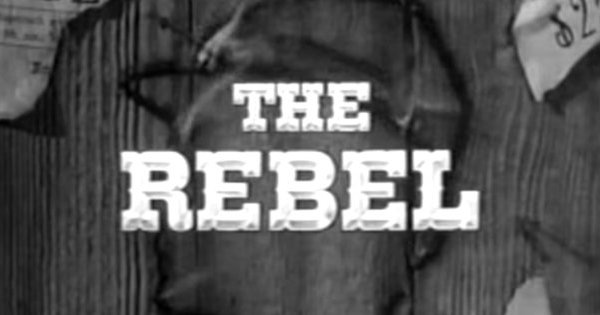
Nick Adams starred in this half-hour Western that aired for an impressive 76 episodes over the course of two seasons. From 1959 to 1961 on ABC, Adams played Johnny Yuma, a wandering former Confederate soldier roaming the West meeting interesting people and helping folks in need. Johnny Cash sang the memorable theme song.
A New Western Is Born
Nick Adams spent the mid-to-late 1950s working consistently as an actor in film and TV but played primarily small roles. He rose to prominence in 1959 for his role on ABC’s half-hour Western The Rebel. Adams created the series with Andrew J. Fenady; the two are listed in the closing credits in that capacity.
Irv Kershner, who directed more than 30 episodes of The Rebel, may also have had a hand in developing the idea [1]. Kershner directed the pilot episode with Fenady serving as writer and producer. The pilot was produced by Goodson-Todman Productions.
Initially, Adams decided not to take on the title role. He felt he had too much on his plate [2]. The New York Times reported in May that Adams would in fact star in The Rebel. ABC liked the pilot and picked up the series. The network gave it the Sunday 9-9:30PM time slot. The series was jointly sponsored by Procter & Gamble and L & M Cigarettes [3].
“It is frankly designed to appeal to a young audience–to be a show that teenagers will dig,” explained Cecil Smith in a July 1959 article for The Los Angeles Times [4]. He continued:
This is even contained in the title–The Rebel. Although the characters Adams plays, Johnny Yuma, fought for the South, the designation “reb” goes deeper than this. He is a symbol of rebellious youth–a loner, seeking something to hang his life on, wandering through the clapboard towns of the West of a century ago. Incidentally, he fought his war with no interest in the causes, no southern bone to pick. [5]
While promoting the series in 1959, ABC referred to Johnny Yuma as “a Reconstruction beatnik,” setting the tone for the series [6].
Johnny Yuma Wandered Alone
Following the end of the Civil War, Yuma spent a year roaming the former Confederacy before eventually returning to his hometown. He found it overrun by ruffians, his father dead, and most of the remaining townspeople ready to leave. After cleaning up the town and visiting his father’s grave, Yuma left. With nothing to tie him down, Yuma became a loner. He wandered from town to town lending a helping hand to those in need. He kept track of his exploits in his journals, carried with him alongside his guns and saddle wherever he went.
As the only regular cast member in the series, Adams was front and center in every episode. There were no recurring characters, only new guest stars each and every week. Adams brought an intensity to the role of Johnny Yuma that fell somewhere between brooding and simmering. There was little emotion other than bursts of anger when confronted with injustice, anger that often led to violence.
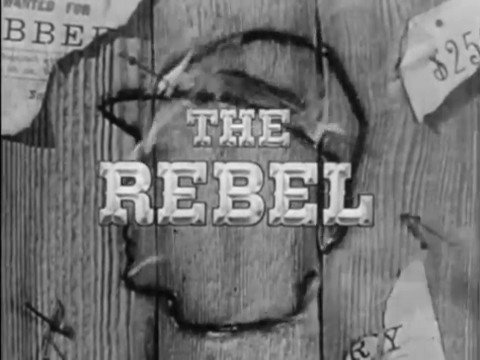
Copyright © 1959 and 1987 The Rebel Company
In each episode, Yuma came upon a town or a group of people in need of saving–typically from a band of thieves or other criminals–and would do what he could to make things right. Not surprisingly, many episodes dealt in some way with the aftermath of the Civil War. Yuma faced down intolerance, distrust, greed, confusion and revenge.
Despite his rebellious nature, Yuma respected law and order and despised abuse of power. He stood up for the weak and downtrodden. He traveled alone and often he was the only one willing to stand up to the bad guys.
Critics Praise, Slam The Rebel
As was so often the case, critics were split in their reviews of The Rebel. Cecil Smith of The Los Angeles Times was high on the series even before it began. Smith and Adams were quite friendly; Adams shared his idea for The Rebel with Smith in 1958 and it was in Smith’s living room that Adams decided not to star in the series in February 1959 [7].
Writing in July, Smith proclaimed “I’ll climb far out onto a limb and predict [The Rebel] will be a major hit” [8]. Following its October debut, Smith called the series “limitless in scope” and lavished it with praise. “It may be my basic unmathematical romantic nature,” he wrote, “but I can find parallels for Johnny Yuma’s search for meaning in the slum kid heading out into the streets of the city, aimlessly walking, seeking, or in young David with his slingshot walking toward Goliath [9].
Broadcasting called The Rebel “a welcome modicum of freshness” to the western genre even if the basic plot was typical for a western. “But a little extra thought went into the writing and production” [10].
John P. Shanley lumped The Rebel together with The Lawman and The Alaskans in a brief review for The New York Times. He called The Lawman “the best of a poor trio last night” before concluding “the total effect of the three programs was almost as numbing and unpleasant as a hangover” [11].
The Episodes: Season 1
A total of 36 episodes were produced during The Rebel‘s first season. Plots ranged from Yuma being arrested and sentenced to a forced labor to inadvertently helping to steal land to trying to help a Chinese family about to be swindled. In one episode he even teams up with the man whose trying to kill him. There were also episodes in which Yuma served as bodyguard, school teacher and bounty hunter. And, of course, a number of episodes involving Indians.
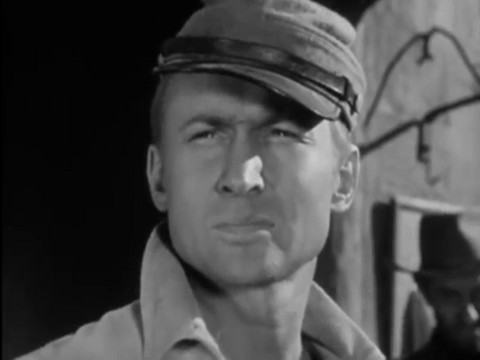
Copyright © 1959 and 1987 The Rebel Company
Plots during the first season included: discovering an old friend from the Army has become addicted to drugs; flashbacks to a wartime romance; venturing into Mexico in search of a sword he promised to return to a general’s widow; visiting a former commanding officer who may be about to execute an innocent man; encountering a number of former soldiers who don’t accept that the Civil War has ended; returning a medal to the family of a fallen comrade.
Guest stars during the first season included Jeanette Nolan, Agnes Moorehead, Robert Blake, Johnny Cash, Robert Vaughn and Dan Blocker. The final episode of the season was broadcast on June 12th, 1960.
The Episodes: Season 2
The Rebel remained in its 9-9:30PM time slot on Sundays for the 1960-1961 season. Nick Adams decided to make the second season of his show a family affair and enlisted his actress wife Carol Nugent and their infant daughter. “Might as well get them all into the act,” he explained. “Can’t let Carol spend all her time doing housework. I’ve arranged, too, for the baby to be paid scale and we’ll put the money in her bank account” [12].
Episodes during the second season included Yuma being forced by an Indian chief to decide which two hostages should be killed; being framed for murder; catching a bandit in the act; rescuing a man who then pledges to repay his debt; joining a posse chasing down an escaped prisoner who is actually innocent; agreeing to help toughen up a rancher’s son; being offered the hand in marriage of the daughter of a man he rescued; trying to help his cousin who wants to be a gunslinger; meeting an actress and being offered a role in a play; heading back to his home town in search of a bounty hunter.
There were more Civil War plots, including a visit from General Grant which gives Johnny the chance to recount Lee’s surrender to a young boy; an old friend from the Army trying to make it as a boxer; facing the man who tortured him when he was a Union prisoner of war; getting into a gunfight after an argument over the Civil War; helping escort Jefferson Davis back to Richmond while trying to foil an assassination attempt.
Guest stars during the second season included Tex Ritter, Soupy Sales, Gigi Perreau, Leonard Nimoy, Claude Atkins, Jamie Farr, Leif Erickson, John Carradine, and John Dehner.
The End Of The Rebel
After two seasons and 76 episodes The Rebel came to an end. Exactly why it was cancelled is disputed. According to Cecil Smith in April 1961, it was due to a shift away from western TV shows. “Shows of the nature of The Rebel, which had high ratings and was, generally, a well-made, intelligent program, are not dying because of the decline of the west–they’re moving aside for the general trend in television–particularly on ABC–toward hour shows” [14].
An attempt was made to turn The Rebel into an hour-long series called The Rebel and the Yank. Val Adams reported in The New York Times in May 1961 that ABC had The Rebel and the Yank listed in its fall schedule, occupying the 7:30-8:30PM time slot on Wednesdays. It would replace the cancelled Hong Kong. However, ABC was negotiating for a variety show starring Steve Allen to air in that same time slot [15].
The Rebel and the Yank would not, according to Cecil Smith, provide adequate counter-programming against NBC’s Wagon Train. ABC tried during the 1960-1961 to lure viewers away from Wagon Train with Hong Kong, an adventure series, and it didn’t work. A western was unlikely to do any better. But a variety series with Steve Allen might [16].
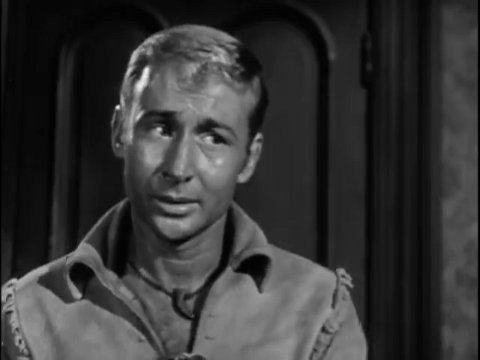
Copyright © 1959 and 1987 The Rebel Company
There was still confusion over the fate of The Rebel and the Yank as late as June 1961. Larry Wolters included the series in a list of hour-long shows scheduled for the fall [17]. Ultimately, ABC did pick up The Steve Allen Show but it lasted less than four months.
The last first-run episode of The Rebel aired on June 18th. Repeats continued on ABC until September.
Too Violent for ABC?
ABC may have had another reason not to pick up The Rebel and the Yank–it was too violent. In June 1961, The New York Times reported The Rebel was among the most popular TV shows watched by young offenders at two juvenile correctional facilities. That fact came up during a Congressional hearing investigating a connection between violent television and juvenile delinquency [18].
ABC insisted it was cutting back on the number of action and adventure shows. The Rebel was ending despite the fact that “it captures about 35 per cent of the Sunday evening audience in its time slot and has sponsors clamoring to back it” [19].
Ultimately, it seems ABC had multiple reasons to pass on The Rebel and the Yank despite the fact that The Rebel was doing well in the Nielsen ratings. The opportunity to bring Steve Allen was likely chief among them. The network’s move away from half-hour shows to hour-long shows was another. And there may have been a concern about violent content as well.
A half-hour pilot for The Yank was filmed with James Drury starring as former Union soldier working as a doctor in the South.
The Ballad Of Johnny Yuma
Johnny Cash sang the show’s famous theme song. Popularly known “The Ballad of Johnny Yuma,” it was called simply “The Rebel” in the closing credits. The song was written by series co-creator Andrew J. Fenady and Richard Markowitz, who also composed and conducted the rest of the show’s music.
During the opening credits only a few bars of the song are heard. The closing credits include several verses. Here are the full lyrics:
Opening Theme Song Lyrics
Johnny Yuma was a rebel,
He roamed through the West.
Did Johnny Yuma, the Rebel
He wandered alone.
He got fightin’ mad,
This rebel lad.
He packed no star
As he wandered far
Where the only law
Was a hook and a draw;
The rebel, Johnny Yuma.
Johnny Yuma was a rebel,
He roamed through the West.
Did Johnny Yuma, the Rebel
He wandered alone.
He searched the land,
This restless lad.
He was panther quick
And leather tough,
And he figured that
He’d been pushed enough.
The rebel, Johnny Yuma.
Columbia Records issued an EP in October 1959 that included “The Rebel” and three other songs by Johnny Cash: “Remember the Alamo,” “The Ballad of Boot Hill,” and “Lorena.” Nick Adams released his own version of “The Rebel” in March 1960 through Mercury Records.
When The Rebel was aired in syndication, the theme song was usually replaced by another piece of music, although the closing credits were not altered to remove Johnny Cash’s credit.
The Death of Nick Adams
Following the cancellation of The Rebel, Nick Adams starred in Saints and Sinners on NBC from 1962 to 1963. In 1963 he was nominated for an Academy Award for his work in Twilight of Honor but lost. Shortly thereafter, his career took a nosedive. Nick Adams was found dead in his home in Los Angeles on February 7th, 1968. He was 36 years old.
A coroner’s report determined that he either intentionally or accidentally overdosed on medication for treatment of nervous disorders and alcoholism [20]. The inquiry over his death was closed on March 2nd, certified as “accidental-suicidal and undetermined” [21]. Some 2,000 mourners were at his funeral in Berwick, Pennsylvania where he was given a military funeral due to his Coast Guard service [22].
Due to his role in Rebel Without A Cause, Adams is sometimes listed alongside James Dean, Natalie Wood and Sal Mineo as victims of a “curse” relating to the film. Those three died relatively young and under unusual circumstances: Dean was killed in a car crash, Wood in a drowning accident, and Mineo was stabbed to death.The Legacy of The Rebel
While The Rebel was on the air several tie-in products were released. The Arlington Hat Company released an officially licensed Tex-Felt children’s hat modeled after the rebel cap worn by Johnny Yuma. Dell published four comic books based on the series in 1960 and 1961. Whitman Publishing released a hardcover children’s book in 1961.
From June to September 1962 NBC aired episodes of the series as a summer filler show. ABC Films, Inc. offered The Rebel in syndication beginning in the fall of 1962, using the recent NBC repeats as a selling point for stations.
Diginet MeTV began airing The Rebel in December 2011 but removed it from its schedule in September 2016. The series currently airs on another diginet called Heroes & Icons.
Shout! Factory released an 11-disc complete series DVD set with all 75 episodes of The Rebel in August 2015. Bonus features include a lengthy interview with co-creator Andrew J. Fenady, interview with the children of Nick Adams, the unsold pilot for The Yank, commercials featuring Nick Adams, and a gallery of production stills. A standalone Season 2 was released in November 2015.
Works Cited:
2 Smith, Cecil. “The TV Scene: Alas–Fair Caesar (Sid) Has Fallen.” Los Angeles Times. 12 Feb. 1959: A12.
3 Adams, Val. “Heflin Will Star on ‘Playhouse 90’.” New York Times. 8 May 1959: 55.
4 Smith, Cecil. “The TV Scene: The Rebel Coming With Hit Material.”
5 Ibid.
6 Shepard, Richard F.” “Rizzuto — Once a ‘Scooter,’ Now a Rooter.” New York Times. 2 Aug. 1959: X11.
7. After discussing how Adams was involved in creating The Rebel and stating that it was “designed for Nick to play the central role,” Smith explained that Adams “sees too many projects in the wind to tie himself up to a series at this moment.” The article ended with the following: “Nick sat in my house the other night talking the problem out–trying to find a decision. He made it himself–against the series.” (“The TV Scene: Alas–Fair Caeser (Sid) Has Fallen,” The Los Angeles Times, Page A12). And in his July 16th, 1959 article about The Rebel, Smith wrote that “I have a double interest in this show because more than a year ago Adams wandered up to the house with the germ of an idea for a TV western with a kid for the hero.” (“The Rebel Coming with Hit Material,” The Los Angeles Times, Page A12).
8 Smith, Cecil. “The TV Scene: The Rebel Coming With Hit Material.”
9 Smith, Cecil. “The TV Scene: Rebel Is Unique Western Fare With Timeless Quality.” Los Angeles Times. 11 Oct. 1959: G5.
10 “The new ABC-TV weekly series.” Broadcasting. 28 Sep. 1959: 50.
11 Shanley, John P. “3 Filmed Adventure Series on Channel 7.” New York Times. 5 Oct. 1959: 63.
12 Korman, Seymour. “Nick Adams Puts His Family to Work.” Chicago Daily Tribune. 17 Sep. 1960: C3.
14 Smith, Cecil. “The TV Scene: Don’t Give Them a Home on Range.” Los Angeles Times. 12 Apr. 1961: A10.
15 Adams, Val. “Steve Allen Near Deal on TV Series.” New York Times. 16 May 1961: 75.
16 Smith, Cecil. “The TV Scene: Plan Revived to Bring Allen Back.” Los Angeles Times. 17 May 1961: A8.
17 Wolters, Larry. “In Prospect for Next Fall: More One Hour Shows than Before.” Chicago Daily Tribune. 25 Jun. 1961: N8.
18 Wicker, Tom. “U.S. Prison Head Assails TV Crime.” New York Times. 10 Jun. 1961: 17.
19 Ibid.
20 Cohen, Jerry. “Actor Nick Adams’ Death Blamed on Overdose of Drug.” Los Angeles Times. 9 Feb. 1968; A1.
21 “Inquiry Closed on Nick Adams.” Los Angeles Times. 5 Mar. 1968: A1.
22 “Nick Adams Buried as 2,000 Attend Funeral.” Los Angeles Times. 13 Feb. 1968: A8.
Originally Published October 14th, 2003
Last Updated April 20th, 2018


Fascinating, well-researched story..thanks!
As a teenager I loved watching his show and as an adult I still love watching The Rebel.
Love and peace to Nick Adams.
I liked the show alot.
At the end of the rebel i noticed there is a square on the left of the screen as if added later to block or obscure
Something. I cant find any mention anywhere why or what would be blocked.
That “square”, in the closing credits, usually featured the sponsor’s product- to remind viewers exactly WHO was sustaining the show. In “THE REBEL”‘s case, it was Liggett & Myers {L&M cigarettes}.
I’ve seen episodes on ME TV in which that square is not obscured. A tube of Crest toothpaste is shown!
I love this show when I first starting watching this show it was two shows 30 mins.
long I ready miss it. what happenI wish you would run a day of all shows we’ll have a Rebel party. September 30,2013 4;10 pm
I also love this show and watch it on ME TV on Saturday mornings.
On reruns of The Rebal on Me TV, Johnny Cash no longer sings the song. Does anybody knoe why?
I would guess it was removed due to a licensing/copyright issue.
Love the closing song played as the ending credits roll. Anybody know the title or any info on it?
Think I heard the same song used on old NFL Films videos.
It was also used in a Charmin commercial where it accompanied two rolls of toilet paper (one of them Charmin, obviously) rolling down the face of a cliff.
Why did they change the teme song of the TV show the rebel..I watch reruns on the MET tv channel and the show has a different theme song not the Johnny Cash version
Julio, when this happens it signals that royalties were not paid to the artist thus the terrible generic theme!
For anyone interested in The Rebel and Nick Adams there is a great interview with creator Andrew Fenedy., just goggle Henry’s Western Roundup March 2012 then scroll down to the March 18th article.
The Rebel is coming to DVD. Shout! Factory will release an 11-disc complete series set will all 76 episodes on August 18th, 2015. Read more here.
Great article. I never saw the show, so was fascinated to read what it was actually about. I thought it had a bit of a Seven Samurai (1954)/Magnificent Seven (1960) thing going on. Those movies were about warriors/gunmen protecting a town.
I love the show nick Adams a good actor
Delicious sponsor billboard and yummy closing credits:)
Anybody know why they use a different theme song than thr old Johnny cash intro?
When the time comes that The Rebel comes to the Encore Westerns channel sometimes in the future that they need to be bringing back the original Johnny Cash opening and closing formats of the rebel otherwise what’s the use in even be bothered to even watching it for the first time just for old times sake!
just watched an episode after many decades,,,horrible acting & scripts, but that was then & this is now,,,so many were good at the time, this was one , sure isn’t now ! lolo
There was one episode based loosely on a Dostoevsky story called ‘How Much Land Does a Man Need?’. In The Rebel version a very old, dying man is trying reach the furthest point land so that he can own, or pass on, land. Does anyone know the episode number / title?
Land
It’s the 20th episode, Season 1, called Land.
I loved watching the Rebel for the two years it was on.A company out of Michigan produced a toy replica of the Rebel’s Scattergun and his revolver. This item sold out in less than a week in Woolworths on Washington st in Boston so I went to the second floor and bought my first BB gun for $3.98 and took the MBTA and bus home.I was 9 yrs old in 1959-60. Could you image a kid doing that today..! The cops would shoot the 9 yr old and arrest him. RIP Nick Adams
Hi, i believe that i saw you visited my weblog thus i got here to return the favor?.I am trying to in finding issues to enhance my web site!I suppose its ok to make use of a few of your ideas!!
Trula Fergus https://newmanbaker.use.com/message-show/6013a436b9a7a90c4e63ef6c1bc567da/98d8665897687f8a5f9d76867d1a74a9/
“The Rebel” was actually doing well in the ratings, averaging a 35 percent audience share. ABC had plans to renew it for a third season.
I use to watch this show religiously when I was a child, in its original format. And when I come across it (every now and then), I still enjoy it. However, it’s just not the same without Johnny Cash’s original theme. It should’ve lasted longer instead of being a plaything for the corporate suits to goof with. Check out a past issue of Filmfax magazine for an in depth look on the show and the life of Nick Adams.