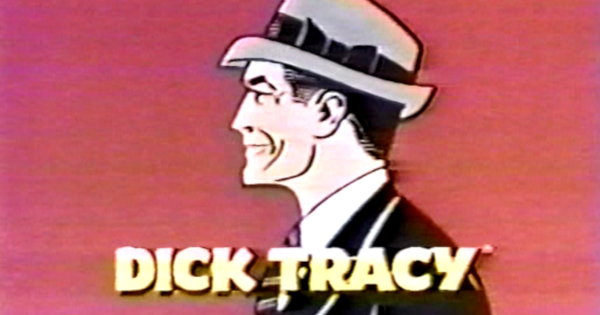
Producer William Dozier struck gold for ABC with Batman in January 1966. That summer, he began working on a potential TV show based on the Dick Tracy comic strip and eventually filmed a pilot episode. NBC considered picking up the series twice but ultimately decided not to.
From The Funny Pages to TV (and Everything in Between)
Chester Gould’s long-running comic strip about a tough, square-jawed detective first appeared in newspapers on October 4th, 1931. Within a few years, a radio version was on the air and in 1937 the first film serial, issued by Republic Pictures, was released with Ralph Byrd playing Dick Tracy. Three more serials were released between 1938 and 1941, followed by four feature films from RKO between 1945 and 1947. Morgan Conway played Tracy in the first two and Byrd returnd to the role of Tracy in the last two.
In September 1950, ABC premiered a filmed, half-hour Dick Tracy television series, again starring Ralph Byrd as Tracy. There seems to be some confusion as to when the program premiered and on what day it aired [1]. According to television listings in The New York Times (WJZ-TV) and The Chicago Daily Tribune (WENR-TV), Dick Tracy premiered on Wednesday, September 13th, 1950, airing from 8:30-9PM Eastern (7:30-8PM Central). In Los Angeles, however, the series was broadcast by KECA on Sundays from 4-4:40PM Pacific, beginning September 24th [2].
The ABC series ended in February 1951, although repeats may have continued to be shown on Saturdays through the end of March. In July, Telescriptions, Inc. took over production of Dick Tracy, this time for first-run syndication [3]. The new syndicated series would retain the cast from the ABC version, including Ralph Byrd as Tracy and Angela Green as Tess Trueheart. It aired over WABD in New York City (beginning Friday, December 7th, 1951), WGN-TV in Chicago (beginning Wednesday, January 16th, 1952) and KNBH in Los Angeles (beginning Wednesday, February 6th, 1952), to name but a few markets [4, 5, 6].
The death of Ralph Byrd in August 1952 ended any plans to continue Dick Tracy on television. Episodes remained in syndication for years to come.
Enter William Dozier
On January 12th, 1966, ABC broadcast the first episode of a new mid-season replacement called Batman, starring Adam West and Burt Ward. Airing twice a week, the series was an instant smash, appealing to children and adults alike. The camp craze had begun. The man responsible for the series, William Dozier, despised the term camp, saying “it sounds so faggy and funsies” [7]. For the network, however, camp seemed to be the word of the season, and even as Batman was taking off, buzz was building for The Green Hornet, a new series from Dozier to premiere on ABC in September 1966 [8].
While promoting The Green Hornet in April 1966, Dozier made it clear that the new series would differ from Batman: “It would be foolhardy to try to copy Batman. Batman is in a class by itself and any impostor would fall on its Batface” [9]. He also stressed the fact that The Green Hornet “will not be a camp show–whatever that is” [10]. He did concede that “there will be a very heavy overlay of gimmicks, gadgets, flair, pace and excitement” [11].
Even while juggling Batman, The Green Hornet and a third series, sitcom The Tammy Grimes Show (all on ABC), William Dozier was hard at work on additional projects. On June 29th, The Chicago Tribune reported that Dozier was flying out to meet with Chester Gould to discuss a potential Dick Tracy series [12]. On July 1st, the meeting had grown to involve scriptwriter Hal Fimberg [13]. And on July 4th, Broadcasting magazine reported that 20th Century-Fox TV and William Dozier’s company, Greenway Productions, had jointly acquired the television rights to Dick Tracy. A weekly series, designed to fill the 7:30-8PM time slot, would likely air on NBC as either a mid-season replacement during the current 1966-1967 season or as a new series to premiere at the start of the 1967-1968 season [14].
Interestingly, Broadcasting explained that prior to the launch of Batman, ABC had commissioned a survey to see which comic book/comic strip character viewers would be most interested in. The winner? Dick Tracy. The network, however, was unable to get the rights to the character from Chester Gould and Henry Saperstein (Gould’s business partner) and turned to Batman. NBC had better luck and tapped Dozier and 20th Century-Fox TV to develop the series [15].
Casting The Series
On July 22nd, The Chicago Tribune reported that Dozier and Gould were hard at work trying to find a suitable actor to play Dick Tracy. Herb Lyon asked readers of his “Tower Ticker” column for suggestions [16]. Days later, Lyon reported that he was “swamped with suggestions,” including Chester Morris and Victor Mature [17, 18]. In late July, with the lead role still to be cast, The New York Times reported that production on a half-hour pilot would begin soon and the series might premiere as a mid-season replacement for NBC [19].
In late August, William Dozier shot down rumors that Victor Mature was the “leading contender” to play Dick Tracy, saying “he couldn’t be more wrong for the part” [20]. Dozier further explained “we are just starting to work on it. No definite date has been set for starting the series. No cast members have been chosen. We are looking at a lot of people and working on the first couple of scripts–just going thru all the necessary preliminaries” [21].
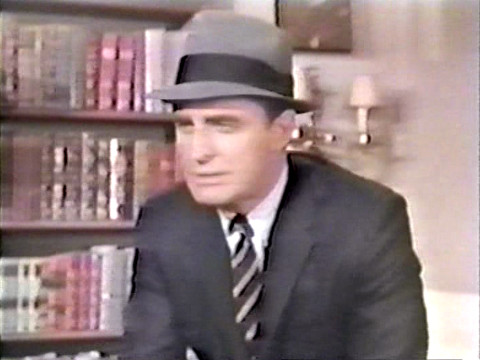
More than a month later, in mid-October, Ray MacDonnell was signed to play Dick Tracy, and production on the pilot was set to begin Monday, October 17th [22].
The Pilot Episode
In the pilot episode, titled “The Plot to Kill NATO,” the intrepid Dick Tracy is pitted against the nefarious Mr. Memory (played by Victor Buono). Mr. Memory, who uses mental telepathy to connect with a vast array of computers, has three ambassadors — all set to attend a secret NATO conference about the Western European Defense System — kidnapped in order to derail NATO and benefit an unnamed group and/or nation led by a man named Major Power. Chief Patton turns to his best man: Dick Tracy.
An abandoned ambulance used in the kidnappings leads the police to three companies that sell ambulances. Sam Catchem and Lizz each take one company, while Tracy meets with the third. He talks with Doctor Alexander, who professes to know nothing. He was lying, of course, and Mr. Memory has the good doctor killed because he inadvertently provided Tracy with his fingerprints. Mr. Memory then sends Tracy an invitation to meet at a hotel; Tracy accepts and Mr. Memory promptly attempts to use knock out gas on him. Tracy manages to improvise an explosive, so Mr. Memory sends his hooked henchman to kill the detective.
The police move in just as Tracy wins the battle: the hooked man impales himself on his own hook. Tracy uses optomexothen, “an amazing new discovery by a Swiss scientist,” that magnifies an object five times more than a microscope when used as eye drops. Found in the hooked man’s pockets are scraps of computer tape and Philippine pine. The scraps lead to Mr. Memory’s mansion, where Tracy and the police spot a woman leaving the mansion in a car; the police follow and catch her. The woman is named Mrs. Flowers and was charged with getting more computer tapes for Mr. Memory.
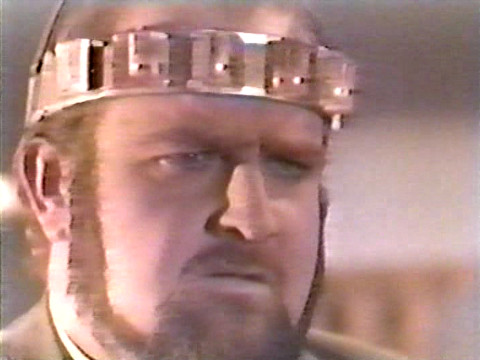
Tracy calls for a wig and computer tapes. He is going to impersonate Mrs. Flowers’ chauffeur while Lizz impersonates Mrs. Flowers. At the mansion, Tracy and Lizz descend into the depths of Mr. Memory’s lair and take out the men guarding the ambassadors. Lizz takes the captured men and the ambassadors back to the Chief while Tracy goes after Mr. Memory. When the ambassadors are discovered missing, the jig is up and Tracy is captured.
Mr. Memory uses his computers to determine which death is most suitable for Tracy: losing his hands to piranha (which coincidentally is how the late hooked henchman lost his hand). The police bust in but are forced to throw down their weapons or risk Tracy’s life. Moments later, Tracy is able to wrestle free and sets off his ultrasonic tapes that quickly take down Mr. Memory, who is revealed to be a mental patient suffering from paranoid delusions who believes he can interface with computers.
Tracy, who was shot and lightly wounded during his scuffle with Mr. Memory, is offered vacation time by Chief Patton, but decides to save it for a rainy day. He then leaves to pick up Tess and Bonnie from the airport. In a brief tag after the closing credits an announcer explains that Dick Tracy will face off against Global Enemy #1 in “The Plot to Destroy Metropolis.”
Deconstructing The Pilot
Unlike Batman, the Dick Tracy pilot is played straight, much like The Green Hornet. Although Tracy has a secret lab in the basement of his home accessible by an elevator hidden behind a wall, reminiscent of the Batcave, for the most part he is a typical detective. The optomexothen drops used to magnify the scraps found in the hooked man’s pockets are outrageous but otherwise Tracy uses intelligence and cunning to outwit Mr. Memory, not fancy gadgets. He does have his famous 2-Way Wrist TV, which is used once early in the episode when Chief Patton contacts Tracy.
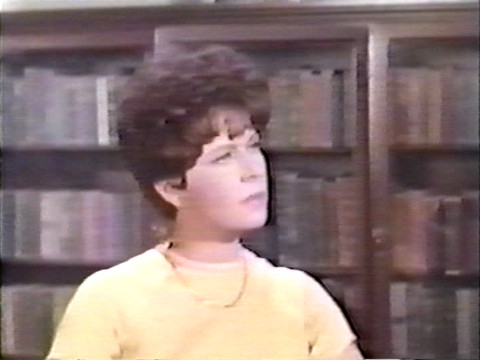
Ray MacDonnell plays Dick Tracy as a brilliant, tough detective with a touch of humor. Victor Buono’s buffoonish Mr. Memory takes the spotlight, suggesting perhaps that Dick Tracy would imitate Batman‘s over-the-top villains. The other characters have little to do. Chief Patton (played by Ken Mayer) and Sam Catchem (played by Monroe Arnold) are portrayed as serious police officers, more so than Commissioner Gordon and Chief O’Hara on Batman. Policewoman Lizz (played by Jan Shutan) basically spends the pilot worrying about Tracy but does get in on the action by slipping on a blonde wig to impersonate one of Mr. Memory’s henchwomen.
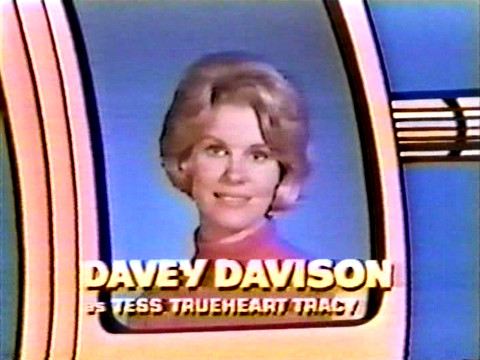
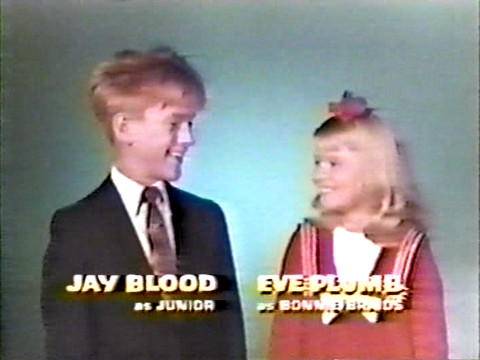
A minor subplot at the beginning of the episode involves Junior Tracy (played by Jay Blood) bringing Dick Tracy his mail and being shown a device that can remove the beard from a criminal’s photograph using an infrared ray. The rest of the Tracy family are notably absent from the episode. Tess Trueheart Tracy (to have been played by Davey Davison) and Bonnie Braids Tracy (to have been played by Eve Plumb) are shown in the opening credits but otherwise never appear. The absence of Dick Tracy’s wife and daughter is explained by having them returning from home after visiting Tess’s sister.
The Green Hornet Bombs, Batman Falters
The Green Hornet bowed to an impressive 21.5/54.8 26-city overnight Trendex rating on Friday, September 9th, airing from 7:30-8PM opposite a repeat of The Wild, Wild West on CBS and an AFL Football special on NBC [23]. It easily won its time slot. The following week, up against new episodes of The Wild Wild, West and Tarzan, The Green Hornet dropped to a 14.8/36.0 Trendex rating but still won its time slot [24]. Its third episode drew a 15.6/37.2 Trendex rating, once again winning its time slot [25].
Nationally, however, for the first two weeks of the 1966-1967 season (Monday, September 12th, 1966 through Sunday, September 25th, 1966, covering the second and third episodes of the series) The Green Hornet ranked 53rd in the Nielsen ratings with a 15.0/31 rating [26], 27]. Batman, which ended the 1965-1966 season with both its weekly installments in the Top Ten, failed to crack the Top Thirty during the first two weeks of the 1966-1967 season; the Thursday installment ranked 36th while the Wednesday installment tied for 57th [28].
Even as the new season got underway, the networks were preparing for the failure of new and returning programs and all had replacements lined up to swap in for poorly performing shows at mid-season. Among NBC’s mid-season possibilities as of September 1966 were a color version of The Saint (an import from Britain), plus sitcoms like Captain Nicely, Sheriff Who as well as Dick Tracy [29]. In early October, Broadcasting reported that in addition to Dick Tracy and the other aforementioned programs, NBC also had thirteen episodes of a new version of Dragnet waiting in the wings [30].
NBC Passes On Dick Tracy
In mid-November 1966, United Press International reported that the pilot for Dick Tracy had been completed [31]. Mid-season came and went, with all the networks juggling their schedules, adding or subtracting numerous shows in the hopes of shoring up their Nielsen ratings. NBC added The Saint, Dragnet and Captain Nice. Neither Sheriff Who and Dick Tracy were added to NBC’s schedule.
Behind-the-scenes production issues plagued Sheriff Who but Dick Tracy had a completed pilot and appeared ready to go. There’s no way to know why NBC decided against introducing Dick Tracy as a mid-season replacement. Perhaps Dozier was too overwhelmed producing three other series to handle a fourth. Or maybe NBC felt it had a strong mid-season lineup and didn’t need another replacement series. Regardless, the network kept the Dick Tracy in the mix for the 1967-1968 season.
Broadcasting included the series in a list of 1967-1968 hopefuls published in its January 9th, 1967 edition, one of seven programs in development at 20th Century Fox and one of two associated with Dozier’s Greenway Productions for NBC (the other was an hour-long detective series based on the 1944 film Laura that never made it to the pilot stage) [32]. In a January 11th interview, Dozier discussed Dick Tracy in the context of the 1967-1968 season. Unlike The Green Hornet, it would not feature a lead character with dual identities; Dick Tracy would be just a cop and had more than three decades of name recognition [33].
There wouldn’t be any camp, Dozier explained, “but Tracy will be larger than life. It will bizarre, no bizarre photographically, but his adversaries will be bizarre” [34]. In a mid-March article in The Los Angeles Times, Dozier discussed the failure of The Green Hornet to catch on with viewers, suggesting that “it may be because we turned Batman into a camp character that people refuse to buy Green Hornet, or anyone else in a mask, who isn’t treated the same way” [35].
When NBC announced its 1967-1968 schedule in late February, Dick Tracy was not on it [36]. What went wrong? The most likely explanation is that NBC simply lost confidence in the ability of Dick Tracy to succeed as a weekly series. Its fortunes were tied to William Dozier and the start of the 1966-1967 season was not kind to the producer.
Consider Dozier’s three shows on the air at the start of the 1967-1968 season. The Tammy Grimes Show was cancelled in late September 1966 after just four episodes. Almost immediately it was obvious that The Green Hornet was not drawing an audience, let alone one comparable to Batman at its height, although it was nevertheless renewed for the remainder of the 1966-1967 season. And Batman itself was in trouble. Why, then, would NBC put another Dozier series on the air?
As Dozier himself noted, viewers who went crazy for the campy Batman in January 1966 showed no interest in the serious The Green Hornet in September 1966. Nor did they watch the two blatant Batman clones (Captain Nice on NBC and Mr. Terrific on CBS) introduced in January 1967. And Dick Tracy would have been a mixture of the two, a serious protagonist and bizarre if not outright campy villains. With the bloom off the rose for camp and for Dozier, whose attempt to turn Wonder Woman into a campy sitcom for the 1967-1968 season also failed, Dick Tracy was doomed. The pilot was never broadcast.
When ABC released its 1967-1968 schedule in early April, The Green Hornet had been cancelled and Batman cut down to a single Thursday broadcast [37].
Works Cited:
2 Ames, Walter. “Dick Tracy Comic Series on Video Today; Eddie Cantor Debuts ‘Comedy Hour,’ KNBH.” Los Angeles Times. 24 Sep. 1950: B6.
3 Brady, Thomas F. “Large-Scale Work on TV Films Begins.” New York Times. 16 Jun. 1951: 9.
4 “Sponsor to Drop TV Comedy Series.” New York Times. 6 Dec. 1951: 44.
5 “New Dick Tracy TV Show Starts On Wednesday.” Chicago Daily Tribune. 12 Jan. 1952: C4.
6 Ames, Walter. “Architects Tell Problems of Making TV City Flexible; Halls of Ivy Time Changed.” Los Angeles Times. 6 Feb. 1952: 24.
7 Stone, Judy. “Caped Crusader of Camp.” New York Times. 9 Jan. 1966: 75.
8 In the above article, published three days before Batman premiered, Dozier admits that he will be the very first to imitate Batman when The Green Hornet bows in the fall.
9 MacMinn, Aleene. “Green Hornet Buzzing Into Batman Domain.” Los Angeles Times. 30 Apr. 1966: B3.
10 Ibid.
11 Ibid.
12 Lyon, Herb. “Tower Ticker.” Chicago Tribune. 29 Jun. 1966: 18.
13 Lyon, Herb. “Tower Ticker.” Chicago Tribune. 1 Jul. 1966: 12.
14 “Greenway-Fox puts Dick Tracy in lineup.” Broadcasting. 4 Jul. 1966: 46-47.
15 “Tracy twist.” Broadcasting. 4 Jul. 1966: 5.
16 Lyon, Herb. “Tower Ticker.” Chicago Tribune. 22 Jul. 1966: 16.
17 Lyon, Herb. “Tower Ticker.” Chicago Tribune. 24 Jul. 1966: 22.
18 Lyon, Herb. “Tower Ticker.” Chicago Tribune. 25 Jul. 1966: 20.
19 Adams, Val. “A.B.C. Will Start Live Night Show.” New York Times. 28 Jul. 1966: 67.
20 Browning, Norma Lee. “Producer Dozier Rules Out Mature as TV Dick Tracy.” Chicago Tribune. 27 Aug. 1966: 15.
21 Ibid.
22 “Ray MacDonnell to Be Dick Tracy.” Los Angeles Times. 14 Oct. 1966: C23.
23 “The numbers game, part one.” Broadcasting. 19 Sep. 1966: 58-60.
24 “The latest form sheet.” Broadcasting. 26 Sep. 1966: 66-69.
25 “Few cheers for new shows.” Broadcasting. 3 Oct. 1966: 58-59.
26 Gowran, Clay. “Nielsen Ratings Are Dim on New Shows.” Chicago Tribune. 11 Oct. 1966: B10.
27 Gould, Jack. “How Does Your Favorite Rate? Maybe Higher Than You Think.” New York Times. 16 Oct. 1966: 129.
28 “The ratings: a photo finish.” Broadcasting. 17 Oct. 1966: 66-69.
29 “Stand-bys ready if new shows fail.” Broadcasting. 12 Sep. 1966: 35-37.
30 “The fall-backs.” Broadcasting. 3 Oct. 1966: 5.
31 “‘Dick Tracy’ Pilot.” Binghamton Press. United Press International. 19 Nov. 1966: 11.
32 “What’s ahead in next TV season?” Broadcasting. 9 Jan. 1967: 33.
33 Leonard, Vince. “Life’s Rosier for Bill Dozier.” Pittsburgh Press. 11 Jan. 1967: 82.
34 Ibid.
35 Humphrey, Hal. “Justice will out on Batman, Green Hornet.” Los Angeles Times. 19 Mar. 1967: A39C.
36 Gent, George. “N.B.C. to cancel 11 Shows in Fall.” New York Times. 28 Feb. 1967: 74.
37 Gent, George. “A.B.C. Programs For Fall Listed.” New York Times. 3 Apr. 1967: 67.
Originally Published September 9th, 2008
Last Updated May 1st, 2018


First of all I’d like to know what type of drugs Mr. Dozier was on when he made this pilot and two, who from NBC okayed this trash….and don’t even get me started on the theme music
Dozier’s problem was that he refused to make Green Hornet and Dick Tracy campy. So they ended up just being stupid, whereas Batman retained some redeeming comedic value. I don’t understand why he couldn’t just continue a good thing!!
Sorry,
The Green Hornet was cool, Batman was stupid.
Sorry,
KATO was cool. The Green Hornet was completely dull. Any show where the sidekick outshines the hero is going to fail. Dozier should have done a “Kato” series.
Disagree re, Batman.
One thing I recall about this pilot (which never aired) is that the producers spent a great deal of money on the sets, no doubt thinking that its pick-up was a slam-dunk. It would have been one of the pricier pilots of that development season, and was probably largely deficit-financed by Greenway in anticipation of a pick-up.
I also seem to remember NBC talking up the potential ‘Dick Tracy’ series as a sitcom partner for ‘Get Smart’ on Saturdays, and it wouldn’t surprise me that they also might have had an under the cone-of-silence plan to pick up ABC’s discarded ‘Batman’ as a companion series.
You’re right about Mr. Dozier’s problems that 1966-67 season with ABC, as his series were struggling, and both had W18-49 issues. ‘Batman’ performed so poorly that season that when the upfront dog-and-pony presentations to ad agencies gathered steam early in the New Year of 1967, ABC didn’t even have ‘Batman’ on their tentative pitch skeds for the fall of 1967.
Perhaps hearing Madison Avenue whispers of a potential NBC pickup, ABC behind the scenes was dickering for a limited 15-episode renewal (down from the astoundingly high 60-episode 1966-67 season order). This limited renewal ploy was a common tactic (‘Remington Steele’, ‘The New Original Wonder Woman’) to prevent a series from jumping networks, and it would have been enough to prevent NBC from openly pitching a combo ‘Batman’/’Dick Tracy’ hour to advertisers.
Ultimately, ABC made a surprise 26-episode third season pickup and Mr. William Dozier re-jigged ‘Batman’ by adding Batgirl in an effort to help improve the W18-49 delivery to ABC’s Thursday sked of femme-slanted comedies.
That has to be the worst theme song ever.
The theme MUSIC is fantastic. I get the feeling that the awful singing was tacked on later. This could have been terrific but the ideas are really undeveloped.(It looks like the custom cop car had a roll bar so it could turn over and keep on going) The gadgets were weak and needed more inspiration, a la “Wild, Wild West”. As for Mr. Dozier, he was dead wrong about Victor Mature, who would have brought a much stronger personality to Dick Tracy. Mature looked born to play that part.
Jay Blood! I’d hate to meet that kid in a dark alley. That way I’d have to tell him what a bad fake name that was. Eve Plumb? Oh, that’s even worse. I love to beat up on the kid actors.
That Mr. Memory actor played King Tut on Batman, who made it to the Batcave and realized who Batman really was. Then got hit on the head.
I know next to nothing about Dick Tracy, but that pilot doesn’t look great.
It Really Had This Picture Made Under The Jurresdiction Of IATSEIA Affilliated With AFL-CIO,AMPTP,National Association Of Broadcasters TELEVISION CODE Seal Of Good Practice,RCA Sound Recording In The Closing Credits Of Dick Tracy Did It Really. In The Closing Credits Of Dick Tracy.
Update of sorts:
Ray Macdonnell, at the time of the Tracy pilot, had to get time off from his regular role on THE EDGE OF NIGHT, to which he returned when the pilot didn’t sell.
In 1970, Macdonnell left EDGE to become one of the original cast members of ALL MY CHILDREN. He retired from that show in 2010, about a year before its cancellation.
Earlier this year, when ALL MY CHILDREN made its internet comeback, Ray Macdonnell came out of retirement – at age 82! – to reprise his role as Dr. Joe Martin.
And goshdarn – he STILL looks just like Dick Tracy!
saw this when i was a kid on vhs . were can i get a copy of it.
I DIDN’T KNOW THAT PRODUCERS OF THE TV SHOWS OF BATMAN AND THE GREEN HORNET DID A PILOT FOR A DICK TRACY SERIES. I LIKE THE PILOT. TO ME, HE’S THE ONLY PERSON THAT LOOKS LIKE DICK TRACY.
In The Closing Credits It Had.
This Picture Made Under The Jurisdiction Of IATSE-IA Affilliated With AFL-CIO,National Association Of Broadcasters SEAL OF GOOD PRACTICE Television Code,RCA Sound Recording,AMPTP,WILLIAM SELF In Charge Of Production For TWENTIETH CENTURY-FOX TELEVISION,INC.
We’ll never know if BATMAN would have succeeded played as straight as GREEN HORNET was, but for sure, it would have changed everything in the comic book and comic-book movie world that occurred thereafter. The Tim Burton BATMAN movies onward were all done as a means to counter the camp approach, as were the BATMAN comics done from around 1972 to the present. Today’s Batman is more of a horror show than super-hero, and, in my lonely opinion, much the worse for it.
Regarding THE GREEN HORNET, anybody who thinks that Kato was the star of that show hasn’t seen it since it first aired. Kato barely has any lines in most of the episodes, and Bruce Lee’s accent makes it obvious why. While his “gung fu” is certainly always impressive in the fight scenes, the Hornet never stands around watching him, using fisticuffs to accomplish the same results. I too was disappointed that it wasn’t more like BATMAN IN 1966 (and don’t gert me wrong, I still love the BATMAN) series, but viewing it today makes me wish Dozier had realized that he could have treated Batman and Robin with as much respect to the source material without making fun of it.
The DICK TRACY pilot still has less appeal to me than either of those two series, but I think where it might have failed was in not taking any of the villains made familiar to kids in the DICK TRACY cartoon series from the 1961-62 season, such as Flattop, Mumbles or The Mole. Even treated with a heavier feel than the Batman foes, the pilot lacks that extra something to lift it from “normal” cop shows.
MR. TERRIFIC, despite being a lacklustre attempt to copy the BATMAN template, still ended up just beating BATMAN in the year-end cumulative ratings at #35 to BATMAN’S #36 (for its Thursday installments), simply by benefit of being on CBS instead of ABC. I still wonder if TERRIFIC was cancelled because of noise made by DC Comics, as the show purloined the name of its hero and his powers from DC characters Mr. Terrific and Hourman (who, like the TV hero, took “Miraclo” pills to get his hour-long super-powers), each of whom had been originally published in the 1940s and then revived in 1961-65. CBS renewed multiple series that were lower rated. I’m still trying to determine if MR. TERRIFIC wasn’t supposed to be renewed had GUNSMOKE not taken its timeslot along with GILLIGAN’S ISLAND after being uncancelled in March of ’67.
MR. TERRIFIC’s ranking at year end 1966-67 (# 36, with a 30.2 share) was skewed upward considerably by two things: 1) as a midseason replacement, it only turned up in the ratings cycle from January to April; 2) a top 15 debut showing. MR. TERRIFIC dropped out of the top 50 after the initial ratings and didn’t return the rest of the season. It did improve on the show it replaced, RUN, BUDDY, RUN (27.3 share, # 62) but take away that first week and the improvement was marginal. Also, take away that first week and the show was third in its timeslot behind I DREAM OF JEANNIE (#43, 30.1) and IRON HORSE (#48, 29.6), just like RUN, BUDDY, RUN was.
MR. TERRIFIC was the highest ranked cancellation of the season (GILLIGAN was third at # 49; F TROOP ranked 40th, but Warner Brothers, not ABC ended it) but the end ranking is misleading.
The young girl Actress Eve Plumb; bka Jan Brady !