
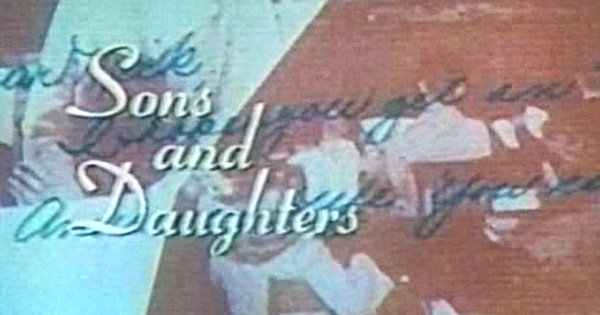
CBS aired just nine episodes of this “continuing love story” during the 1974-1975 season. Gary Frank and Glynnis O’Connor starred as high school students falling in love in the mid-1950s. Critics felt the show had potential but viewers never tuned in.
Young Love in the 1950s
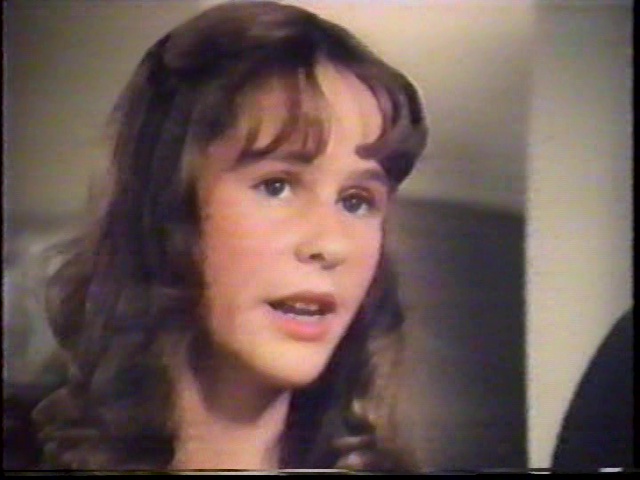
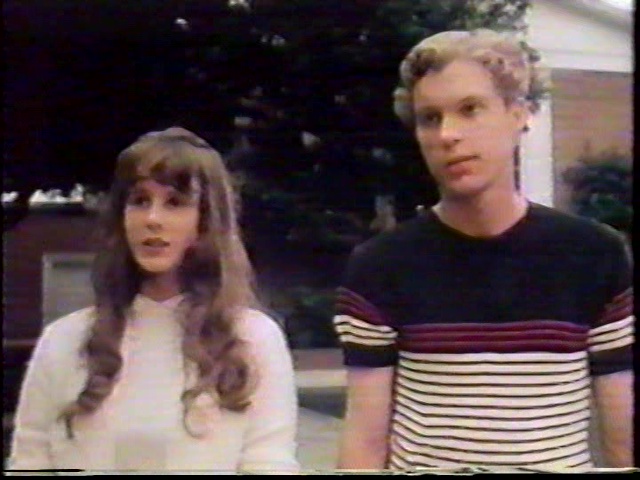
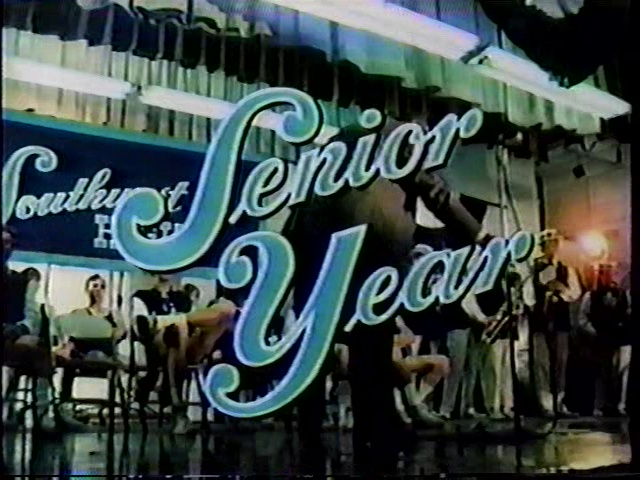
CBS had 26 pilots in contention for the 1974-1975 television season, according to a March 1974 list published in Broadcasting, fewer than ABC or NBC. Among them were several 90-minute telefilms, including Manhunter, Dr. Max, and The Family Kovac. There was also a telefilm from Universal Productions called Senior Year. [1]. Set in the mid-1950s, it starred Gary Frank and Glynnis O’Connor as high school students Jeff Reed and Anita Cramer.
The two attended Southwest Senior High School in an unnamed town in an unidentified state [2]. Jeff was relatively popular, played baseball, and had dated a number of girls. He lived with his parents Lucille and Paul (played by Jay W. MacIntosh and Dana Elcar) and his younger brother Danny (played by Michael Morgan.) Anita had only recently moved to town with her parents Ruth and Walter (played by Jan Shutan and John S. Ragin).
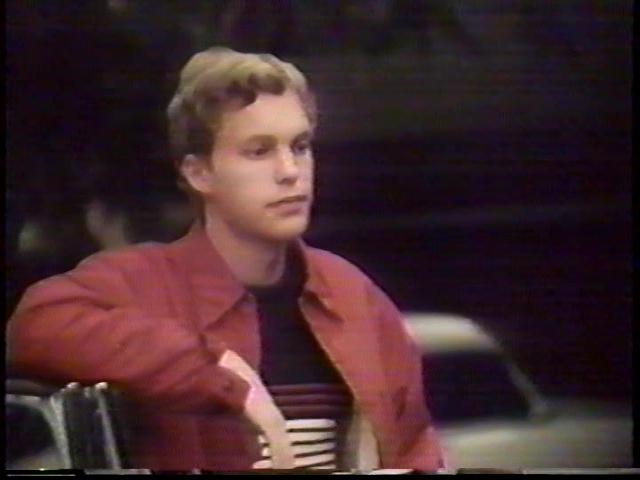 Gary Frank as Jeff Reed
Copyright 1974 Universal City Studios, Inc.
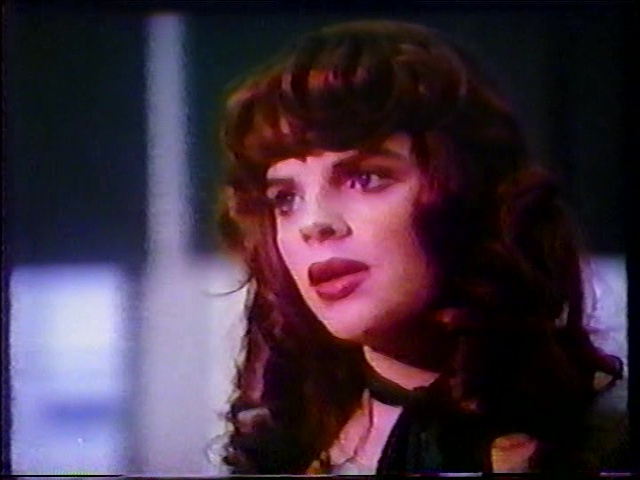
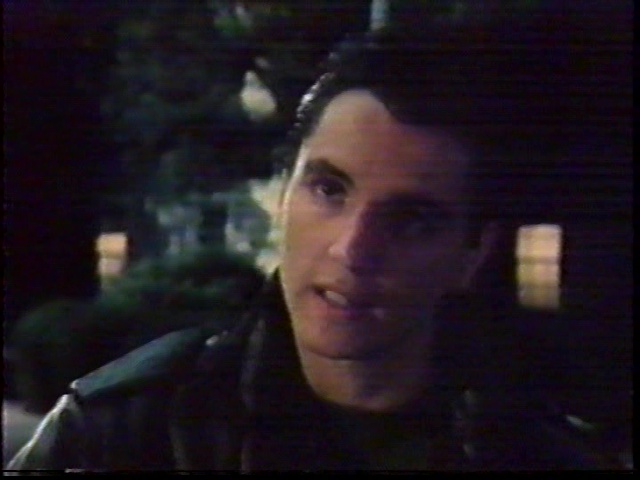
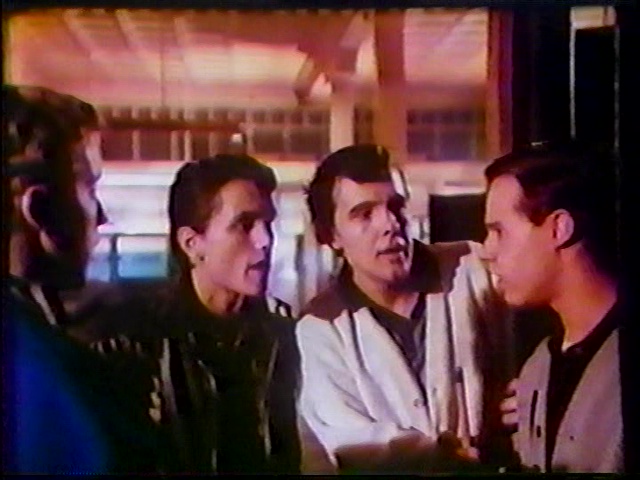
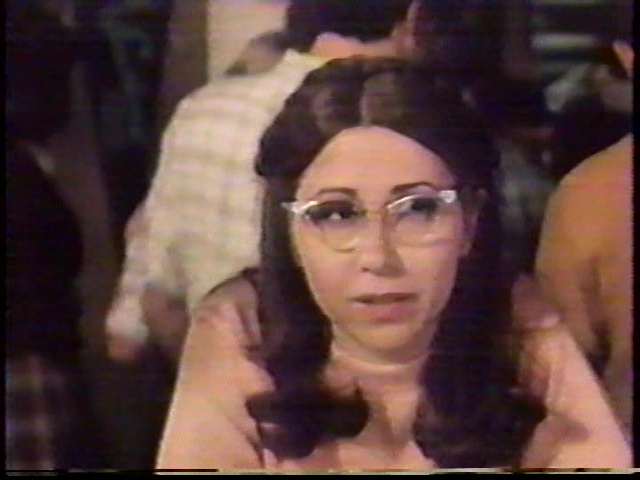
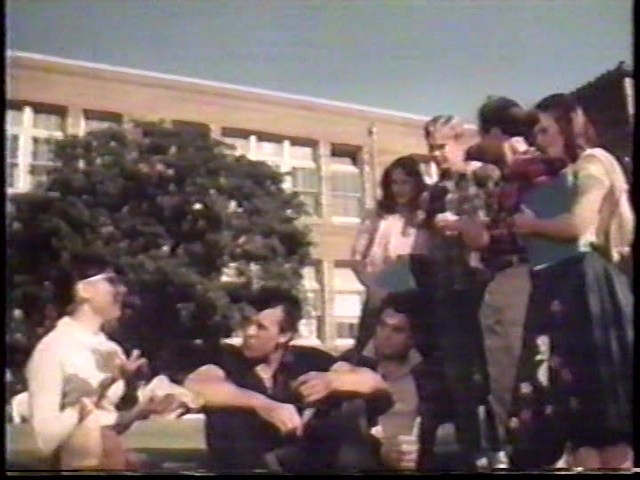
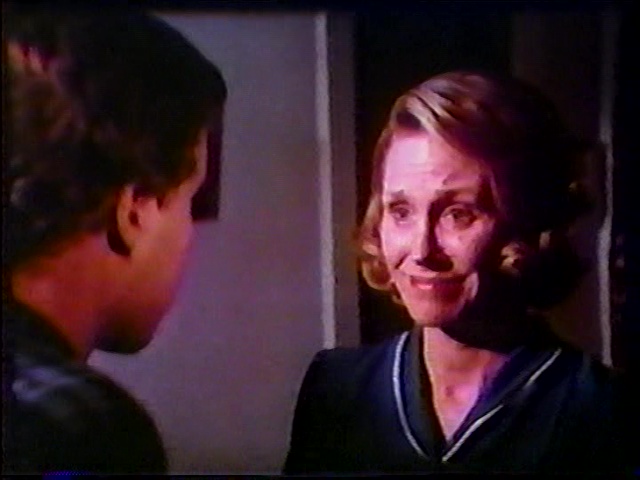
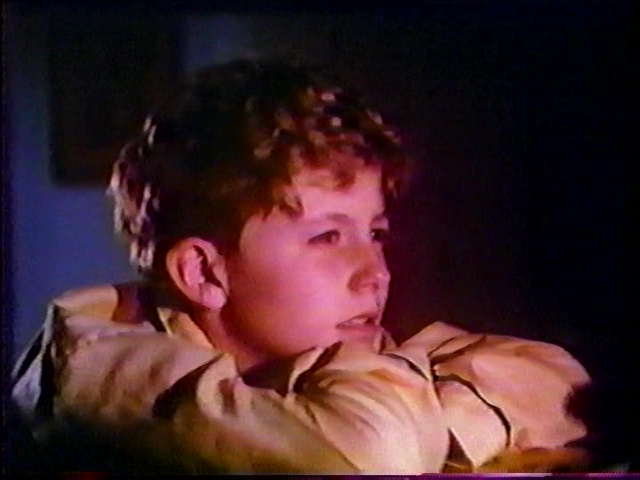
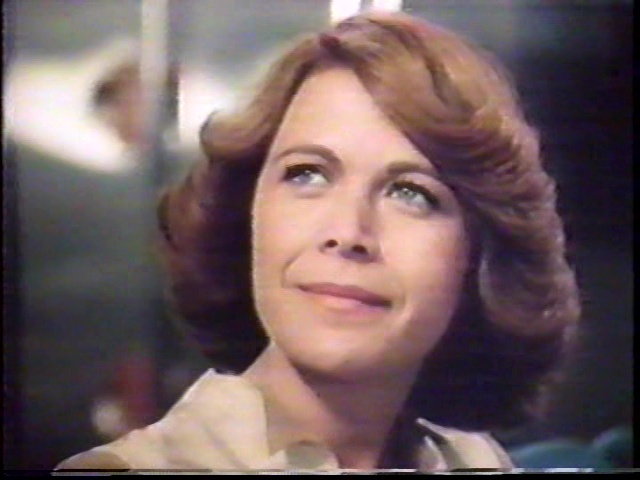
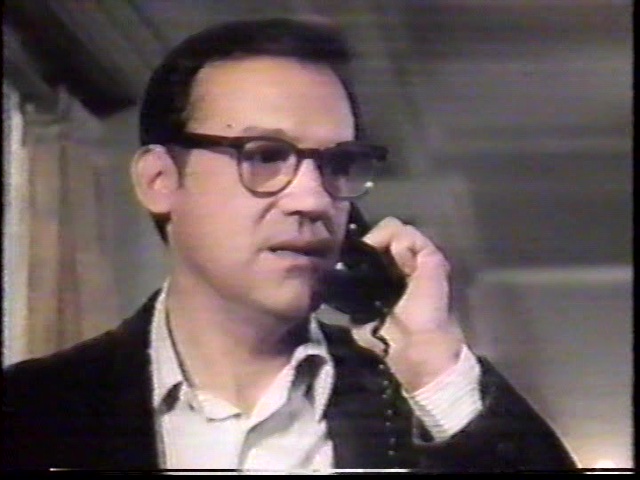
Jeff’s best friend was Stanley “Stash” Melnyk (played by Scott Colomby), a tough guy who liked to wear a leather jacket, copied homework from anyone and everyone, and had a strained relationship with his father. Another good friend was the smart but insecure Murray “Moose” Kerner (played by Barry Livingston), who was always awkward around girls. Rounding out the group was the straight-laced Charlie Riddel (played by Lionel Johnston).
CBS aired Senior Year from 9-10:30PM ET on Friday, March 22nd, 1974. Jeff and Anita have their first date but their budding relationship is strained when Anita’s parents split up because of her mother’s affair and Jeff’s father dies suddenly of a heart attack. While Jeff tries to take on more responsibility at home, Anita struggles with her feelings.
Critics made comparisons to the film American Graffiti and the recently-introduced ABC sitcom Happy Days. In a review for The Boston Globe, Percy Shain praised the stars and little else:
Will they ever stop making spinoffs of “American Graffiti?”
Still another nostalgic look at the mid-’50’s was afforded in “Senior Year,” which started off as a typical teenage lark, but quickly turned serious as the boy lost his father by heart attack and the girl suffered the trauma of a parental breakup.
The clean-scrubbed kids, Gary Frank and Glynnis O’Connor, set up nice vibrations. But the relationships in general were unnatural and forced, the soap opera overtones seemed out of place, and the story never lifted into reality. [3].
Senior Year was produced by David Levinson, written by M. Charles Cohen, and directed by Richard Donner.
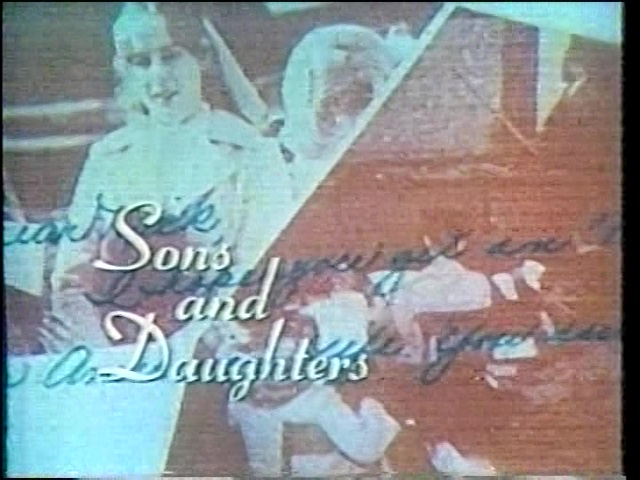
Senior Year Becomes Sons and Daughters
When CBS announced its 1974-1975 schedule in April 1974, the network gave Senior Year the 8-9PM ET time slot on Wednesday evenings, replacing The Sonny and Cher Comedy Hour [4]. All three networks hoped to attract viewers with family-friendly programming similiar to The Waltons or Happy Days. [5].
The New York Times gave Senior Year as an example of a new show aimed at what an unamed network president called “the traditional wholesome values of America” [6]. The New Land on ABC and Little House on the Prairie on NBC were other examples. “The expected rash of Waltons-type family dramas failed to materialize,” countered Broadcasting in a review of all three network schedules for 1974-1975, with three on NBC and one each on ABC and CBS [7].
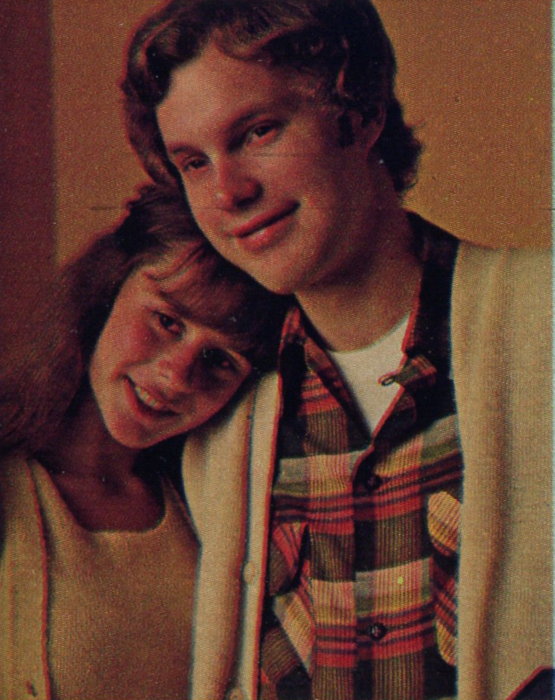
Copyright 1974 TV Guide/Universal City Studios, Inc. [1]
Producer David Levinson had approached NBC with the concept for Senior Year in 1971, pre-dating the debut of The Waltons on CBS in September 1972. When NBC passed on his idea for an eight-part miniseries, he went to Fred Silverman at CBS, who felt a two-hour telefilm was more appropriate [8]. According to Gary Frank, NBC turned it down because “it didn’t have the audience ‘insurance’ of action, like train wrecks and chases, to carry it through” [9].
By July, the title of the show had changed from Senior Year to Sons and Daughters [10]. “We didn’t want to be seniors for the rest of the series, if it catches on,” said Glynnis O’Connor, “so the name was changed” [11].
“I don’t want to end up like ‘Room 222’ with a bunch of 30-year-old sophomores,” David Levinson explained. “Three years from now, our kids will be different. Not like ‘Marcus Welby’ where they’re still operating on patients the same as seven years ago [12].
A New Kind of Television
“Sons and Daughters,” a new series blending drama and nostalgia and focusing on a pair of 1950s high-school sweethearts — Jeff Reed and Anita Crammer — will have its premiere on Wednesday, Sept 11 (8:00 – 9:00 PM, EDT) on the CBS Television Network. The series is nighttime television’s first continuing love story.
CBS Press Release, August 1974 [13]
Sons and Daughters had the look of a soap opera, Levinson admitted. “But the only way to protect against prime-time soap opera is very good writing,” he declared. “The only difference between soap and drama is in the writing” [14].
Levinson preferred to think of Sons and Daughters as “heavy drama, very emotional, in the context of the relationships we have set up, a death in his family, a divorce in hers. If it’s derivative of anything,” he told The Boston Globe‘s Percy Shain, “it would be ‘Red Sky at Morning,’ not ‘American Graffiti,’ and certainly not ‘Happy Days,’ which is a piece of fluff [15].
Critics referred to Sons and Daughters as a primetime soap, a nighttime soap, a continuing medlodrama, or simply semi-serialized. There were jokes referring to the show as a teenage version of Peyton Place. “Like a soap opera,” Jerry Buck of the Associated Press wrote in September 1974, “the story carries over from one episode to another. What is only an incident in one show may be blown up into a full episode a few weeks later” [16].
Levinson, who won an Emmy Award in 1971 for producing The Bold Ones: The Senator, bristled at the suggestion his latest TV show was “a teen-age ‘Peyton Place'”:
This is the point where I may get up and walk away. I’m amazed — no, not amazed, offended — at the number of knocks this show has gotten before it even went on the air.
Where is it written you have to keep on doing the same thing? I did “The Senator.” I did “The Bold Ones.”
What I’m trying to do, what interested me, was the chance to do a drama that wasn’t life and death. We’re trying to do simple emotional drama.
People keep asking me what I’m doing on a show like this. I may fall on my butt. But I’d sure as hell rather be doing this than another cop show. [17]
Sons and Daughters was the most challenging TV show he had worked on, Levinson insisted. “You haven’t got a lot of normal things to fall back on that you have in other series. I don’t have any life and death situations. You can’t have someone go into a coma or have someone stalking around trying to kill one of the teen-agers” [18].
(Ultimately, an episode of Sons and Daughters did end up featuring a character in a coma.)
The 1950s Weren’t All Happy Days
Comparisons between Sons and Daughters and Happy Days were perhaps unfair, considering the ABC show was a comedy, but also inevitable due to the 1950s setting. “It’s the flip side of ‘Happy Days,’ Levinson insisted. “That show says it was fun being a teenager in the 1950s. I was 16 years old then and it wasn’t fun. We’re trying to reflect that” [19].
“The atmosphere of the ’50s is not as important as the problems of the people,” said Gary Frank. “Quite basically, the show deals with growth — maturity — versus sophistication. It isn’t to be a Time-Life parade of the 1950s. Twenty years ago the scope of a teenager’s horizon wasn’t as broad as today, so we’ll concentrate on their growth as persons” [20]. Levinson agreed the show wasn’t just about nostalgia. “It’s there, in the background, but if anybody wants to hear the songs of the ’50s, he can go to a record store” [21].
Senior Year featured vintage cars and clothing and references to 1950s pop culture. Songs like “Shake, Rattle and Roll” by Bill Halley, “Peggy Sue” by Buddy Holly, and “Chantilly Lace” by the Big Bopper. A character mentiones The $64,000 Question. Another watches See It Now. A movie theater seen in the background of several scenes is showing the film The Seven Year Itch, released in 1955.
The pilot telefilm also dealt with sex. Jeff and Anita’s first date includes a drive to Inspiration Point where everyone from school goes to make out and more. A subplot saw Moose dating Evie Martinson (played by Debralee Scott), a girl with a bad reputation.
Sons and Daughters would tackle the subject as openly as possible within the restrictive environment of network television. “I recall the ’50s as a period with a great deal of talk about sex and little practice,” Levinson explained. “Of course, the CBS censors believe kids really were brought by the stork. It was a horrible period for kids. If a girl wanted to hold onto a guy, she was afraid to hold out. But if she said, ‘Go ahead,’ he was scared and didn’t know what to do. We’ll get into sex, but we won’t go to war weekly with the CBS censors” [22].
Would the same viewers who laughed at Happy Days on ABC also enjoy the drama and emotion of Sons and Daughters?
Critics See Potential
According to an article in the May 27th issue of Broadcasting, advertising agency media executives considered Sons and Daughters (at that point still called Senior Year) a likely winner for CBS. Why? As Werner Michel, vice president and director of broadcast operations at ad agency SSC&B explained, the show “blends a mixture of family drama and comedy that came off quite well in the pilot. Besides, it’s steeped in the currently popular vein of nostalgia for the fifties” [23].
CBS rebroadcast Senior Year on Thursday, August 22nd, 1974. Sons and Daughters debuted three weeks later on Wednesday, September 11th. Reviews of the series premiere were mixed but many critics felt the show had potential.
“What takes ‘Sons and Daughters’ out of the realm of ABC’s ‘Happy Days’,” explained United Press International‘s Frank S. Swertlow, “is that this program focuses on the human element, rather than on the props of the 1950s — the songs, the cars, and the outlandish dress and dialogue.” Although he criticized moments of “schlock theater” and “some brushes of the all-wise parent of ‘Father Knows Best’,” Swertlow ultimately felt the premiere was “so good at points that [it] escapes the ’50s and could have taken place in any era” [24].
The Toledo Blade‘s Norman Dresser called the premiere “somewhat disappointing” with a thin plot stretched to fill an hour [25]. Still, he thought Sons and Daughters showed some promise:
This is because, despite some very soap-operish interludes, the series boasts of two attractive and appealing young leads, Gary Frank and Glynnis O’Connor, and a competent supporting cast. Although the story gets pretty soppy and soapy at times, there are a few genuinely touching moments.
[…]
The script alternated between being preposterous and perceptive, but the tortures of teen-age love were occasionally dealt with realistically. An added plus was the honest depiction of the tensions created between the girl and her divorced parents, who still feel strong bonds between them. Chalk up “Sons and Daughter” as not quite a winner, but capable of a run in the stretch. [26]
Percy Shain of The Boston Globe called the premiere “gentle, heart-tugging soap opera, not the hard kind featured in the daylight hours.” He also praised Frank and O’Connor as “well suited in the key roles” [27].
In his review for The New York Times, John J. O’Connor compared the show to both American Graffiti and Peyton Place. The premiere featured wholesome, innocent characters facing the ugliness of the real world,” he explained. O’Connor continued:
The mix is sticky, and in this first episode, with its labored introduction of characters and setting, it becomes downright glutinous. But the cast and production are generally attractive, and the series should give younger viewers a reasonable alternative to those interminable car chases on the action-adventure series” [28].
The Chicago Tribune‘s Gary Deeb also felt the debut episode featured too much soap and a thin storyline but believed the show “holds great promise as a quasi-novelistic venture and has the definite potential to grow into another phenomenon like The Waltons” [29]. Morton Moss of the Los Angeles Herald-Examiner called the series premiere a “dignified, sound and sincerely felt narrative” [30].
There were also a few negative reviews. “Don’t watch this one after eating anything not likely to stay down,” warned Terrence O’Flaherty of the San Francisco Chronicle [31]. The Philadelphia Inquirer‘s Harry Harris called the premiere “callow” and lamented how “everything ends happily–for everyone but discriminating viewers” [32].
A Very Quick Cancellation
Airing from 8-9PM ET on Wednesday evenings, Sons and Daughters competed with NBC’s new drama Little House on the Prairie and ABC’s new sitcom That’s My Mama (plus the first 30 minutes of the ABC Wednesday Movie of the Week). Cannon followed Sons and Daughters at 9PM with another new drama, The Manhunter, rounding out the CBS Wednesday lineup at 10PM.
Broadcasting predicted Cannon would “prove a strong enough anchor for CBS on Wednesday for the two shows that will be adjacent to it” [33]. ABC’s Wednesday lineup, the publication suggested, would likely suffer if viewers reacted to new sitcom That’s My Mama the same way critics did. As for NBC, if Little House on the Prairie failed to attract a decent audience, the network’s entire night would collapse.
NBC’s gamble on Little House on the Prairie paid off. National Nielsen ratings for the first week of the 1974-1975 season saw the new drama in ninth place (out of 59 shows), with That’s My Mama ranked 39th and Sons and Daughters 47th [34, 35]. The following week Little House on the Prairie fell to 18th (out of 61 shows) while Sons and Daughters slipped to 52nd; bucking the trend, That’s My Mama moved up to 35th [36].
The premiere episode of Sons and Daughters averaged a 16.2/26 Nielsen rating/share on September 11th while the second episode sank to a 14.3/25 rating/share on September 18th. Its average 25.5 audience share placed it far behind the 38.0 share for NBC’s Little House on the Prairie as well as the 31.5 share for ABC’s That’s My Mama. (For the record, The ABC Wednesday Movie of the Week averaged a 32.5 audience share from 8:30-10PM ET during the first two weeks of the season) [37].
By the end of September, CBS was already talking about replacing Sons and Daughters. It was one of two weak spots the network had to deal with (the other was the under-performing Planet of the Apes on Fridays). The likely replacement for Sons and Daughters? Tony Orlando and Dawn, a variety series that had debuted over the summer [38].
On October 7th, Broadcasting reported that CBS would most likely cancel three new shows: Sons and Daughters, Planet of the Apes, and Apple’s Way. The previous week, CBS had halted production on Sons and Daughters after the completion of the ninth episode [39]. Five days later, The New York Times revealed Tony Orland and Dawn would replace Sons and Daughters beginning December 4th [40].
CBS officially cancelled Sons and Daughters on October 16th, with the ninth and final episode scheduled to air November 6th. The network planned to fill the next three weeks with a pair of specials (featuring Sandy Duncan and The Osmond Brothers) and a repeat airing of a 1973 made-for-TV movie (The Thanksgiving Treasure, starring Jason Robards) before Tony Orlando and Dawn took over the time slot on December 4th [41].
Commenting on the cancellation in late October, Jan Shutan revealed how the cast had tried to stay optimistic about the show’s chances by remembering how long it took Bonanza to become a hit. But the atmosphere was nevertheless pretty negative as production wound down. “CBS wanted a kids show and from what I hear the network still likes the format,” she explained. Reportedly, the network had hoped to draw both younger and older viewers but wasn’t getting the older ones, who were watching Little House on the Prairie instead [42].
The Episodes
The entire cast of Senior Year returned for Sons and Daughters. The weekly series also added one new character, Anita’s best friend Mary Anne Coburn (played by Laura Siegel). That made for a total of ten regular characters. Despite having announced she was moving to Omaha at the end of the pilot, Anita’s mother Ruth remained in town and got a job at a bookstore. Christopher Stafford Nelson guest starred in a handful of episodes as underclassman Cody, a role he had also played in Senior Year.
The series featured continuing story lines involving all of its characters, with a heavy emphasis on the relationship between Jeff and Anita. Other story lines included Anita’s feelings about her mother and the Reeds learning to live without their father. The characters regularly hung out at a drive-in called Hogies and a diner called Kelso’s.
The first episode of Sons and Daughters is set roughly two months after the events of the pilot telefilm. Jeff wants to buy an expensive necklace to give Anita for their one-month anniversary but the gift doesn’t get the reception he expected.
Other episodes: Anita gets a bad reputation after Mary Anne’s mother sees her and Jeff standing outside a motel; Lucille has trouble accepting Anita’s place in Jeff’s life so she tries to get a job to feel useful; a budding romance between Moose and Evie faces obstacles from their parents; Jeff’s former girlfriend is pregnant and Jeff tries to do the right thing; Anita meets her mother’s new lover; and Anita and Jeff consider having premarital sex
Epilogue
In an August 1974 article, Gary Frank referred to 24 story outlines, suggesting basic plots for the entire first season of Sons and Daughters had been developed [43]. What did the writers have in store for Jeff and Anita and their families and friends? During its brief run, several characters were barely developed, particularly Danny, Mary Anne, and Charlie.More importantly, how would the series have handled most of the main characters–all seniors in high school–graduating and moving on with their lives? In one episode, Jeff talks about his plan to attend college while Anita admits she isn’t sure what she wants to do after graduation. Presumably, by the end of the first season Jeff and Anita and their friends would’ve graduated from Southwest High. If so, perhaps the second season would begin with Jeff starting his freshman year of college at a school nearby so he could stay close to his family and Anita.
Following its cancellation, Universal Television edited the final four episodes of Sons and Daughters into a pair of telefilms: Love Is Not Forever featured “The Rejection” and “The Tryst” while Teenage Lovers consisted of “The Pregnancy” and “The Invitation.” Along with the pilot telefilm Senior Year, the three made-for-TV movies were syndicated to local stations and cable.
Exterior scenes of fictional Southwest High were filmed at John Burroughs Junior High School in Los Angeles. Other exteriors were filmed at Universal Studios. Interior sets were constructed at the General Service Studios sound stages in Hollywood [44].
In November 1974 Ballantine Books published a novelization of Senior Year, written by William Johnston, under the title Sons and Daughters.
Works Cited:
2 Although many sources indicate Senior Year and Sons and Daughters were set in Stockton, California, no mention was made of the setting in either the pilot telefilm nor the series. In fact, the series appears to have gone out of its way to avoid identifying where it took place.
3 Shain, Percy. “Pilot season at flood tide but choices at low ebb.” Boston Globe. 25 Mar. 1974: 39.
4 Shain, Percy. “NBC kills 14 shows, CBS cancels 7.” Boston Globe. 20 Apr. 1974: 19.
5 Brown, Les. “TV Programming for Fall Cuts Down on Violence.” New York Times. 20 Apr. 1974: 65.
6 Brown, Les. “Fall TV Schedule: Old Formulas, New Time Slots.” New York Times. 27 Apr. 1974: 63.
7 “Housecleaning in prime time as networks issue line-ups.” Broadcasting. 29 Apr. 1974: 16.
8 Shain, Percy. “Acting tyros series stars.” Boston Globe. 3 Nov. 1974: A5.
9 Benbow, Charles. “Television’s time machine at work again in two series.” St. Petersburg Times. 22 Aug. 1974: 3-D.
10 Shain, Percy. “Court ruling leaves TV schedules in shambles.” Boston Globe. 9 Jul. 1974: 43.
11 Benbow, Charles. “Television’s time machine at work again in two series.”
12 Shull, Richard. “This Nostalgia Show Will Change as It Goes Along.” Lakeland Ledger [Lakeland, FL]. Television sec. 15 Sep. 1974: 22.
13 [Press Release]. “Young Love Scorned in Nostalgic Drama of Growing Up in the ’50s on Premiere of New-Type Series, ‘Sons and Daughters,’ on Sept. 11.” CBS Television Network Press Information. 19 Aug. 1974.
14 Shull, Richard. “This Nostalgia Show Will Change as It Goes Along.”
15 Shain, Percy. “Acting tyros series stars.”
16 Buck, Jerry. “‘Sons and Daughters’ is Flip Side of ‘Happy Days’.” Lewiston Daily Sun [Lewiston, ME]. Associated Press. 21 Sep. 1974: 23.
17 Ibid.
18 Ibid.
19 Ibid.
20 Benbow, Charles. “Television’s time machine at work again in two series.”
21 Buck, Jerry. “‘Sons and Daughters’ is Flip Side of ‘Happy Days’.”
22 Shull, Richard. “This Nostalgia Show Will Change as It Goes Along.”
23 “Agencies lay heavy odds on CBS’s fall line-up, but see tight race for second place.”Broadcasting. 27 May 1974: 18-19.
24 Swertlow, Frank S. “Two nostalgia entries — one good, one weak.” Tonawanda News [Tonawanda, NY]. United Press International. 10 Sep. 1971: 25.
25 Dersser, Norman. “Preview of 3 New Wednesday Shows.” Toledo Blade. 11 Sep. 1974: P-6.
26 Ibid.
27 Shain, Percy. “What’s new on the screen? life in the 1870s and 1950s.” Boston Globe. 11 Sep. 1974: 41.
28 O’Connor, John J. “TV: 1870, 1950 or 1974? New Shows Up on the Times.” New York Times. 11 Sep. 1974: 90.
29 Excerpts from this review were printed in the September 16th, 1974 issue of Broadcasting (“Prime-time viewing: the critics’ choices,” Page 18).
30 Ibid.
31 Ibid.
32 Ibid.
33 “No recession at networks: sold out in new season at high rates.” Broadcasting. 16 Sep. 1974: 17.
34 “Rhoda Debut Tops National Nielsens.” Los Angeles Times. 19 Sep. 1974: H22.
35 Sharbutt, Jay. “‘Rhoda tops week’s new shows.” Herald Statesman [Yonkers, NY]. Associated Press. 19 Sep. 1974: 26.
36 Shain, Percy. “Hope show a bit tired; ratings show ABC slide.” Boston Globe. 26 Sep. 1974: 67.
37 “Trouble enough to go around as networks assess results of first two rating weeks.” Broadcasting. 30 Sep. 1974: 19; 20.
38 Ibid., 18.
39 “Nine newcomers, two holdovers head for plank at networks.” Broadcasting. 7 Oct. 1974: 16.
40 Brown, Les. “Variety Shows to Make Winter Comeback on TV.” New York Times. 12 Oct. 1974: 64.
41 Shain, Percy. “CBS cancels Sons, Daughters.” Boston Globe. 17 Oct. 1974: 52.
42 Witbeck, Charles. “Jan Shutan Gave It Whirl But…” Leader-Herald [Gloversville-Johnstown, NY]. King Features Syndicate. 30 Oct. 1974: 9.
43 Benbow, Charles. “Television’s time machine at work again in two series.”
44 “‘Sons, Daughters’ Returns to the 1950s.” Florence Times-Tri Cities Daily. 6 Sep. 1974: 24.
Image Credits:
Originally Published October 24th, 2004
Last Updated October 20th, 2019


Glad to have come across this site regarding Sons & Daughters. I remember it well, having watched every episode when they originally aired. I was very sorry to see it disappear, as quickly as it did, from the television schedule. I have always thought it was a mistake… that it would have done very well if it had been given more time. It will always be one of my all-time favorite series. I’m sure there are many others like myself, who enjoyed and remember “Sons & Daughters”.
Regarding the series “Sons and Daughters”, my husband and I both enjoyed the series and looked forward to watching it each week. We were afraid that it might be canceled, and we often commented that anyone seeing the first episode “The Locket” might have switched to another program. “The Locket” was not as dynamic as the rest of the episodes. In fact, it was kind of boring. Levinson made a mistake when he made that the first episode. He lost his audience. After watching the first show, even we questioned whether we would watch again, but we gave it a second chance. Glynnis O’Connor and Gary Frank did a great job acting in “Sons and Daughters.” We started watching “Family” because Gary Frank was in it. I would buy the series if it came out on DVD.
Penelope, thank you for your comments about Sons and Daughters (and to Don, who posted last year). This show is one of my personal favorites and I very much wish the few episodes that were made were available on DVD. It seems unlikely, though, but we can hope.
Thank you so very much for this webpage as a tribute for “Sons and Daughters.” I was only 9 when the show debuted (as such, I couldn’t have hoped to understand the discussions of pre-marital sex or the ramifications of repressive 1950s sexual mores, et al). Even so, I remember that I liked the show because I had a tremendous affinity for the 1950s as a child, and “Sons and Daughters” treated the 1950s seriously where “Happy Days” didn’t. I remember VERY well the episode when Jeff’s mother dropped Danny off at the barbershop and went to run some errands–and then she was struck by a car driven by one of Jeff’s schoolmates! The camera focused on Danny’s serious face–that’s all you could see as he got out of the barber’s chair, still wearing the barber’s sheet–and found his mother lying on the pavement outside with a crowd around her. I also recall another episode when “Evie” went on a date and because she wouldn’t go “all the way,” her date made her walk home. Evie’s Dad then threw her out of the house for coming home late (as I understand it now, he didn’t want his daughter to be “promiscuous”).
I always think back to “Sons and Daughters” as being one of the best sitcoms on TV in the early 1970’s. I thought that the stories were relevant to teenage problems in the 1950’s. I loved the characters and the actors, especially Gary Frank and Glynnis O’Connor. I couldn’t wait until the show came on I loved it so much. When it suddenly ended I was “shocked” and very disappointed. It was not a silly comedy like “Happy Days”…it was real and believable. I would definitely buy the whole nine episodes if it were available on DVD.
I also loved this show. I was a senior in high school and couldn’t wait for Wednesday night to watch. It really covered some relevant issues for the 50’s as well at the 70’s. I would love to see them again.
I was 14 years old and staying up late to complete an 8th grade science project when I saw the TV movie “Senior Year.” The affiliate in Houston had delayed it to a late night time slot for some reason. It was one of the first times I was drawn to an “adult-type” show. I thought Gary Frank was cool and Glynnis O’Connor was sweet and pretty. When the series came on in September, I watched every episode and even recall making audiotapes with my casette recorder. I loved the theme music and to this very day, I can recall it and have it running in my head. P.S. I always preferred “The Waltons” to “Little House on the Prairie.”
I came across this site while doing a search to see if Senior Year was available on DVD. The movie was filmed in Stockton Ca and I was an extra and stand in for Glynnis O’Connor during filming. A friend and I heard about the casting for extras; at that time we were so fascinated with the 50’s and dressed that way all the time even attending school in the attire. So needless to say we were thrilled when we went to the audition, dressed in our poodle skirts and saddle oxfords and was chosen for the movie. This was so much fun and several other friends from the high school drama club I was in also were chosen as extras. Those of us that were 18 or older got to do the filming that took place after 10pm and continued until the next morning. We had more fun than you could imagine, got to see first hand how movies were made and hang out with the cast. I have such fond memories of this movie that became the pilot for Sons and Daughters.
I was 13 when I saw the pilot for this wonderful show. It had a gentleness to it that most shows lack today. I also remember the theme song and occasionally hear it in my head. Glynnis O’Connor periodically pops on TV these days, most recently on episodes of “Law & Order”. Thank you for this tribute page!
I remember Debralee Scott better as Mary Hartman’s sister, and for her frequent appearances on “Match Game.”
I loved the show Sons and Daughters. I was in high school when the showed was aired and watched it every week. I would love to see it again. I would definitely buy it on DVD! That was not mindless television!!!
I remember the show and was very sorry to see it taken off the air. Show cover real world issues and made you think.
Hadn’t heard that title music for more than forty years. Happy Days premiered just a few months before the S&D pilot aired, and was a much gentler light satire of fifties mores than the cartoonish Fonzie-centered show it would later beciome. Sons and Daughters made a great companion piece to early Happy Days, exploring the same era via drama intermixed with some comedy. I think it would fare better today, without constant comparison to other shows, hectic seventies writing and production schedules, a meddlesome network, and a need to produce quick ratings. I still find appeal in the idea of a low-key and perhaps sentimental drama, exploring it’s characters and both the differences and similarities between adolescence and family life then and now.
This show is the reason I hated Happy Days…..Sons and Daughters was a drama that showed life in the 50s. Morality, very serious issues and fine acting. Happy Days was a moronic sit-com that had 70s hairstyles and was truely an embarresment. The fonz going ayyyyyyy was almost enough to make me hate my name! Really wish the series was somehow available for current viewing.
That is funny what you say about the 1970s hairstyles on “Happy Days.” I liked the show during its first few seasons, as did so many other kids in school. The first season, which was not filmed in front of a live audience, actually was done with an attempt to at least look like the 1950s. As the years went on the production staff didn’t seem to care if it looked authentic at all. It really “jumped the shark” in that respect when there was a scene at Arnold’s Diner. I think the teenagers were decorating for a celebration of some kind. Then a teenage girl ran in with some news. She was wearing elephant bell jeans, and it was supposed to be taking place in 1958 or so. Even at the time, when I must have been about 13 or 14 years old, I just thought that they don’t even care anymore about making the show look like the period it took place.
I remember this show barely, I believe that I saw the pilot right after the series was taken off the air. I thought that it was very worthwhile and it was a shame that it simply became one of those potentials axed before it could get a start. Such is the ways of television.
I also loved this program, I was in 8th grade when it was on, and it dealt with issues real to my age group. Thank you for posting such a great entry on the show.
I remember watching this show very well. I really liked it. Glynnis O’Connor was (and still is) cute. I identified with the Jeff character. I was 13 at this time. I liked the more realistic look at the 1950s. Thanks for remembering the show on this site.
Remember watching it for the authentic portrayal of the ’50s. Was disappointed by it’s cancellation. Thanks for the recalling.
Does anyone recall Glynnis O’Connor playing “Moonlight Sonata” on the piano in one episode of this series?
Don, that was in the second episode.
Thanks RGJ, I thought I remembered that but couldn’t find any evidence of it on the net. I’m going to check it out.
Does anyone know if these episodes are available anywhere? A search of the Internet turned up very little.
This is a fantastic overview of “Sons and Daughters.” Thank you for the hard work you put into it. I remember this show. I was in seventh grade at the time, and watched it every week. I was extremely disappointed when it was canceled. I also bought the novelization of “Senior Year” by William Johnston. In fact, I may still have it packed away with some other books.
I remember being at my brother’s little league practice on the evening it premiered. The practice was late afternoon, before dinnertime. I can still remember a couple of the mothers talking about the new shows that were premiering that night, and how there were three on at the same time. (Although I see from this article that “That’s My Mama” actually premiered a week earlier than the other two.) One of the women predicted that “That’s My Mama” would be canceled after 13 weeks. Well, her prediction was wrong, although “That’s My Mama” was not a big hit, and only lasted about halfway through a second season. It seemed such a shame that “Sons and Daughters” was not given more time to develop. However, I recall that during that period of time shows were canceled much faster than they are now. I think it got even worse in the late-1970s and early-1980s, when so many seemed to come-and-go in the blink of an eye.
This show might have lasted longer if it had been an Aaron Spelling production. Historically, other than “ROOM 222”, there have been very few high school programmes that lasted longer than a season, if even that long. Nothing but “90210” has proven to truly have any endurance.
I think the obvious problem with the success of “SONS & DAUGHTERS” is that it was scheduled against the monster that was “LITTLE HOUSE ON THE PRAIRIE.” It had a built-in audience of readers of the series of books that gave it an unbeatable edge over anything it was up against.
It is notable that while veteran shows on CBS that year were once again very solid, they had a grand total of only TWO shows that were a hit that fall…”RHODA” & “GOOD TIMES.” So any programming decisions were suspect. If they had moved “SONS & DAUGHTERS” to Friday night, it surely would have done better than “PLANET OF THE APES.” With such a poor showing, it is no surprise that the chief programmer for CBS was gone the next season….straight to ABC!
I am usually more respectful of critics, but in these cases, I have to say that that most of those whom you quoted were a collection of hacks who would not know good television if it fell on them! The modern-day continuing dramas would surely have driven them to a conniption followed by a stroke. They were very obvious in their prejudice against soap operas and apparently to embrace anything “soapy” would cause them to lose their street cred, as it were. One wonders how many of them threw their typewriters out the window after they watched “RICH MAN, POOR MAN”!
I have to admit that I was a bigger fan of “THAT’S MY MAMA”. I did watch the episode that Linda Purl guest-starred in and was struck by how more realistic the approach was than “HAPPY DAYS”. I thought it was on-par with other contemporary dramas like “MEDICAL CENTER” and “MARCUS WELBY, MD”. But it was just the wrong timeslot for anything so edgy. As mild as it seems now, there was a definite difference in subject matter that parents would by apt to let their children watch between a story about a pregnant 50’s teen and a prairie girl who tried to help another little girl who was being made fun of….which is what we were back to watching the next week.
At the time and forever-after, I have thought Glynnis O’Connor was just the cutest thing. But after revisiting the show with more mature eyes, I have to say that Jan Shutan actually gave her a run for her money! With her 50’s makeup, she looked like a cross between Carol Potter and Kate Capshaw. It is a mystery as to why this was her last regular job on TV.
Good Times premiered in February 1974, not September 1974. So, Rhoda was CBS’s biggest new hit TV series in the fall of 1974. Good Times in its’ 2nd season (1974-75) finished #7 in the Nielsen ratings behind Rhoda (finished #6). Good Times nearly killed Happy Days, ratings-wise. It funny because Fred Silverman scheduled Good Times to go up against Happy Days while he was at CBS. But when Mr. Silverman moved to ABC in 1975, he had to save Happy Days from possibly being canceled. Bit of irony, isn’t it.
I loved this show! I became a huge fan of Glynnis O’ Connor because of this show and the movie “Jeremy”. I was very fortunate to later meet Glynnis O’ Connor on location while she was filming a movie in the late 80’s. She was kind enough to have a quick chat with me and I had a picture taken with her.
I loved this show! I was 14 – 15 years old when it aired. I watched every episode and was saddened when the show was abruptly take off the air. They left me wondering what would happen to all these people…to Jeff and to Anita. The show must have made quite an impression on me as I remember always wanting to know how all of this came out – LOL. Quite a statement! It’s the only show in my mind that I remember so vividly being upset it was cancelled and the story discontinued. Too bad. I think given some time it would have really gathered an audience.
Hi Terri… I actually have some episodes of Sons & Daughters if you are interested… [email protected]
– Richard
I loved this show. I was 12 or 13 at the time. The characters were very real and believable and the acting and story lines well done. It was a kind of “coming of age” show for me. Even the opening credits and music I remember loving. Such a shame that the networks didn’t have more faith in it. I’ve searched for information on this show many times and was disappointed that l had found nothing, like it had never existed. Thank you for putting this site together. It was great to see the clips too.
Hi all….
I recently acquired all 9 episodes of “Sons And Daughters” and have put them in order on 5 DVDs. I am still looking for the movie pilot “Senior Year.” Feel free to contact me at [email protected]
Are you willing to make someone a copy ?
I know it’s been a while since your comment, but I am definitely sending you an email to see if you would be so kind to send a copy. It would be so great to see this show again!
Loved the pilot; was very Happy when it got picked up as a series.
Back then no VCR’s – but I do have all 9 Shows as well as Senior Year on Audio Tapes..
CBS never gave this a show a chance, and pretty much canceled it because it wasn’t Happy Days.
Wow! Any chance of you posting those Sons and Daughters episodes on YouTube?
I was just out of college when SONS AND DAUGHTERS premiered. It was clearly something special and certainly not the run of the mill TV series we were used to seeing. Gary Frank fortunately became a star (and an Emmy winner for his role in another TV series FAMILY) and Glynnis O’Connor went on to make the film ODE TO BILLY JOE and many TV guest appearances. I sure wish this was available either on DVD or even on You Tube. I remember it fondly and would love to see the episodes again.
Loved the pilot Senior Year when I saw it and was very Happy when it went to series; I think it would have survived if it had a 9PM slot.
Great Cast – CBS F@@ked up on this one.
Loved this show. I recall episodes with a nice blend of drama and observational comedy. Had a schoolboy crush on Glynnis O’Connor. The title music has never left my head. I wonder what could be done with a concept like this today, with less rushed production schedules.
I loved the show, and was very upset at CBS for not giving it a chance. They should’ve moved it to a more suitable night, where it wouldn’t be up against other good shows. If it were made today, it would get a longer period to develop, and be sandwiched between two proven shows to help it along…of course, they won’t make a show like that today, it doesn’t have enough sex in it…so we have to dream, and say “what if…”.
I truly enjoyed Sons and Daughters for the short time that it was on TV is there anywhere I can watch it now. I have been all over the Internet trying to find some footage for some episode but haven’t been successful. Can you please suggest where I can find it if it all possible thank you.
Sons and Daughters ranked 60th out of 84 shows that season with an average 15.2 rating.
http://www.thetvratingsguide.com/2020/02/1974-75-ratings-history.html
Sons and Daughters was cancelled due to low ratings, but truthfully was never given a fair chance to compete, not even completing one full season. It was a better show than given credit for. The fact that so many people remember it in a positive way prove that. No episodes seem to have been preserved, sadly.