
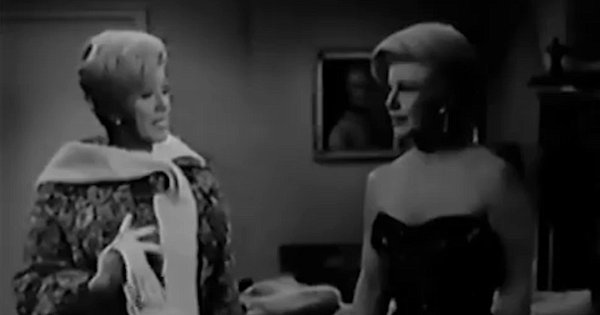
Read about 11 TV shows broadcast between 1956 and 1966 that featured unsold pilot episodes, including Sneak Preview, Vacation Playhouse, Summer Fun, Westinghouse Preview Theatre, and new Comedy Showcase.
Unsold Pilots on TV: 1956-1966 | 1967-1989
The Business Of Television
Broadcast television is a commercial industry. Money is put in and money is expected to come out. Starting in the early 1950s, when the networks solidified their dominance, the broadcast year has revolved around the traditional season running from September through March. The unveiling of new and returning shows kicks off at the end of summer. Underperforming programs are pulled in December or January and mid-season replacements debut. In March and April, shows wrap their current season or end for good and the summer repeat season begins.
Today, the TV season runs through May, which is when the networks reveal their new schedules to advertisers in lavish “upfront” presentations. In the past, however, the bulk of the decision making took place between February and April. In a sense, schedule building was a year-round project, with network executives always hard at work mulling changes and preparing their next fall schedules. The networks would always order far more pilots (or tests episodes) for potential weekly programs than they could ever hope to use.
These unsold pilots added up quickly. By August of 1951 there was already some $10 million worth of unsold pilots in existence, with dozens more being filmed each year [1]. Larry Wolters reported in May of 1957 that 170 pilots were being looked at by sponsors [2]. A July 1959 article in The New York Times stated that of the 250 pilot films produced during the 1958-1959 season only 10% were ever broadcast [3]. In December of 1964, it was reported that just 10-20% percent of pilots, which could cost up to $500,000 to produce, would be sold to a network [4].
Airing Unsold Pilots On Television
As early as 1954 there were those in the industry suggesting that some of these pilots could be packaged and presented on television. Walter Ames quoted screenwriter Frank Guber in June of 1954: “All you have to do is swipe an idea from Peter Potter and call the program Pilot Film Jury. Let panelists look at a portion of the films and air their opinions as to why the pilot flopped. I’m sure I can find at least 1500 half-hour films which should keep me in business for quite a few seasons” [5].
(Peter Potter hosted a television series called Juke Box Jury and later The Peter Potter Show on CBS from September of 1953 to March of 1954. Music was played and songs were rated by panels and the audience.)
In July of 1956 two summer replacement series premiered on the very same day at the very same time: ABC’s G.E. Originals and NBC’s Sneak Preview. They may have been the very first programs to consist solely of unsold pilots. Before long it was common for unsold pilots to be broadcast during the summer repeat season. It was a way for the networks to offer fresh programming during the summer and recoup some of their investment. Many of these programs showed half-hour sitcom pilots; a few alternated between hour-long dramas and a pair of comedies. Most were only broadcast during one summer.
The longest running unsold pilot program was Vacation Playhouse, which aired every summer from 1963 to 1967 on CBS. From 1960 to 1962, CBS broadcast The Comedy Spot during the summer as a replacement for The Red Skelton Show. Read about these and nine other unsold pilot programs aired between 1956 and 1966.
G.E. Summer Originals (ABC, 1956)
When The New York Times announced this series on June 8th, 1956, the paper wrote that “the problem of what to do with ‘pilot’ or sample films of projected television series that previously have failed to sell has been solved” [6]. The ten-week series was sponsored by the appliance and television receiver division of General Electric Company and premiered on Tuesday, July 3rd, 1956, running from 9-9:30PM. The first offering was called “It’s Sunny Again,” with Vivian Blaine as a singer looking for work and Jules Munchin as a smooth talking manager.
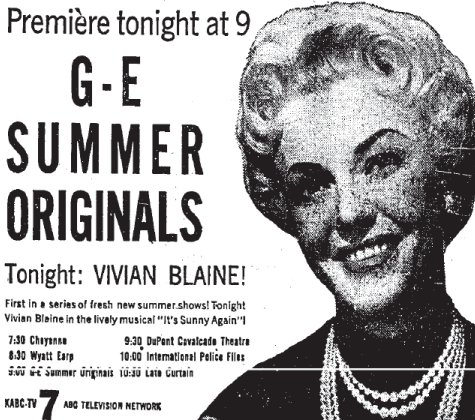
Copyright © The Los Angeles Times, 1956 [1]
Other installments included “Alias Mike Hercules,” starring Hugh Beaumont as a private detective working a kidnapping case; “The Green Parrot,” with Claude Daupin as a French agent charged with guarding a parrot that knows nuclear secrets; “The Great Lady,” starring Vera Miles as an actress who retires and opens a boarding house; and “The Jungle Trap” with Ronald Reagan as the leader of a safari who learns that one of the men under his charge is the judge who sentenced his brother to death. G.E. Summer Originals was last seen on September 11th, 1956.
Sneak Preview (NBC, 1956)
Nelson Case was host of this half-hour series that, like G.E. Summer Originals, ran from 9-9:30PM on Tuesdays and also premiered on July 3rd, 1956. The premiere episode, “Just Plain Folks,” starred Zsa Zsa Gabor and Cy Howard as a married couple in Hollywood. The following week, a story by Ray Bradbury was adapted by Mel Dinelli in “The Merry-Go-Round.” Said The Chicago Daily Tribune: “The story concerns a magic merry-go-round which can make its owner younger or older as it moves forward or backward. production, acting, settings and camerawork are all superlative. If you like thrillers, tonight’s play is your meat” [7].
Other pilots broadcast as part of Sneak Preview include “The Way Back,” with Pat O’Brien as a parole officer working with an ex-con; “Carolyn,” starring Celeste Holmes as an actress whose best friend dies and leaves her with three young children to take care of; “One Minute from Broadway” with Brian Aherne as a hotel manager who tries to help an aspiring actress. Sneak Preview ran for seven weeks; the final broadcast took place on August 14th, 1956.
Decision (NBC, 1958)
The premiere installment of this series, broadcast on Sunday, July 6th, 1958 from 10-10:30PM, was a half-hour pilot called “The Virginian.” James Druary starred as a special investigator called in by a judge (played by Robert Burton) trying to get his ranch connected to a local railroad. According to The Chicago Daily Tribune, “had this unsold pilot film hit the channels two years ago, the show would probably be firmly entrenched as one of the top 10 westerns. Unfortunately, despite some very good acting by Andrew Duggan and James Drury, it’s now just a collection of familiar events and characters” [8].
Decision ran for a total of thirteen weeks. Six installments were rebroadcasts of episodes originally aired as part of Schlitz Playhouse of Stars, Screen Directors Playhouse and The Ford Television Theatre. Among the unsold pilots were “Indemnity,” starring Richard Kiley as a guard protecting an armored truck carrying $250,000 that disappears while he’s having lunch; “Man Against Crime,” starring Darris McGavin as a lawyer; “The Tall Man,” with Michael Rennie as a detective; and “Man on a Raft” starring Mark Stevens and Diane Brewster as detective and client, respectively, involved in an inheritance claim.
Colgate Theater (NBC, 1958)
Broadcast by NBC on Tuesdays from 9-9:30PM, this series ran for eight weeks. The premiere, on August 19th, starred Joanne Dru in a pilot titled “The Adventures of a Model.” Other pilots included “Night in Havana,” with Ricardo Montalban; “Strange Counsel” starring Walter Brennan as a lawyer working for a woman (played by Vera Miles) hoping to ensnare her uncle; “The Claudette Colbert Show” starring Claudette Colbert as a Congresswoman who has taken on more than she expected; and “If You Knew Tomorrow” with Bruce Gordon as a newscaster trying to avert a disaster.
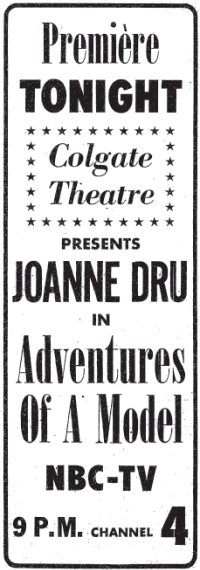
Copyright © The New York Times, 1958 [2]
The fifth installment of Colgate Theater (broadcast on September 23rd, 1958) was written, directed and narrated by Orson Welles. Titled “Fountain of Youth,” the pilot (presumably for an anthology series) starred Rick Jason and Joi Lansing as newlyweds who receive as a wedding gift a potion that can provide them with two centuries of youthful vigor. The Chicago Daily Tribune lavished “Fountain of Youth” with praise:
Orson Welles hasn’t lost his touch. This is as witty and imaginative a TV film as we’ve ever seen. Welles has written the screen play, designed the sets, arranged the music, directed the show, and narrated the action, and he comes out ahead on all fronts. Based on a short story by the macabre humorist, John Collier, the film tells of the hilariously harrowing triangular relationship of a vengeful scientist, a lush actress, and a tennis playing playboy. The performances of Dan Tobin, Joi Lansing and Rick Jason as the leads, plus those of everybody else, are superb. But perhaps the outstanding feature of the production is that, for once, every aspect of TV filming has been used for maximum effect. Unlike most films for TV, this one indicates taste, care, intelligence and a sense of humor. [9]
The paper was less impressed with the following week’s pilot, “McCreedy’s Woman,” starring Jane Russell: “All it proves is that Miss Russell would be a welcome addition to the TV roster, if somebody could find the right format for her. In this play, she appears as the owner of a small night club, wears some attractive clothes, sings a few songs, and struggles thru an extremely obvious teleplay” [10].
New Comedy Showcase (CBS, 1960)
The final broadcast of this half-hour series was a pilot called “Waldo,” starring Gil Stratton as an anthropologist whose best friend is arrested for driving without a license and for speeding. The catch? His best friend is a chimpanzee. The series premiered on Monday, August 1st running from 10-10:30PM. Pilots included “You’re Only Young Twice,” with George Murphy and Martha Scott as an elderly couple who decide to take a second honeymoon; “They Went Thataway,” starring James Westerfield as a feared gunfighter who has never actually shot anyone; “The Trouble with Richard” with Dick Van Dyke as a hapless bank teller; and “”Maggie,” starring Margaret O’Brien as a rambunctious teenager whose imagination gets her into trouble.
The Comedy Spot (CBS, 1960; 1962)
This summer replacement series for The Red Skelton Show actually ran every summer from 1960 to 1962. During the summer of 1961, however, it was made up entirely of repeats of General Electric Theater. The Comedy Spot premiered on Tuesday, June 28th, 1960 and ran from 9:30-10PM. Art Gilmore served as host. The premiere installment, “Ben Blue’s Brothers,” starred Ben Blue as four brothers taking in the opera. The third installment (“Head of the Family,” broadcast on July 19th) starred Carl Reiner and Barbara Britton as parents who try to explain to their son what his father does for a living. The concept led to The Dick Van Dyke Show.
Other pilots broadcast during the summer of 1960 included “The Sky’s the Limit” with Ross Martin, Joey Forman and Doug McClure as instructors at a Navy air base; “Meet the Girls,” starring Mamie Van Doren, Gale Robbins and Virginia Field as three young woman who move to New York City in search of fame and fortune (and marriage); and “Tom, Dick and Harry” with Gene Nelson, Joe Matell and Marvin Kaplan as three friends, fresh out of the Army, who determine they can get their hands on a free lease for a restaurant if one of them will marry the daughter of the owner.
Although projected to run for thirteen weeks during the summer of 1960, The Comedy Spot was pre-empted twice. Two broadcasts were repeats of General Electric Theater. Two more were repeats of NBC’s Colgate Theater: “Adventures of a Model” and “Welcome to Washington (aka The Claudette Colbert Show).”
When the series returned in the summer of 1962 it presented ten unsold pilots and a rebroadcast of “Maggie” (first shown as part of New Comedy Showcase on CBS). Among the pilots were “For the Love of Mike,” starring Shirley Jones, Burt Metcalfe and Gale Gordon in the story of a newly married couple with money problems; “Poor Mr. Campbell” with Agnes Moorehead as a woman whose nagging drives her husband to murder; “Charlie Angelo,” starring James Komack as an angel charged with keeping a man from torching his nightclub for the insurance money; and “His Model Wife” with Jeanne Crain and John Vivyan as a couple who don’t know how to fire their housekeeper.
Westinghouse Preview Theatre (CBS, 1961)
This series replaced The Nanette Fabray Show (aka Westinghouse Playhouse) during the summer of 1961 on CBS. It premiered on Friday, July 14th, running from 9:30-10PM, with a pilot called “Five’s a Family” starring Joe E. Brown as a former detective who joins his son, also a detective, in tracking down an arsonist. Other installments included “I Married a Dog,” with Hal March as a man who battles for his bride’s attention with her pet poodle; “Happily Ever After,” starring John Armstrong and Olive Sturgess as a couple who return home from their honeymoon and realize married life isn’t as easy as they thought; “Picture Window” with Jean Byron as a women who is dismayed when her husband buys their son used clothing at a PTA sale; and “The McGonigle” starring Mickey Shaughnessy as a sailor who helps a U.S.O. entertainer meet up with her husband.
Vacation Playhouse (CBS, 1963-1967)
The longest running unsold pilot series, Vacation Playhouse ran every summer from 1963 to 1967 on CBS. During the summers of 1963, 1964, 1966 and 1967 it aired from 8:30-9PM on Mondays as a replacement for The Lucy Show and the unsold pilots shown were primarily sitcoms. But during the summer of 1965, it aired Fridays from 9:30-10PM as a replacement for Gomer Pyle U.S.M.C. and the unsold pilots were a mix of sitcoms and adventure shows.
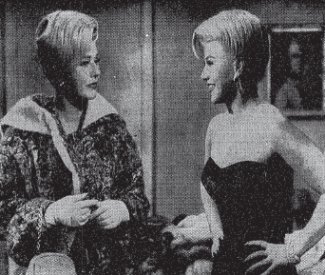
Copyright © The New York Times, 1963 [3]
Vacation Playhouse premiered on Monday, July 22nd, 1963. The first installment was a pilot called “A Love Affair Just for Three” starring Ginger Rogers in dual roles as twin sisters. Other pilots during the summer of 1963 included “Three Wishes,” with Diane Jergens as a woman who finds herself in possession of a genie; “All About Barbara,” with Barbara Nichols as a famous singer who gives it all up to marry a college professor; and “Maggie Brown,” with Ethel Merman as the owner of a nightclub in the South Pacific. The 1963 season ran for 10 weeks and ended on September 23rd.
Season 2 premiered on Monday, June 15th, 1964 with a pilot called “Hey, Teacher” starring Dwayne Hickman as an elementary school teacher whose first day on the job involves a snake on the loose. “Hurray for Hollywood,” starring Herschel Bernardi as a movie mogul fighting with his stars, aired the following week. The Hartford Courant wrote that “the ingredients for a good series are here, with the colorful characters sparkling an otherwise so-so comedy pilot” [11].
Other pilots during Season 2 include “Papa GI,” with Dan Dailey as an army sergeant in Korea who has his hands full with two orphans who want him to adopt them; “He’s All Yours,” starring Eve Arden as the manager of a travel agency in London forced to work with the inept nephew of the owner; “The Bean Show,” with Orson bean, the Beanbaggers comedy troupe and the Serendipity Singers in a half-hour of sketches, music and more; “Love Is a Lion’s Roar” with James Franciscus and Suzanne Pleshette as a bachelor and the French dancer who wants to marry him; and “First Hundred Years” starring Nick Adams and Joyce Bulifant as a young couple raising a baby and trying to finish college. Season Two ended on September 14th, 1964.
Copyright © The Hartford Courant, 1964 [4]
Season 3 bowed on Friday, June 25th, 1965 with a pilot called “Sybil,” about a wood nymph played by Suzy Parker who is sent to Earth and charged with doing 100 good deeds to make up for her vanity. Other pilots include “The Barbara Rush Show,” with Barbara Rush as a woman supporting her family by working as a stenographer; “Starr, First Baseman,” starring Martin Milner as a baseball player whose career almost ends before it begins; “Three on an Island,” with Pamela Tiffin, Julie Newmar and Monica Moran as three young woman helping a boxer (played by Jody McCrea) who can’t fight; and “Luke and the Tenderfoot,” broadcast over the course of two weeks, starring Edgar Buchanan as a traveling salesman and his inexperienced partner (played by Carleton Carpenter) who work together to stop a fearsome gunman (Charles Bronson). Season 3 ended on September 10th, 1965.
Season 3 premiered on Monday, July 4th, 1966 with a repeat of “Hey, Teacher” starring Dwayne Hickman. The following week Darryl Hickman starred in “The Good Old Days” about a caveman who goes searching for adventure. Another repeat, Ethel Merman’s “Maggie Brown,” was shown the next week. Other pilots included “Where There’s Smokey,” starring Soupy Sales as a Fire Chief whose brother-in-law threatens his perfect record; “My Lucky Penny” with Richard Benjamin and Brenda Vaccaro as a married couple charged with guarding $15,000; “The Hoofer,” starring Donold O’Connor and Soup Sales as a pair of vaudeville performers searching for a great gig; and “The Two of Us,” with Patricia Crowley as a widow who works as an illustrator and Billy Mumy as her son, who imagines her drawings coming to life. 4 Four ended on September 5th, 1966.
Season 5 , which began on Monday, July 3rd, 1967, included four repeats from earlier seasons: “My Lucky Penny,” “The Two of Us”,” “Maggie Brown” and “Hey, Teacher.” The latter two were shown three times during the five summers Vacation Playhouse was on the air. Five new unsold pilots aired during the fifth and final season: “The Jones Boys,” with Mickey Shaughnessy as the boss of a maintenance crew; “Heaven Help Us” starring Barry nelson as a magazine editor who winds up with two dates on one night and the ghost of his late wife in the mix; “My Boy Goggle,” with Jerry Van Dyke as a father whose son is charged with biting a teacher; “You’re Only Young Twice,” starring Ed Wynn as a inventor who comes up with a pill that can make anyone look ten years younger but only for a short time; and “Alfred of the Amazon” with Wally Cox as a young man whose father owns a rubber plantation in South America who heads out into the jungle to rescue a dentist and his beautiful daughter from headhunters.
Vacation Playhouse aired for the last time on Monday, August 28th, 1967. The series featured a total of 47 unsold pilots plus a handful of rebroadcasts from earlier programs and several repeats.
Summer Playhouse (CBS, 1964-1965)
Unrelated to an NBC series shown in 1954 and 1957, Summer Playhouse was shown during the summers of 1964 and 1965 on CBS in addition to Vacation Playhouse. Thus, the network was showing two unsold pilots each week. It aired on Saturdays from 9:30-10PM and premiered on July 4th, 1964 with a pilot titled “The Free Wheelers” starring Patricia Barry as a woman who finds herself in the middle of an international mess while her husband writes travel books. The first season ran for fourteen weeks; two of the unsold pilots had earlier been seen as part of The Comedy Spot (“You’re Only Young Once” and “The McGonicle”).
Some of the other pilots broadcast during the summer of 1964 include “Apartment in Rome,” with Susan Oliver and Allen Case as a married couple in Rome who have to keep their unconventional lifestyle a secret from a relative; “Apartment House,” starring George Gobel as the overworked manager of an apartment building (with cameos from Fred MacMurray, William Frawely, Steve Allen and Reginald Gardiner); and “The Jimmy Durante Show,” with Jimmy Durante, Eddie Hodges and Audrey Christie in a story about a man who wants his grandson to be an entertainer just like him. The first season ended on September 19th.
Summer Playhouse returned on Monday, June 28th, 1965, running from 8:30-9PM. The season premiere was a pilot titled “McGhee” starring Jeremy Slate as a painter from New York City who inherits a poor town in California. Other pilots include “Sam and Sally,” with Gary Lockwood as a young man who meets a young woman (played by Cynthia Pepper) in New York City and gets her to fall in love with her on a bet; “Mr. Belvedere,” starring Victor Borge as a fashionable gentleman who helps a young girl hoping to see her father at Carnegie Hall; “Kibbe Hates Finch” with Don Rickles and Lou Jacobi as firefighters whose friendship is threatened when one is promoted (Pert Kelton and Nancy Andrews played their wives); and “The Young in Heart,” starring Mercedes McCambridge as the house mother for a sorority who angers her charges when she tells the dean about a late night visit by a football player.
Two pilots had earlier been seen on The Comedy Spot (“Full Speed Anywhere” and “His Model Wife”) while a third was a repeat from the 1964 season (“Mimi”). Summer Playhouse was last seen on September 6th, 1965.
Summer Fun (ABC, 1966)
One of two unsold pilot programs ABC aired during the summer of 1966 Summer Fun was broadcast on Fridays from 8-8:30PM and premiered on July 22nd, 1966. The first installment was titled “McNab’s Lab” and starred cliff Arquette as a pharmacist who would rather be tinkering than dispensing pills. Other pilots included “Baby Crazy” with James Stacy as a young pediatrician who has his hands full; “Meet Me in St. Louis,” starring Celeste Holm and Shelley Fabares and based on the 1944 Judy Garland film; “Thompson’s Ghost” with Bert Lahr as a bumbling ghost 4,700 years old; and “Little Leatherneck,” starring Scott Brady as a drill sergeant and Donna Butterworth as his nine-year-old daughter. Summer Fun was last seen on September 2nd, 1966.
Preview Tonight (ABC, 1966)
This ABC series ran for five weeks on Sundays from 8-9PM as a summer replacement for The FBI. It premiered on August 14th, 1966. The hour-long pilots included “Pursue and Destroy” starring Van Williams as the commander of a submarine battling the odds during World War II; “Somewhere in Italy,” with Robert Reed and Harold J. Stone as soldiers cut off behind enemy lines; “The Cliff Dwellers,” starring Bert Convy, Gretchen Walther and Carol Rossen as alumni celebrating their tenth college reunion only to have murder get in the way; “Roaring Camp,” with Richard Bradford and James McMullan as a small town marshal and a gunman forced to team up; and “Great Bible Adventures” starring Hugh O’Brian as Biblical Joseph, sold into slavery with his brothers. Preview Tonight last ran on September 11th, 1966.
Unsold Pilots on TV: 1956-1966 | 1967-1989
Works Cited:
2 Wolters, Larry. “Where to Dial Today: Conjurers Faded by TV Magic.” Los Angeles Times. 30 May 1957: A6.
3 Anderson, Jack. “‘Coercion’ Cited On TV Show Time.” New York Times. 11 Jul. 1959: 39.
4 Bart, Peter. “Hollywood Resumes Seasonal Rush on TV Pilots.” New York Times. 1 Dec. 1964: 52.
5 Ames, Walter. “Henry Fonda Emcees New Series of TV Films; Noble is Marilyn’s Aide.” Los Angeles Times. 4 Jun. 1954: 26.
6 “G.E. Will Sponsor TV Series in Summer Using Previously Unsold ‘Sample’ Films.” New York Times. 8 Jun. 1956: 37.
7 “Previews of TODAY’S TV.” Chicago Daily Tribune. 10 Jul. 1956: A6.
8 “Previews of TODAY’S TV.” Chicago Daily Tribune. 6 Jul. 1958: 18.
9 “Previews of TODAY’S TV.” Chicago Daily Tribune. 16 Sep. 1958: B10.
10 “Previews of TODAY’S TV.” Chicago Daily Tribune. 23 Sep. 1958: A2.
11 “TV Previews.” Hartford Courant. 27 Jun. 1964: 23.
Image Credits:
2 From The New York Times, August 19th, 1958, Page 55.
3 From The New York Times, July 21st, 1963, Page 79.
4 From The Hartford Courant, September 6th, 1963, Page 1G.
Originally Published May 21st, 2009
Last Updated August 15th, 2019


“A Love Affair Just For Three” (aka “THE GINGER ROGERS SHOW”) was produced at 20th Century-Fox, and written by Sidney Sheldon [who would successfully reuse the idea of “identical twins” for “THE PATTY DUKE SHOW” (1963-’66) and as a continuing storyline on “I DREAM OF JEANNIE” from 1967 through ’69], originally submitted to CBS for its 1961-’62 schedule; the pilot ended up on “VACATION PLAYHOUSE” in the summer of ’63.
Incidentally, if you want to see the original UNAIRED version of “Where There’s Smokey”, a Desilu pilot produced as a possible 1959-’60 series for ABC [starring Soupy Sales and Gale Gordon]- it’s currently available on YouTube right now…in three parts.
It makes you wonder if the detective series with Hugh Beaumont had been successful, who the producers of LEAVE IT TO BEAVER would have gotten to play Ward Cleaver…Another thought is if Dick Van Dyke had been in THE TROUBLE WITH RICHARD, would the Dick VAn Dyke Show have existed and would Mary Tyler Moore be a household name
“SUMMER PLAYHOUSE” {aka “GENERAL FOODS SUMMER PLAYHOUSE”} was originally the 1964 summer replacement for the cancelled “NEW PHIL SILVERS SHOW”, which had been sponsored by General Foods. In the summer of ’65, it was Lucille Ball’s perennial summer replacement under a different title- General Foods, “THE LUCY SHOW”‘s primary sponsor, “borrowed” her “VACATION PLAYHOUSE” title that summer for another summer replacement series of “busted pilots” (mostly co-financed by them) that aired in place of “GOMER PYLE, U.S.M.C.”‘. The ‘VACATION PLAYHOUSE” title reverted to Lucy’s summer series in ’66…
“DECISION” was the 1958 summer replacement for “THE LORETTA YOUNG SHOW”, also sponsored by Procter & Gamble.
“ADVENTURES OF A MODEL” was initially produced (and pitched) by Desi Arnaz for CBS’ 1957-’58 schedule; one idea he tried to “float” was that it should appear alternately with the new “LUCILLE BALL-DESI ARNAZ SHOW” hour-long specials he would also produce that season. The network rejected that idea, as well as the potential series. The script was written by Sidney Sheldon, after he was dropped from Paramount’s roster of theatrical writer/directors in the spring of ’57. According to Sheldon’s autobiography, “The Other Side Of Me”, Desi finally convinced CBS to buy “ADVENTURES OF A MODEL” for their 1962-’63 schedule…with chief programmer James Aubrey tentatively pencilling it in for Wednesdays at 9:30pm(et)…until Sidney got the bad news from Desi: apparently, Danny Thomas, who had a “top ten” series on CBS, had put pressure on the network to renew “THE DICK VAN DYKE SHOW” [he was one of the four production partners in Carl Reiner’s series] in that Wednesday time period after Aubrey had “officially” cancelled it at the end of its first season [actually, it was sponsor Procter & Gamble who provided more than enough influence to warn Aubrey that, unless Dick’s series was renewed in “their” time slot, they’d pull ALL of their advertising and daytime soap operas off CBS and place them on the other networks]. “Maybe next time”, Desi assured Sheldon…but “next time” never came for “ADVENTURES OF A MODEL”.
I’m a kind of latecomer to this, but CeeJay’s comment above caught my attention.
I don’t know if anyone made Cee Jay aware of it later, but Hugh Beaumont was not the first choice for the dad in LEAVE IT TO BEAVER. There’s an earlier pilot called IT’S A SMALL WORLD with Barbara Billingsley, Jerry Mathers, and Tony Dow, but the dad is played by Casey Adams (aka Max Showalter). This one didn’t sell, and the dad role was recast with Hugh Beaumont.
Interesting thing about that is before BEAVER, Hugh Beaumont’s career typecast was as tough guy characters – he did a couple of B-movie series playing two-fisted private eyes, plus a string of poverty-row “films noir”, where he sometimes turned out to be the killer. Quite a few of these can be found on public-domain DVDs at the dollar store; you can shock your baby-boomer friends by showing them good old Ward Cleaver punching out thugs or (worse yet) plotting to do in the leading lady.
The DVD of Leave It to Beaver, Season One has the “Small World” pilot with Max Showalter as Ward. A young Harry Shearer is also in it, playing an Eddie Haskell-type character.
Wonder what Leave It To Beaver would have been like without Hugh?
It’s amazing how many shows you can find that originally had others slated to play roles we today hold as iconic.
“As early as 1954 there were those in the industry suggesting that some of these pilots could be packaged and presented on television.”
—
I believe the first pilot showcase was ‘ABC Album’, a 13-episode series in the spring/summer of 1953, which was quite successful in leading to subsequent pick-ups across three networks, and may have stimulated the idea to create these trial balloon theatres.
There were 13 episodes aired (12 pilots as one was a two-parter), and IMDB lists 12 of the pilots and dates of broadcast as follows (I think there was one additional broadcast in July that IMDB doesn’t list):
‘ABC Album’
————–
1. “Justice” (Apr.12/1953)
2. “Mr. Glencannon Takes All” (Apr.19/1953)
3. “Jamie” (Apr.26/1953)
4. & 5. “A Tale of Two Cities Parts 1 & 2” (May.3&10/1953)
6. “Hogan’s Daughter” (May.17/1953)
7. “Four Stories” (May.24/1953)
8. “Colonel Humphrey J. Flack” (May.31/1953)
9. “The Split Second” (June.7/1953)
10. “Baby & Me” (June.14/1953)
11. “The Turning Point” (June.21/1953)
12. “Jetfighter” (June.28/1953)
As a result of the pilots airing on ‘ABC Album’ (a.k.a. ‘The Plymouth Playhouse’), the broadcasts led to three network pick-ups:
1. Based on ratings and critical buzz generated by the pilot, ‘Jamie’ was picked up by ABC (running one season 1953-54);
2. The ‘Colonel Flack’ pilot got an unexpected order from the DuMont Television Network, which was a bit starved for development funding, and this led to the one season ‘Colonel Humphrey Flack’ series on that network (1953-54) and later spun-off a syndie version too; and
3. ‘Justice’ got activated the following year by NBC (running two seasons 1954-56).
I remember when ABC debuted their risky 90-minute anthology ‘ABC Movie of the Week’ in the fall of 1969, which had an unheard of season-long price tag estimated in the $15-20 million range. At the time, everybody thought the Alphabet net was crazily spendthrift as no one thought they would never recover that coin in ad sales. Well ‘ABC Movie of the Week’ turned into a six-season-long cash cow for the network, and showcasing 90-minute pilots within a made-for movie anthology series was replicated many times over the three nets. Its success derived from becoming a viable viewer-grounded testing ground for backdoor pilots that might otherwise never have aired, and moreso, it became a revenue source for all the coin spent on development that previously had negligible cost recovery.
DuMont, ABC Album was an anthology series intended to showcase the new ABC following its merger with United Paramount Theatres. It could potentially be considered a series of backdoor pilots but certainly not an unsold pilot burn-off series.
If You Knew Tomorrow sound like a dry run for this recent TV show.
Any chance you can find the exact date of the 1965 pilot “Two’s Company,” starring Marlo Thomas and Ron Hussmann? It can be found on the Second season “That Girl,” DVD box set, and I’m trying to get it listed on IMDb.
DTD, I don’t believe “Two’s Company” was actually aired.
“TWO’S COMPANY” was never telecast, DTD. Not all TV pilots were broadcast….and “TWO’S COMPANY” was one of them.
Aw, dammit! Now I have to find somewhere else to put the data!
If you want to see what “MAGGIE”, the 1957 unsold pilot starring Margaret O’Brien (produced by George Burns’ McCadden Productions) looked like, as telecast on the July 24th, 1962 edition of “THE COMEDY SPOT” [sponsored by Johnson’s Wax], it’s posted on YouTube {“The Comedy Spot- Maggie (Unsold pilot) (1960)”}.
Braddock and Laramonth (SP) two ultraviolent crime shows very well produced circa 1967 -what does anyone know of them
What a difference eight years (!) makes:
I was just looking at this one again after many years away, and noted the brief mention of They Went Thataway, the Western spoof that ran on the CBS collection.
This show aired in the summer of 1960, almost a year after it was made.
The premise was that a small Western town wanted to get a reputation as “a town too tough to tame”, but most of the people weren’t quite able to pull it off.
The star was Wayne Morris, playing a peace-loving sheriff.
Morris was a longtime B-movie leading man, with many Warner Bros. second features and B-westerns to his credit.
By 1959, Morris was transitioning to TV, spending most of that year piling up guest shots on all kinds of shows, capping it off with the They Went Thataway pilot.
In September ’59, with a dozen or so telefilms in the bank for fall, Wayne Morris was invited by some old Navy pals to watch maneuvers on an aircraft carrier – and that’s where he suffered a fatal heart attack, aged 45.
All of Morris’s guest shots aired throughout the ’59-’60 season; They Went Thataway was (I believe) the last one on.
better late than never” WEVE BEEN TRYING TO LOCATE THE TAPES OF ABCS PREVIEW TONITE** FOR 10 YEARS/ …even UCLA’s ABC ARCHIVES HAVE NO LINK TO help**== somewhere in Italy company b “” With Robert Reed ; John van Dreelan ;; and Barbary Shelley was/ a lark*=== a SPINOFF of the episode filmed in Italy of I SPY’s— TO FLORENCE w/ LOVE– produced by DANNY ARNOLD=*(filmed only on location for extra shots)—-nothing is impossible/ yet the value of making a contact for the sources is worth it right here…
You can see an awful lot of Desilu pilots in the various unsold pilot programs that aired over the years.
According to many sources Desilu had a horrible batting average when it came to selling pilots. Although it had a ‘special’ relationship with CBS based on retaining services of Lucille Ball and getting first crack at whatever series she had at the time, Desilu ended up selling a low number of pilots to the network.
One CBS executive who Bill Paley had assigned as his special ‘Desi Arnaz Rep’ said Arnaz just didn’t grasp what made a new series work. ‘He was so used to Ball getting anything she wanted from CBS that he assumed they’d give him special consideration’. They did that, and often picked up pilots and aired them for a season (or less) then cancelled them. They also gave Desilu a large budget to produce and/or develop pilots as a sort of CBS adjunct studio, giving the studio a head start in the race. However, the pilots had to clear Arnaz until 1962. And, it was well known back then, his judgement was not very good. He often passed on ideas that turned out to be major hits somewhere other than his studio.
Although that’s fairly common in the trade, Arnaz record of flops was amplified by the fact that Desilu was a leader in the business and often got first crack at new scripts or ideas. Even with this extra help, sort of having the ball on a tee, Arnaz still whiffed. His days were numbered when he asked his ex-wife to return to TV in 1962 and, most agree, her new series ‘The Lucy Show’ saved Desilu from the junk pile, giving it a 5 year lease on life.
You could almost argue that Arnaz’ concept ‘Westinghouse Desilu Playhouse’ (1958-1960) was either an early version of the ‘ABC Movie of The Week’ format or a ‘pre-flop’ presenter of pilots to be (or never were). As we all know, a couple of major tv hits came out of that series (‘The Untouchables’ and ‘The Twilight Zone’), Ironically, Desilu’s last success not starring Ball, ‘The Untouchables’ ran 4 seasons on ABC. Arnaz had big plans for the ‘Playhouse’ and levered inclusion of the former ‘I Love Lucy’ series hour-format as the bait to lure Westinghouse in as its sponsor.
The anthology type series was doomed to fail. Very high production costs, a hard time landing major stars to ‘guest star’ in weekly episodes and the unexpected drying up of solid scripts (an area Arnaz had a well deserved strong reputation for landing in the early days) contributed to the series earth shaking, foundation rattling failure. By the last season Arnaz was so into his cups that executive production chores were pretty much taken over by Arnaz deputy at Desilu who bailed him out of trouble with the network by chipping in reruns of past Comedy-Hour episodes to balance out the schedule left open by Arnaz failure to land more scripts. Arnaz reputation in the trade never recovered from this series epic failure. He staked everything on the series and lost, big time. His failure led to a fatal downhill run for the studio, ruined his standing in the business and took the most popular series in TV history down with him. Although ‘I Love Lucy’ recovered, the others didn’t.
Although Arnaz worked his ass off, ultimately he failed across the board, bringing only a handful of meaningful series to air (most before 1960), and, without ‘The Lucy Show’ never took Desilu beyond it’s early heights when it was, for several years, the only show in town (in TV production).
VACATION PLAYHOUSE must have been on CBS if it replaced THE LUCY SHOW and GOMER PYLE, USMC, not on ABC.
You are correct. I’ve fixed the mistake. Thanks.
First of all, the late great TONY DOW R.I.P.
Does anyone recall an unsold pilot WEEKEND about teenagers hanging out at the beach on the weekends. Tony Dow and Michael Burns were in it. I think it aired during the Summer of 1966, or ’67. It may have been on the NBC Network. Tony Dow, sort of, played the heavy.
does anybody know what the full cast and crew are for the following alcoa goodyear theatre episodes
a good name
the slightly fallen angel
action off screen
you should meet my sister
Another question;
If “Ben Blue’s Brothers,” was the first pilot within the CBS Comedy Spot, and “Head of the Family” was the third pilot within the CBS Comedy Spot, what was the second pilot?
It was McGarry and Me.
Supposedly an adult Shirley Temple did a pilot around 1965 called “You Can’t Fight City Hall”. Shirley was a public defender, I believe, in this show.
G’day, my name is Nicholas from Australia and I watched The Brady Bunch when it was repeated on Channel 10 in the 1990s.
Can you please tell me what’s the name of a sitcom pilot starring Allan Melvin who later played as Sam The Butcher appeared in and played as a child’s imaginary friend, Banraby who resembled W.C. Fields?
The Secret Lives of Walls Kitty?
I recall a summer replacement show in 1965 , CBS or NBC, using an unsold Pilot. It was Science Fiction , starring Les Tremayne and Jeremy Slate. Slate plays an astronaut on a mission in deep space, and right in the middle of a transmission to earth, his communications go dead. An hour later he is back on the air , saying everything is fine , nothing happened. When he returns to earth, he isnt the same. and has something to do with electrical creatures that turn up. Les Tremayne is an investigator, ala X files, sent to investigate. It was quite engrossing. But I cant seem to track it down
You have the wrong network for Westinghouse Preview Theater, it was on NBC in the summer of 1961, replacing The Nanette Fabray Show, a.k.a Yes, Yes, Nanette, co-starring Wendell Corey, Bobby Diamond, and Jacklyn O’Donnell, from Bee-Jay Productions and Revue Studios/MCA-TV.