• Recent Posts

  • Recent Videos

  • Recent Comments

  • Tags

  • Site Archives

  • Main Content

    Archive for November 2009


    Historical TV Ratings

    Nielsen Top Ten, September 11th - September 17th, 1972

    Earlier this year I went through the 1966-1967 regular season (excluding the summer months) and listed the top ten programs from each week. I've decided to start doing the same with the 1972-1973 season. So here are the first ten programs from the very first Nielsen report of the 1972-1973 season, which covered the week running from Monday, September 11th, 1972 through Sunday, September 17th, 1972. Albin Krebs wrote about them in a September 26th, 1972 article for The New York Times. Only one new program -- Bridget Loves Bernie on CBS -- was in the top ten. Although ABC had the top two programs for the week it was NBC that came out on top with 20.7/34.3 Nielsen rating. ABC was second with a 19.4/31.7 and CBS brought up the rear with a 17.1/28.4.

    According to Krebs, a CBS spokesman attempting to explain why his network was in third place pointed out that ABC and NBC had "front-loaded" premiere week with specials and "high-priced theatrical movies," like Goldfinger. That movie, broadcast on The ABC Sunday Night Movie, ranked second for the week, barely beaten by ABC's Marcus Welby, M.D.. Three other movies were in the top ten: No Place to Run The Daughters of Joshua Cabe (The ABC Wednesday Movie of the Week), In the Heat of the Night (The NBC Saturday Movie) and The Anderson Tapes (The NBC Monday Movie).

    I only know the actual ratings for the top two programs; later weeks should include the ratings for the entire top ten.

    Thursday, December 24th, 2009 Update: Bill was kind enough to contribute the remainder of the Nielsen ratings for this week. DuMont has added rating/share information for the four movies in the comments.

    ## Program Net Rating
    1. Marcus Welby, M.D. ABC 31.2
    2. ABC Sunday Night Movie ABC 31.1
    3. All in the Family CBS 28.7
    4. Bonanza NBC 25.1
    5. ABC Wednesday Movie of the Week ABC 25.0
    6. Bridget Loves Bernie CBS 24.9
    7. The NBC Saturday Movie NBC 24.7
    8. The Flip Wilson Show NBC 24.2
    9. Ironside NBC 23.5
    10. NBC Monday Movie NBC 23.0

    Sources:

    Krebs, Albin. "'Marcus Welby' Tops First Week's Nielsen TV Ratings." New York Times. 26 Sep. 1972: 95.

    Historical TV Schedules

    W2XBS Schedule, Week of September 10th, 1939

    Here's the schedule for NBC's experimental station W2XBS in New York City for the week starting Sunday, September 10th, 1939, straight from the weekly television listings printed in The New York Times. There are a lot of gaps in the schedule due to various outside telecasts that were to be announced when this schedule was published. For some reason The New York Times didn't indicate when the noon broadcasts ended; they were simply listed starting at "12:00 Noon. The week was filled with plenty of films, some interviews and the fourth chapter of the 1934 film serial The Lost Jungle (you can see it's IMDb page here). It seems W2XBS simply started with the fourth chapter because I can find no record of the station broadcasting the earlier installments.

    Here's what The New York Time had to say about the play broadcast on Thursday:

    "Art and Mrs. Bottle," the comedy drama to be telecast on Thursday evening, will be presented with the cast of one of the most successful Summer theatre groups in the East, the Surry Theatre, from up Maine way. The cast of the tele-version of Benn W. Levey's comedy will be the same as that which presented the play a month ago at the Surry Playhouse.

    The program will mark the first time since NBC started its public service that an outside group has been brought in intact to televise one of its productions. Donald Davis will direct.

    Finally, according to the Internet Movie Database, magician Gali Gali, who was part of the Friday variety hour, would later appear in several episodes of Toast of the Town between 1949 and 1961.

    Read the rest of this entry »
    Bookshelf

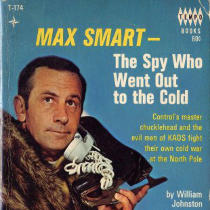
    Bookshelf: Get Smart #7 - The Spy Who Came Out to the Cold

    Get Smart #7 - The Spy Who Went Out to the Cold
    By William Johnston
    First Published in 1968 by Tempo Books
    152 Pages

    I believe the full title to this novel is Max Smart - The Spy Who Went Out to the Cold, but that's a bit long so I'm just going to call it The Spy Who Went Out to the Cold. It's the seventh of nine Get Smart tie-in novels, all written by William Johnston, that were originally published between 1965 and 1969. I reviewed the third novel in the series -- Sorry, Chief... -- back in May, calling it "an absurd story filled with the sort of inanity and hilarity that Get Smart is known for." If anything, The Spy Who Went Out to the Cold was even more absurd. In it, Agents 86 and 99 are charged with safely delivering one Professor Wormser von BOOM to the North Pole.

    Professor von BOOM (that's how his name is pronounced: BOOM!) is the only person in the world who can successfully complete the formula for an incredibly lightweight fuel. Obviously, if KAOS got their hands on him it could prove disastrous. The Chief orders Max and 99 to bring him to a laboratory located underneath the North Pole. Max decides the best way to outwit KAOS agents would be the old "crow-disguised-as-a-wild-goose" in which "you make your pursuer think you're going on a wild goose chase, but, actually, you're zeroing-in on a predetermined destination, more or less as straight as the crow flies."

    The Spy Who Came Out to the Cold Front
    The Spy Who Came Out to the Cold Front - Copyright 1968 Tempo Books

    With Professor von BOOM in tow, Max and 99 decide to take an ocean liner to Africa, where they'll cross the Sahara, take the Nile to Alexandria via houseboat, catch a flight to Russia, hop the Trans Siberian Railway to the coast, board a submarine to Alaska and then make their way to the North Pole. What could possibly go wrong? First and foremost, Max sees KAOS agents everywhere (and nowhere). To make matters worse, Professor von BOOM will wander off if he hears a certain word. Hearing "tip" will send him to a restaurant while "line" will make him head for the nearest post office. Max and 99 lose the good professor time and time again.

    The Spy Who Came Out to the Cold Front
    The Spy Who Came Out to the Cold Front - Copyright 1968 Tempo Books

    Eventually, though, they make it to the North Pole, but not before they're all chased by bulls, Professor von BOOM becomes a movie star, Max and 99 are mistaken for mummies and Max rides a cow. Unfortunately, once they arrive at their destination Max receives a phone call from the Chief informing him that Professor von BOOM isn't who they think he is. I won't spoil the ending for you but it was hilariously frustrating to read.

    DVD Releases

    Warner Archive Expanding Its Television Selection?

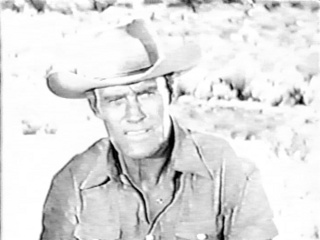
    I've written in the past about the Warner Archive, an "On-Demand" program launched in March of this year that offers several hundred films directly to consumers in the form of DVD-Rs manufactured as needed. Recently, it seems, the Warner Archive has been expanding its selection of made-for-TV movies and may even be releasing individual episodes of certain shows. According to this October 6th Video Business article, the first made-for-TV movies were added to the Warner Archive website in August. A recent addition includes Then Came Bronson, the pilot telefilm that launched the television series. Lou Lumenick wrote about the Warner Archive for The New York Post a few days ago. Included was this :

    Sales for the relative handful of TV movies and mini-series released so far "blew everyone away. We had our best month yet in October. I have found some stuff nobody even knows about. There was a series called 'Conflict' that Warners made for ABC in the '50s, with a lot of stars in remakes of old movies, like Natalie Wood in a version of 'Pretty Baby.'

    Conflict ran for 20 episodes during the 1956-1957 season, replacing Warner Brothers Presents (which consisted of three rotating dramas: Cheyenne, Casablanca and Kings Row). It alternated weekly with Cheyenne.

    Unfortunately, there is no easy way to search the website for made-for-TV movies. DVD Aficionado has a list of upcoming releases; at the moment many of them are made-for-TV movies from the 1970s, including The Deadly Tower, Dying Room Only, Babe, The Gathering, The Gathering, Part II and The Girl in the Empty Grave. A discussion of upcoming and/or announced titles can be found at the Home Theater Forum (which is where I learned about the aforementioned article in The New York Post).

    One sticking point with the Warner Archive is the cost. Each film typically runs $19.95. So buying both The Gathering and The Gathering, Part II (if they're actually released) will cost about $40, unless there's a discount for purchasing both. As for any potential release of Conflict, it could cost quite a bit; at $19.95 for each two episodes, which is roughly the length of a movie, would be almost $200. Hopefully, should the Warner Archive truly start branching out into television programs rather than just made-for-TV movies, prices will be manageable.

    DVD Tuesday

    DVD Tuesday: The Golden Age of Television, The Jerry Lewis Show

    The big release this week for fans of classic and relatively obscure television is Criterion's The Golden Age of Television, which includes the kinescope recordings of eight live dramas from the 1950s. These were broadcast on PBS between August of 1981 and March of 1982 as a special series also titled The Golden Age of Television, packaged with new interviews from cast and crew. Among those interviewed were Andy Griffith, Carol Serling, Kim Hunter, Jack Palance, Mickey Rooney and Richard Kiley. These interviews have been retained for the DVD release. There are also commentaries from directors John Frankenheimer, Delbert Mann, Ralph Nelson, and Daniel Petrie.

    I believe a few of these episodes were released on VHS in the 1990s but I'm not sure. Here's the official Criterion page for the collection and what follows is a list of the dramas included in the set, the programs they were part of and their original air dates:

    "Marty" - The Philco Television Playhouse (May 24th, 1953)
    "Patterns" - Kraft Television Theatre (January 12th, 1955)
    "No Time for Sergeants" - The United States Steel Hour (March 15th, 1955)
    "A Wind from the South" - The United States Steel Hour (September 14th, 1955)
    "Requiem for a Heavyweight" - Playhouse 90 (October 11th, 1956)
    "Bang the Drum Slowly" - The United States Steel Hour (September 26th, 1956)
    "The Comedian" - Playhouse 90 (February 14th, 1957)
    "Days of Wine and Roses" - Playhouse 90 (October 2nd, 1958)

    Reviews of The Golden Age of Television note that the video and audio quality isn't all that great. Matt Hough at the Home Theater Forum gives the overall collection a 5/5 but both the video and audio get 2.5/5. He states that "every program has that flat, soft look that kinescopes of the period almost always contain." Joseph Jon Lanthier of Slant Magazine is more critical of the dramas themselves, giving the collection 2.5 stars out of 5, and writes that "the kinescopes used for Criterion's set are at times nearly unwatchable."

    If kinescopes of live dramas aren't your thing there are quite a few other releases out today. You can pick up Hogan's Heroes: The Komplete Series, Kommandant's Kollection from Paramount Home Video, with all 168 episodes. According to TVShowsOnDVD the set also includes a variety of bonus features which presumably weren't part of the individual season sets, which is frustrating for fans who have been faithfully buying them one after another. Another complete set out today is Laredo - The Complete Series 1965-1967 from Timeless Media Group. In addition to all 58 episodes it also includes an interview with actor Peter Brown.

    Other new releases include Alfred Hitchcock Presents: Season Four from Universal Home Video, with all 36 episodes from the 1958-1959 season and two new collections featuring episodes of Daniel Boone. The first, Daniel Boone: Fess' Favorites, includes eight episodes selected by actor Fess Parker, one of which is the original color pilot episode. The second, Daniel Boone: The Best of Mingo, includes eight episodes selected by actor Ed Ames. Both are from Liberation Entertainment.

    Finally, Infinity Resources is releasing The Jerry Lewis Show Collection. Unfortunately, according to the description available at Amazon.com, the two-disc set includes "the hilarious 'best of' highlights from 13 episodes of The Jerry Lewis Show, which aired on NBC from 1967-69." So these aren't full episodes.

    Content Copyright (©) 2003-2013 TVObscurities.com. Copying from this site is strictly prohibited. No ownership of television shows intended or implied.
    About | Site Map | FAQ | Press | Disclaimers