
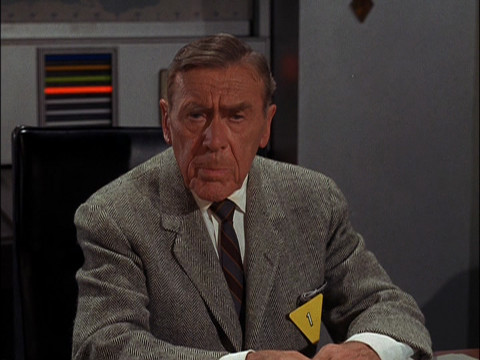
Stefanie Powers played the title role in this often campy spin-off of popular NBC spy thriller The Man from U.N.C.L.E. Noel Harrison co-starred as her partner. Leo G. Carroll appeared on both shows simultaneously as the head of U.N.C.L.E. Despite decent initial ratings, NBC cancelled the show at the end of the 1966-1967 season after 29 episodes.
Spies, Guns & International Intrigue
NBC introduced The Man from U.N.C.L.E. in September 1964. The spy series starred Robert Vaughn and David McCallum as secret agents Napoleon Solo and Illya Kuryakin. Leo G. Carroll played their boss Alexander Waverly, who headed an international spy agency called United Network Command for Law and Enforcement. Its mission was to combat the evil agents of THRUSH, a global criminal organization bent world domination.
The series ranked 62nd for the 1964-1965, when it was broadcast in black-and-white [1]. For the 1965-1966 season, the series transitioned to color and shifted time slots. The Man from U.N.C.L.E. easily bested its new competition and moved into the top twenty programs in the national Nielsen ratings [2]. The success of the series did not go unnoticed by Metro-Goldwyn-Mayer.
In early November 1965 the production company proposed a spin-off: The Girl from U.N.C.L.E. [3]. An episode of The Man from U.N.C.L.E. was to serve as a backdoor pilot; it was tentatively set air in January 1966.
Former Miss America Mary Ann Mobley earned the role of inexperienced young agent April Dancer–the girl from U.N.C.L.E. Norman Fell signed on to play Mark Slate, an agent butting up against U.N.C.L.E.’s mandatory retirement age. Production on the episode–titled “The Moonglow Affair–wrapped in December 1965 [4].
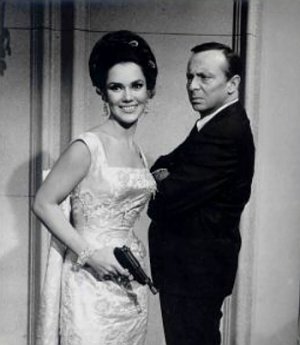
The plot saw April tasked with retrieving a radiation weapon from THRUSH that had already immobilized Solo and Illya. Waverly assigned Slate to assist and train Ms. Dancer, despite the fact that he was technically too old to work for U.N.C.L.E. After successfully completing their mission and saving Solo and Illya, Waverly decided to turn a blind eye to Slate’s age and allow the two to continue their partnership.
A New Girl for The Girl from U.N.C.L.E.
According to Broadcasting, as of early February The Girl from U.N.C.L.E. was not among the “top contenders” for NBC’s 1966-1967 schedule but it still had a chance [5]. At that point, the episode introducing April and Mark had yet to air.
“The Moonglow Affair” aired on Friday, February 25th and ranked fourth for the week in Nielsen’s major market ratings. It earned a 27.0 rating, behind only the Thursday edition of Batman on ABC, Get Smart on CBS, and Bewitched on ABC [6].
NBC released its 1966-1967 schedule in late February, right around the time “The Moonglow Affair” was broadcast. It’s unknown whether the network waited until early ratings were in before deciding to pick up The Girl from U.N.C.L.E. NBC gave the series the 7:30-8:30PM time slot on Tuesday evenings, where it would compete with ABC’s Combat and CBS’s Daktari [7]. NBC also renewed The Man from U.N.C.L.E. for a third season.
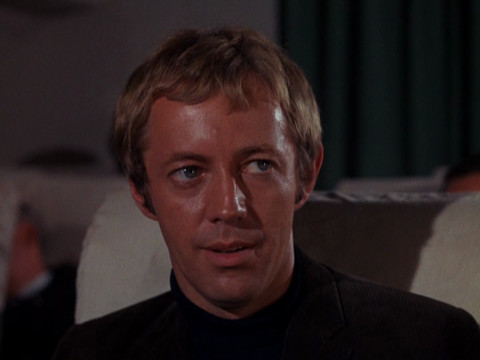
Casting changes were unveiled in early March. Out was Mary Ann Mobley. Replacing her in the role of April Dancer was Stefanie Powers [8]. Later that month, Noel Harrison (son of Rex Harrison) took over the role of Mark Slate from Norman Fell [9].
Harrison was 32 at the time; Powers was 23. By comparison, when “The Moonglow Affair” was filmed Norman Fell was 42 while Mary Ann Mobley was 27. Thus, Harrison and Powers would make for a younger, hipper partnership. Also, Harrison’s version of Mark Slate would, like the actor, be British.
A new character was added to The Girl from U.N.C.L.E.–an eager young agent named Randy Kovacks played by Randy Kirby. Leo G. Caroll would appear simultaneously in both The Girl from U.N.C.L.E. and Man from U.N.C.L.E. in his role as head of U.N.C.L.E. Plus, Robert Vaughn and David McCallum could potentially make crossover appearances to help the new show find an audience.
The Man from U.N.C.L.E. finished the 1965-1966 season in the 13th spot, the only time the series would crack the Top 20. Its popularity was at an all-time high and the chances of a spin-off succeeding would never be better.
Powers Confuses Critics
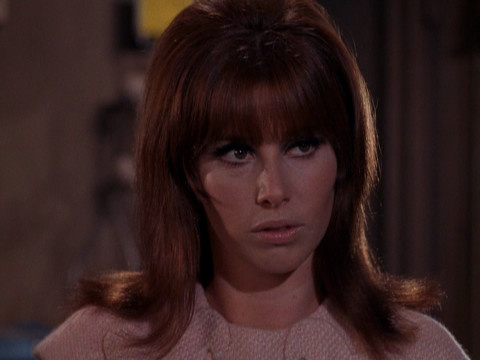
The promotional push for The Girl from U.N.C.L.E. started before production on the series began on May 20th [10]. Stephanie Powers and Noel Harrison were sent on photo shoots and conducted interviews across the country. Powers seemed to confound newspapers. The New York Times noted the way she “swings from cool appraisal to blunt candor to girlish playfulness in one brief conversation” [11].
Copyright © 1966, 1967 Turner Entertainment Co.
Clay Gowran of The Chicago Tribune had a hard time even getting her to talk. “Miss Powers seemed more interested in reading a magazine than in talking about herself or her show,” he wrote, “but she finally offered a few tidbits, as negligently as she had posed” [12].
“I think if we go about making The Girl from U.N.C.L.E. in a civilized manner,” Powers said, “it has the greatest possibility of succeeding. I hope so, at least. I think Man from U.N.C.L.E. is the best show on TV–they don’t seem to spare the money in producing it” [13].
Gowran referred to this encounter with Powers in a later article about the popularity of spies and secret agents on TV. He declared that “from her glum expression the one time we met her she’s liable to deadpan enemy agents into submission” [14].
Poor Reviews for the Spin-Off
Critics were almost uniformly negative in their response to the series. Harriet Van Horne of The New York World Journal Tribune called it “violently sadistic and altogether repellent” [15]. The Washington Post‘s Lawrence Laurent suggested that for the following season, “we’ll be ready for a new series about The Jackass from U.N.C.L.E.” [16]. Paul Molloy of The Chicago Sun-Times seemed to write it off as simply “The Man from U.N.C.L.E. in high heels” [17].
On the other end of the spectrum, Walt Dutton praised the series in The Los Angeles Times, saying it “moves along nicely, thanks to some clever dialogue” [18].
Television Magazine polled 24 television critics about their opinions of the new fall shows, including The Girl from U.N.C.L.E.. Only two rated the series “Good,” twelve rated it “Bad,” and ten were “Indifferent” [19]. Anthony La Camera of The Boston Record American wrote that “Stefanie Powers looks like a road company Barbara Feldon, Noel Harrison wears a half smile, and all is chaos” [20].
Mary Ann Lee of The Memphis Press-Scimitar suggested the series “seems to have a slightly lighter touch than The Man from U.N.C.L.E., otherwise it’s business as usual” [21].
The Trouble with The Girl from U.N.C.L.E.
Critics weren’t the only ones concerned with the series. Both Stephanie Powers and Noel Harrison expressed if not trepidation, at least some worry that The Girl from U.N.C.L.E. would be unable to stand apart from its parent series. According to Harrison, “the only way it will work is if our show is different, rather than the same. More towards laughs, I mean” [22].
Likewise, Powers didn’t appear happy about the way early episodes were written. After “mockingly” describing an episode to The Chicago Tribune, she was quoted as saying: “Silly, isn’t it? Absolutely campy. Noel and I are having a field day. We curse the script and make changes all the time. The writers haven’t found our style yet.” [23].
When asked about the new series, David McCallum said “I don’t feel anything about the new show–I feel, personally, numb” [24]. He continued:
“We have worked very hard here, and we have a good show going. So, now they came along and pull out a Girl from U.N.C.L.E., to run parallel. It’s not as tho we’re going to have one U.N.C.L.E. one week and the other the next. No, we’re going to see both U.N.C.L.E.s every week.” [25]
Powers and Harrison (and McCallum) had reason to be concerned. In its first season on the air, The Man from U.N.C.L.E. was a straight spy drama with some humor woven into the episodes. During the second season, a episodes were a little looser, a little more outrageous. Then ABC’s Batman took the nation by storm midway through the 1966-1967 season (The Man from U.N.C.L.E.‘s second). The Girl from U.N.C.L.E. seemed designed to capture some of the wackiness that made Batman so successful.
Copyright © 1966, 1967 Turner Entertainment Co.
Unlike Batman, which was intentionally exaggerated to the point of absurdity, The Girl from U.N.C.L.E was supposedly a dramatic show. The preposterous plots and harebrained schemes on the part of the bad guys clashed with the concept of U.N.C.L.E. agents as serious spies. At times, The Girl from U.N.C.L.E. appeared to have more in common with sitcom Get Smart than with The Man from U.N.C.L.E..
Gadgets, Gizmos, Killers And Impersonations
In the series premiere, April and Mark are tasked with getting their hands on the antidote to a drug THRUSH has developed. The drug causes people to move in slow motion. The antidote is hidden in fleas living on a dog. In short order April loses track of the dog, gets captured by THRUSH, and is strung over a pit filled with piranhas.
She’s able to free herself, get the dog back and meet up with Mark. The two are then captured only to escape again by provoking a rowdy barroom brawl. During the climactic fight scene, April stands clutching the dog while Mark is roughed up. Ultimately, the two save the dog and the antidote. The premiere set the tone of the series, which rarely saw April involved in any physical fighting.
Other early episodes featured April impersonating the daughter of an Arab sheik and posing as a belly dancer. She and Mark were sent to Mexico to free several scientists, flew to Denmark to rescue a hapless man who accidentally ate some cheese containing a THRUSH microdot, and teamed up with Napoleon Solo in London to face off against the fiendish Mother Muffin (played by Boris Karloff) who wanted to turn April and Napoleon into wax figurines.
Over the course of the series plots involved a variety of dangerous devices and substances: a chemical transported by birds that slowly kills humans; laser crystals; an anti-aging serum; a pill that can give anyone superhuman strength; a molecular reorganizer; and a machine that can remove all the color from anything it is pointed at.
Guest stars over the course of the season included Pernell Roberts, Leslie Uggams, Patricia Barry, Peggy Lee, Nanette Fabray, Dom DeLuise, Sorrell Booke, Tom Bosley, Ed Asner, Victor Buono and Ann Southern.
Ratings Initially Good–Soon Disappoint
The absurdity of its plot did not negatively impact ratings for the debut of The Girl from U.N.C.L.E.. The September 13th, 1966 premiere episode easily beat it competition, drawing a preliminary 19.7/39 Arbitron rating and a 22.3/44.6 26-city Trendex rating. By comparison, Combat on ABC had a 12.6/25 Arbitron rating and a 12.1/24.1 Trendex rating; Daktari on CBS had a 13.4/32 Arbitron rating and a 13.6/27.1 Trendex rating [26].
Nationally, the first two episodes of The Girl from U.N.C.L.E. averaged a 19.7 Nielsen rating, ranking 24th [27]. The following two episodes fell somewhat, averaging a 17.9 Nielsen rating and tying for 47th [28]. Viewers apparently quickly tired of the new series. Based on national Nielsens for October through December 1966, The Girl from U.N.C.L.E. ranked a dismal third in its time slot with an average 16.6 rating, behind both Combat on ABC with a 17.2 and Daktari on CBS with a 21.9 [29].
Copyright © 1966, 1967 Turner Entertainment Co.
NBC officially canceled The Girl from U.N.C.L.E. in late February 1967 [30]. For the season as a whole, the series ranked 69th (Combat ranked 54th and Daktari 7th) [31]. As for The Man from U.N.C.L.E., it ranked 46th for the season and was renewed for the fall of 1967 but would move back to Mondays from 8-9PM [32].
Despite attempts to downplay the camp during its fourth season, increased competition from Gunsmoke and The Lucy Show on CBS led NBC to cancel The Man from U.N.C.L.E. in December 1967 [33]. Only 16 episodes were produced during the 1967-1968 season, for a total of 105 over the course of three and a half season.
Legacy of The Girl from U.N.C.L.E.
Some television critics, like Clay Gowran, laid the blame for the failure of The Girl from U.N.C.L.E. squarely on the shoulders of Stefanie Powers. In his year-end wrap-up in December 1966, Gowran called The Girl from U.N.C.L.E. the worst non-comedy series of the new fall season. He suggested that Powers, “she of the condescending smirk and calamitous acting, is just more than we can take” [34].
Although it only aired for one season, The Girl from U.N.C.L.E. produced a slew of commercial tie-in products. There were five novels (only two of which were published in the United States), a series of five comic books from Gold Key, a digest magazine from Leo Margulies Corp. which ran for seven issues between December 1966 and December 1967, and a soundtrack album.
There were also several toys. Louis Marx & Co. released an action figure in the United States with more than 30 accessories. A combination radio/pistol was also sold in the United States. Lone Star Toys in the United Kingdom sold a spy kit that included a purse, an U.N.C.L.E. badge, a garter holster and pistol, a walkie talkie compact and a decoder. A larger plastic garter holster was sold separately.
Availability
After its cancellation, The Girl from U.N.C.L.E. aired in local syndication. Cable channel TNT aired the series in the 1990s. Around 2005 or 2006, AOL’s defunct In2TV video portal streamed episodes of the series.
In August 2011, Warner Archive released The Girl from U.N.C.L.E. on DVD in two half-season sets.
Works Cited:
2 For the first two weeks of the 1965-1966 season, The Man from U.N.C.L.E. averaged a 22.4 rating, tied for 12th with Get Smart, according to an article in the October 18th, 1965 issue of Broadcasting (Page 93).
3 Adams, Val. “TV to Tour Capital With First Lady on Nov. 25.” New York Times. 1 Nov. 1965: 83.
4 Adams, Val. “Barbra Streisand’s 2d TV Solo Is Set for March 30 on C.B.S.” New York Times. 9 Dec. 1965: 95.
5 “Networks sift their pilots.” Broadcasting. 7 Feb. 1977: 59-60.
6 Gent, George. “Coonskin Parker Fights Kentucky.” New York Times. 5 Mar. 1966: 37.
7 “Here’s how the network programs shape up for next fall.” Broadcasting. 28 Feb. 1966: 24.
8 “Program Notes.” Broadcasting. 7 Mar. 1966: 77.
9 Gent, George. “Young Harrison to Be Assistant For the Girl From U.N.C.L.E.” New York Times. 19 Mar. 1966: 59.
10 Gowran, Clay. “Girl from U.N.C.L.E. Is a Cool Customer.” Chicago Tribune. 29 Apr. 1966: C16.
11 Stone, Judy. “U.N.C.L.E. Gets a Girl.” New York Times. 31 Jul. 1966: 87.
12 Gowran, Clay. “Girl from U.N.C.L.E. Is a Cool Customer.”
13 Ibid.
14 Gowran, Clay. “Cloak and Dagger Shows Still Strong.” Chicago Tribune. 5 Jun. 1966: I17.
15 All quoted in “Critics’ views of hits, misses.” Broadcasting. 19 Sep. 1966: 58-64; 91.
16 Ibid.
17 Ibid.
18 Ibid.
19 “Consensus.” Television Magazine. November 1966: 52-55; 64-68.
20 Ibid.
21 Ibid.
22 Gowran, Clay. “Should U.N.C.L.E. Have a Relative?” Chicago Tribune. 18 Sep. 1966: F12.
23 Stone, Judy. “U.N.C.L.E. Gets a Girl.”
24 Gowran, Clay. “Should U.N.C.L.E. Have a Relative?”
25 Ibid.
26 “The numbers game, part one.” Broadcasting. 19 Sep. 1966: 58-60.
27 Gowran, Clay. “Nielsen Ratings Are Dim on New Shows.” Chicago Tribune. 11 Oct. 1966: B10.
28 Gowran, Clay. “Nielsen Shows New Series Still Slipping.” Chicago Tribune. 25 Oct. 1966: B7.
29 “Hindsight 66/67.” Television Magazine. March 1967: 26-29; 34-35.
30 Gent, George. “N.B.C. To Cancel 11 Shows In Fall.” New York Times. 28 Feb. 1967: 74.
31 “TV’s Vast Grey Belt.” Television Magazine. August 1967: 54-55; 81.
32 Gent, George. “N.B.C. To Cancel 11 Shows In Fall.”
33 Gent, George. “Those Men from U.N.C.L.E.–Going, Going, Really Gone.” New York Times. 17 Dec. 1967: 119.
34 Gowran, Clay. “Best–and Worst of Season’s TV.” Chicago Tribune. 4 Dec. 1966: 10C.
Originally October 14th, 2003
Last Updated April 20th, 2018


Wow, they were really down on Stefanie Powers. I remember as girl loving her and the show. I saw it recently on ALN and enjoyed the campy feeling of the show. I think I was simply in awe of her hip beauty. I wanted to be April Dancer when I grew up. Of course, we all loved The Man from U.N.C.L.E. so liking this show was a given. We were such “TV kids” that instead of cops and robbers or army, we played “Man from U.N.C.L.E. in our basement! Illya Kuryakin and Napoleon Solo are still like old friends that conjure up warm memories. It’s amazing how old TV shows can have that impact.
It seems that critics who didn’t respond well to Stefanie Powers in person weren’t able to step back and analyze the show — and especially her character — in an objective manner. On the other hand, April Dancer was an unusual woman, very cool or even glum. That could have turned off a lot of reviewers (and viewers). I actually thought it was an interesting way to play the character.
Good article!
Yes, the plots on GfU made the silly ones of third-year MfU look like Shakespeare. It was the producers’ campy direction, not the writers, as more than one of GfU’s writers also wrote more sensible stuff for MfU (and other TV shows then and later). Personally I’ve always thought that the team of Mobley and Fell would have been vastly better and more interesting — the contrast in their lives, their generations, and their knowledge would have made for good character comedy and drama.
Oh, and you have a typo: The GfU pilot was completed in 1965, not 1964. In December ’64 MfU was wobbling on the edge of cancellation, not firing off a spinoff!
my U.N.C.L.E. HEADQUARTERS NEW YORK website
has pics from The Man From U.N.C.L.E.
The Girl From U.N.C.L.E. and the
Return of The Man From U.N.C.L.E. 15 YEARS LATER AFFAIR that was the worse….Solo returns to the Tailor Shop and walks to wall on his left no the right…..no shots of U.N.C.L.E. HEADQUARTERS EXCEPT for Section 1 Office….the script stunk
the plot really stunk and Patrick Macnee cast as head of U.N.C.L.E. was really stupid….would be great to have a MFU Feature Film with Illya Kuryakin as Section 1 Number 1
I barely remember the show, it was so short lived. I do remember liking April Dancer so much I wrote a script for and episode for her character in Junior High School! Yeah, like that was going to happen!
I’d like to know if it’s possible to rent The Girl From U.N.C.L.E on DVD. Is it available anywhere to view?
Sandy
Um, umm! What girl wasn’t in love with the mysterious Illya Kuryakin! My walls were plastered with his pictures!
The main reason I watch NCIS is to catch glimpses of “Ducky”, who is… My Illya!
Sandy
Is Girl from UNCLE available on video or dvd’s? What about Man from UNCLE? I had posted earlier how we used to pretend we were the characters. Of course, my older sister got to be April Dancer much to my chagrin! Stefanie Powers as April shaped my adolescent ideas about feminity, fashion, and the possibility of being a worldly woman! I wonder if ther are any toys, maybe a Colorform (remeber those) with different outfits for April?!? If anyone knows about videos/dvd’s or toys please post.
Vicki, The Girl from U.N.C.L.E. has never been commercially released on home video. A few years ago, however, certain episodes were streamed online at AOL TV. You can buy The Man from U.N.C.L.E. on DVD, but only if you want to get the whole series in one fell swoop.
There was an April Dancer action figure released by Marx when the show was on the air. It included several dozen vinyl accessories. You can see a few pictures here. Included were a Derringer, a .38 pistol (and garter holster), a stiletto, a radio purse, an umbrella with a sword in it, three pairs of glasses, a grenade bracelet, a fur piece and a pill box hat.
RGJ, I just read your response to my question a few years ago. Thank you for the info! Just watched the Hart to Hart marathon on Hallmark Movies & Mysteries Channel and Stefanie was just great in that show. She was paired perfectly with RJ Wagner. I know it was not groundbreaking but a lot of fun and I guess I am just feeling nostalgic about that time of my life…something comforting about solving all problems in an hour while doing it in style! 80’s style that is! By the way, Stefanie had THE best hair! I see RJ doing commercials lately but haven’t seen Stefanie in a long time. Any sightings lately, anyone??
Loved the show as I had such a crush on Stephanie Powers, I was 12-13 the year it ran. Followed her career, and actually ran into her on Catalina in the late 70’s. Quite down to earth and had a nice chat as we sat at adjacent tables. Never will forget her, that afternoon, and I think I still have that crush on her.
I feel that this show had the potential but like its parent program, network interference prevailed and it became just plain campy and surreal and not all that interesting. One of those examples of a network “curing” a show into cancellation.
Did Jerry Lewis replace The Girl from UNCLE for fall 1967?
One of the best shows ever made, once you get it, it’s incredible, a cool camp romp into weirdsville. Every show they bungle the operation but they are not fazed about this.
Stephanie would have been terrific as April Dancer in some Italian Euro spy film, just right for the part.
The first season of MFU was the best followed by 2. If I had been for Batman the show pro ly would have ran for at least 5-6 seasons and GFU at least 2-3 if produced like 1st of MFU. I’ve always favored films and tv shows with strong female leads. How ever ms Dancer was no Emma Peel I still wanted to be her. The purposed new series simply titled U.N.C.L.E. and alternating between the two casts could have worked if only it followed MFU season 1 or 2. I’d like to see a revived series on this premise.
Return Of The Man From UNCLE was Citizen Kane compared with the Guy Ritchie fiasco which nobody went to see.
I think a major problem for GFU was that ‘The Avengers’ was on at the same time, and ‘April Dancer’ was weak compared to Mrs.Peel. They made her a supporting character in her show. I think MFU Season 4 was the best, particularly ‘The Prince Of Darkness Affair’.
The critics of the time certainly seemed to have it in for Stefanie Powers!
I can remember some of the episodes quite well and from what I remember April Dancer spent most of the time getting either knocked unconscious or kidnapped by T.H.R.U.S.H agents, only for Mark to rescue her at the last minute. I think the show would have been improved if April had been more of an Emma Peel character, although April did occasionally get the better of her foes.
However, I was 12 at the time and had a massive crush on April Dancer!
Strangely, some of the books that were produced from the series were totally different. In the Birds of a Feather Affair, of which I still have a copy, by page 31 April has disposed of two enemy agents and then meets a female T.H.R.U.S.H agent called Arnolda van Atta. Van Atta quickly overpowers the Girl from Uncle and shoves a small needle into April’s arm, injecting a knock-out serum into April Dancer. The serum works quickly and April Dancer faints. Having successfully rendered the Girl from Uncle unconscious, van Atta kidnaps her and removes April’s clothes, leaving the unconscious April Dancer in only her white bra and panties! Maybe if there had been more action like this, there may have been a second season for the T.V. show.
The first show in the series was the Dog Gone Affair and I think a great chance was missed to make the show a success. There is certainly plenty of action, with Slate almost getting blown up after being kidnapped and April Dancer getting karate chopped into unconsciousness after chasing a dog, hung over a pool of piranhas and the knocked out again when hit with the butt of a gun.
However, where this episode seemed to go wrong was at the end Slate gets beaten up by the villain before finally defeating him, while April, after hitting a scientist over the head with a bottle (off screen), just stands and watches while holding the dog.
Surely, as this was The Girl from U.N.C.L.E, it would have been better if April Dancer has defeated the villain at the conclusion of the episode, but this seemed to set the tone for the entire series.
I see my assessment of the series as a whole aligns with that of a lot of the ’60s critics, which is surprising, mostly because most critics back then were far more interested in out-snarking each other and offering terrible Rex Reed-esque puns. Stefanie Powers was, and stiil is, personally attractive to me, but her coolness was close to sleepwalking through the part, made worse by the lack of physical action she was allowed to indulge in (much like Yvonne Craig’s Batgirl, who was only allowed to pirouette-kick villains, never actually punch them)–but chiefly in contrast to the warmth and exuberance shown by Mary Ann Mobley’s April. While I actually preferred Noel Harrison’s Mark to Norman Fell’s patented hangdog version, I think that the series might have stood a better chance of enchanting a larger audience had they kept Mary Ann. After all, something out of the ordinary must have made so many people watch the backdoor-pilot episode.
Though I personally may have felt disappointed, having already seen Emma Peel show us how effective a female spy vould be, GIRL FROM U.N.C.L.E. was operating in an American TV world where THE AVENGERS was being outwatched by the absolutely passion-devoid and emotionless MISSION: IMPOSSIBLE and its leading lady ice-queen Barbara Bain (snatching Emmys Diana Rigg should have won). What M: I delivered that GIRL did not were tightly plotted, almost logical scripts that, while so boring I can’t even remain focused enough to have the slightest idea what their goal is or what Barney is building, at least they almost never edged into the almost embarrassed-to-be-watching territory. The Mother Muffin episode is the perfect case in point–while you want to really like seeing the stars of the two U.N.C.L.E. series team up, they have little actual interaction, and you have to suffer through scene after uncomfortable scene of Karloff in completely unconvincing drag. I also think it should have been April and Illya, with Mark joining Napoleon on the parent show, since the personalities of the duos as paired were too similar to each other to offer much interplay. (Had the fourth season of MAN lasted longer–there were eight unproduced scripts written– it would have been nice to see whether they’d have used April as an intermittant guest-star, as they’d planned for Mark to appear in “The Man From THRUSH Affair” in the role ultimately played by Robert Wolders, explaining the absence of David McCallum in the episode; Noel Harrison either couldn’t or wouldn’t do it, for reasons I forget; oddly, I believe Wolders was given April’s badge #22. The earlier episode “The Survival School Affair” starred only McCallum, but the female role in that episode was for an U.N.C.L.E. trainee, a role which wouldn’t have been a fit for Powers.
Sadly, the producers’ campy approac h might have worked had their outrageous plots actually been either entertaining or funny, and they usually weren’t. Unlike the pilot, there was never much justification for April Dancer to have been given the assignments she was given, showing neither intellectual or physical superiority to an average (attractive) agent. Again, hardly Powers’ fault. And unlike the parent show, they didn’t cast anybody who eventually graduated to a lead role on series of their own:
MAN FROM U.N.C.L.E., SEASON ONE: Robert Culp, Carroll O’Connor, William Shatner, Leonard Nimoy, Patricia Crowley, Anne Francis, Sue Ane Langdon, Werner Klemperer, Kurt Russell, Marta Kristen, Ricardo Montalban, June Lockhart, Ralph Taeger, Marlyn Mason, Lee Meriwether, Pat Harrington, Jr. , Yvonne Craig, Gavin McLeod, Barbara Feldon, Cesar Romero, Eddie Albert, Bonnie Franklin, Jeanette Nolan;
SEASON TWO: Rip Torn, Judy Carne, Roger C. Carmel, Vincent Price, Julie Sommars, Lee Bergere, Jay North, Angela Lansbury, Juliet Mills, Claude Akins, Victor Buono, Elizabeth Allen, Ann Elder, Norman Fell, Kevin McCarthy, Lou Jacobi, Diana Hyland, Jack Weston, Bruce Gordon, Martin Landau, Joan Collins, Richard Anderson, Shari Lewis, Arthur Malet, Reta Shaw, Beth Brickell, Kurt Kaznar, Joe Sirola, Harold J. Stone, Cesare Danova, Telly Savalas, Henry Jones, Zalman King;
SEASON THREE: Victoria Young, Christopher Jones, Chad Everett, John Dehner, Jack Lord, Darren McGavin, Peter Mark Richman, Leslie Nielsen .
THE GIRL; FROM U.N.C.L.E.: Kurt Kaznar, Edward Mulhare, Dom DeLuise, Cesare Danova, Pernell Roberts, Leslie Uggams, Tom Bosley, Sorrell Booke, Ed Asner, Arthur Malet