
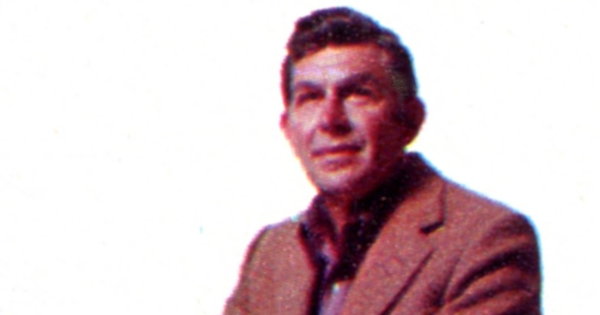
Andy Griffith returned to TV in this CBS sitcom, playing the headmaster of a prestigious private school. Although early Nielsen ratings were decent when it debuted in September 1970, reviews were critical of the show. The network replaced it with The New Andy Griffith Show in January 1971, and cancelled that show months later.
Andy Griffith Returns To Television
Following the conclusion of the 1967-1968 season, Andy Griffith left his long-running CBS sitcom, The Andy Griffith Show, and the beloved character of Sheriff Andy Taylor. He had appeared in 249 episodes over the course of eight years. The series continued without him in the form of Mayberry R.F.D., with Ken Berry starring as Sam Jones, a widower who finds himself elected to Mayberry’s town council. Griffith would make five guest appearances on Mayberry R.F.D. between 1968 and 1969. He also starred in a 1969 film titled Angel in My Pocket.
Broadcasting reported in its September 15th, 1969 issue that Griffith would return to CBS in a new sitcom planned for the 1970-1971 season; Richard O. Linke, a producer for both The Andy Griffith Show and Mayberry R.F.D., would executive produce the new show [1]. And in the November 17th, 1969 issue, a sitcom also titled The Andy Griffith Show from CBS-TV Productions was included in a list of likely pilots for the 1970-1971 season. Broadcasting called it a “contemporary comedy” and noted that it had been ordered to series without a pilot episode. Aaron Ruben, another longtime producer of the 1960-1968 The Andy Griffith Show, would join Linke in producing the new sitcom [2].
In February 1970, when CBS announced its fall schedule, Griffith’s new series had been given a title, The Headmaster, and a time slot, Fridays from 8:30-9PM, where it would follow The Interns (a new drama) and precede The CBS Friday Night Movies. The Headmaster would replace Hogan’s Heroes, which was shifted to the 7:30-8PM time slot on Sundays for its sixth and final season. The same time slot had once been held by Gomer Pyle U.S.M.C., a spin-off of The Andy Griffith Show, from 1967 to 1969. Cecil Smith, writing in The Los Angeles Times about the 1970-1971 season as a whole, noted that “the emphasis at CBS seemed to be on contemporary urban drama to counteract the network’s rube-tube image of recent years” [3].
Broadcasting called The Headmaster one of the new shows on CBS “calculated to generate a youth mystique,” although in its March 9th issue it called the series The Andy Griffith Show, suggesting that the title change had not yet spread throughout the entire television industry [4]. Clarence Petersen also referred to the series as The Andy Griffith Show in a March 8th article [5].
Andy Taylor Becomes Andy Thompson
In The Headmaster, Griffith would star as Andy Thompson, the headmaster of a small, coeducational private school in California. Joining Griffith in the cast were Claudette Nevins as Margaret Thompson, Andy’s wife and an English teacher at the school, Jerry Van Dyke as Jerry Brownell, the school’s football coach and Parker Fennelly as Mr. Purdy, the school custodian.
In the CBS fall preview for The Headmaster, Griffith explained that “since all of our students are teenagers we’re going to try to deal with many of the situations that young people come up against these days. And in all of these stories there’ll be a combination of comedy and drama” [6].
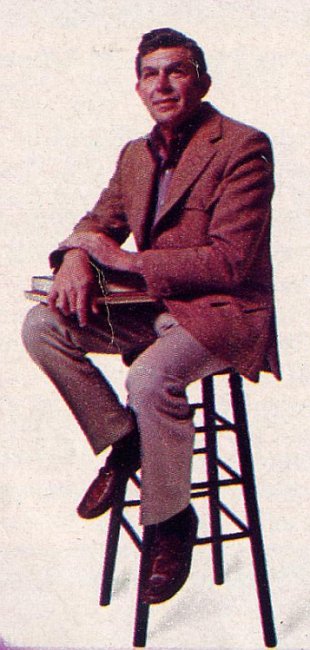
Copyright © TV Guide, 1970 [1]
TV Guide quoted producer Aaron Ruben as calling The Headmaster a “comedy-drama, with varying degrees of each” [7]. The question facing the series was whether viewers would appreciate the mixture of comedy and drama within a contemporary sitcom starring none other than Andy Griffith. Jack Gould of The New York Times didn’t think so. He suggested that the premiere, in which a student nearly dies of an overdose due to peer pressure, was “modern TV waste,” and lamented that it didn’t live up to its potential:
Mr. Griffith and the school’s football coach, played by Jerry Van Dyke, shake their heads over the futility of their warnings but the chance to zero in on the social dilemma of the entrapped youngster was never explored. What so easily might have been a worthwhile half-hour drifted off into helpless generalities, all too typical television that invites a viewer to look at people but never learn anything about them. [8]
The student in question, played by Butch Patrick, adamantly refused to take barbiturates but, after being shunned by other students, eventually gave in. Later episodes dealt both with other issues faced by students as well as problems affecting the faculty. The second episode, for example, saw Headmaster Andy Thompson realizing that perhaps the school’s very free dress code wasn’t such a good idea after a new female teacher wears a miniskirt to school and becomes popular with her male students (and Coach Jerry Brownell, who wants to ask her out on a date).
Other episodes involved students dealing with pressure to succeed academically (both from themselves and their families), confrontations with angry parents, Margaret reacting badly to a student’s comment about her not understanding children because she doesn’t have any, Jerry deciding to quit after the track team loses again, and a male psychology teacher falling for a female student who feels the same way. Guest stars included Rob Reiner, Ron Howard (as Ronny Howard), Mark Hamill and Mitch Vogel.
Critics And Viewers Rate The Headmaster Low
The Headmaster premiered on September 18th, 1970. Like Jack Gould, the majority of critics were brutal in their reviews. Lawrence Laurent of The Washington Post called it “the major disappointment of this first week of the new season,” opining that “the missing ingredient is comedy” [9]. Dwight Newton of the San Francisco Examiner wrote that it “failed to be entertaining or convincing.” And Donald Freeman of the San Diego Union wrote that “the touch is heavy-handed, the blend of drama and humor uncertain, and Andy seems terribly uncomfortable.”
Perhaps the only positive review came from Clarence Peterson of The Chicago Tribune, who focused on the acting, writing that “Andy Griffith was plausible and likeable [sic], despite an annoying (but human) tendency to preach to his prep-school charges. Jerry Van Dyke as the athletic coach was funny for the first time in his television career, and Parker Fenelley as the caretaker was funny for the thousandth time in his.”
Andy Griffith’s popularity, coupled perhaps with the promotional efforts of CBS, led viewers to tune into the premiere of The Headmaster in large numbers. Opposite the season premiere of The Name of the Game on NBC and a repeat of The Ghost and Mrs. Muir on ABC, it ranked 20th out of 80 shows for the week with a 21.4/40 share [10]. It was the third highest-rated new series to bow during the week, behind The Mary Tyler Moore Show, also on CBS, and NBC’s Nancy [11].
The following week, The Headmaster fell to 38th place in the Nielsen rankings [12]. The week after that it was out of the Top 40 entirely. By late October it was obvious that the show wasn’t working. Changes needed to be made. An October 25th article by Joan Barthel in The New York Times Magazine quoted producer Richard O. Linke as saying “the public doesn’t want Andy stark. They don’t want ‘message’ shows. They want that old Andy Griffith back” [13].
The New New Andy Griffith Show
CBS had invested some $3.5 million into Andy Griffith’s return to television and expected a full season’s worth of episodes in return. They didn’t have to be episodes of The Headmaster, however. Here’s how Joan Barthel explained the format change to The New York Times Magazine:
There will be no dramatic transition–his wife will not run off with the plumber, nor will the school burn down–but sometime next January Andy will be relocated in a small town down South, “about 15 or 20 miles from Mayberry,” Linke says seriously. He will have no wife, one housekeeper, maybe two children. Some details remain unsettled–he may be a farmer, or even a sheriff again. But the show will not be called “Farmer” or “Sheriff.” Of the 53 shows that outranked Andy [in the latest Nielsen report] , only five were new this season. The title will be “The Andy Griffith Show,” or possibly “The New Andy Griffith Show,” so that this time there will be no mistake. [14]
The New York Times reported on November 18th that The Headmaster would be changing titles, becoming The Andy Griffith Show, and just about everything else in January of 1971. Andy Griffith would “give up the rarefied atmosphere of the academy for the more familiar part of mayor of a small town in North Carolina” [15]. A total of 14 episodes of The Headmaster were produced, the last of which aired on December 18th. A pair of repeats were broadcast the following two weeks and on January 8th, 1971 the show’s new format was unveiled.
In the new series, now known officially as The New Andy Griffith Show, Andy Griffith played Andy Sawyer, mayor of a small Southern town. Lee Meriwether played his his wife; Marty McCall and Lori Rutherford played his children. Guest stars in that first episode included Don Knotts, George Lindsey and Paul Hartman. All three had appeared alongside Griffith in the 1960-1968 The Andy Griffith Show. Critic Kay Gardella of The New York Daily News called the premiere “an amusing 30-minute episode” and wrote that “it certainly is superior to Headmaster” [16]. Tom Donnelly of The Washington Daily News, however, was less enthused, writing that “Andy Griffith may not be the only star in TV annals to serve as his own midseason replacement … but if this is the first it is the only novel facet of The New Andy Griffith Show” [17].
The premiere of The New Andy Griffith Show ranked 12th in the Nielsens, better than the premiere of The Headmaster, which had ranked 20th [18]. The second episode fell slightly to 14th, tying with Mayberry R.F.D. [19]. The series fell again in its third week, ranking 17th, and by the fourth week was out of the Top 40 [20, 21]. In March 1971, CBS announced it was dropping 13 programs from its schedule and The New Andy Griffith Show was one of them [22]. So were The Ed Sullivan Show, The Beverly Hillbillies, Green Acres and Hee-Haw. It was the infamous CBS “rural purge.” Griffith had helped usher in the age of the rural sitcom with The Andy Griffith Show in 1960. A decade later he — and The New Andy Griffith Show — was there to see it end.
What Went Wrong
Was the failure of The Headmaster due to seeming sophistication of Andy Griffith’s scholarly character? The Boston Herald-Traveler‘s Eleanor Roberts seemed to think so, suggesting in her review of The Headmaster that “they should have left Andy Griffith in Mayberry” because he “looked lost as headmaster in a dreary series that went nowhere” [23]. And advertising men from Lever Bros., during talks to sponsor The Headmaster, stated that the series was “a big switch on Andy, making him an intellectual” [24]. Executive producer Richard O. Linke was quick to point out that “he won’t be intellectual. This won’t be a snob-appeal school like Princeton, where you need a lot of money to get in. We’ll keep him right down the middle. Just plain people. Just basic good common sense. Andy Griffith won’t do anything that isn’t good for Andy Griffith, I can tell you that right now. And I can’t afford to have the man come back with a flop” [25].
Linke seemed confident that The Headmaster would succeed because “”the American public misses Andy on TV” [26]. Viewers may have missed Andy Griffith but they didn’t seem to care for The Headmaster. Stephanie Harrington, reviewing The New Andy Griffith Show, laid the sarcasm on thick while discussing how viewers preferred to see Andy Griffith:
And, to begin at the beginning, the title, simple though it might appear, was probably the subject of considerable thought. Using the star’s name, for instance, is an acknowledgment of the fact that there are millions of Andy Griffith fans across the country who would watch Mr. Griffith brush his teeth for 30 minutes (which, come to think of it, would be an improvement on the “plot” outlines of the first two installments of the new series). Evidently, a lot of these fans were lost to Mr. Griffith’s autumnal fiasco “Headmaster,” because the name was not there to let them know Mr. Griffith was. With no clues to go on, they would never have figured their down-home hero for that kind of a role. The word “new” in the title is probably a tacit admission that it was a mistake to try to update Andy’s image and a way of implying that the new show is bringing back the old Andy. [27]
Harrington then savaged The New Andy Griffith Show, calling it “a situation without the comedy, a premise that remains under construction for 30 minutes with no results except, one assumes, the only one seriously intended–selling the products of Bristol-Myers, Lever Brothers, and Pillsbury” [28]. To Harrington, it didn’t matter whether Andy Griffith was a headmaster, a mayor or a sheriff. Viewers would tune in if the show was worth watching. The Headmaster and The New Andy Griffith Show weren’t.
Interestingly, after The New Andy Griffith Show finished its run of new episodes and a handful of repeats, CBS brought back repeats of The Headmaster beginning June 25th. The final repeat aired on September 3rd; the following week a repeat of To Rome with Love was aired. And on September 17th O’Hara, United States Treasury premiered.
The Theme Song
Linda Ronstadt sang the theme song to The Headmaster, which was titled “Only a Man” (or perhaps “He’s Only a Man”). According to Brooks and Marsh in The Complete Directory to Prime Time Network and Cable TV Shows, 1946-Present, the song was written by Gordon and Williams [29].
The following audio file was originally recorded in 1970 off-air using a reel to reel recorder, then transferred to cassette tape before being digitized. Thus, the quality isn’t great.
Opening Theme Song Lyrics
Only a man.
And he walks like a man along a path.
Full of hills to climb without pause,
Climb them because he’s a man.
Yes, he’s only a man.
And he’ll give you a hand up the path.
Through the fields to climb if you will,
Climb them until you’re a man.
The closing theme song consisted of an additional stanza:
Closing Theme Song Lyrics
So hold out your hand to a friend
And help him to stand on his own
And find a path through the hills
To climb if he will
Climb them until he’s a man
Although Linda Ronstadt went on to much popular and critical acclaim in the decades since she recorded this theme, it’s one song that has never appeared on one of her albums.
Works Cited:
2 “Network program development for 1970-1971.” Broadcasting. 17 Nov. 1969: 53-54.
3 Smith, Cecil. “New Shows, Reshuffling: CBS, NBC Set Fall Slates.” Los Angeles Times. 21 Feb. 1970: A3.
4 “Network aim: to move with the times.” Broadcasting. 9 Mar. 1970: 19-22.
5 Petersen, Clarence. “Lowdown on–and the Implications of–Schedule Changes for Fall.” Chicago Tribune. 8 Mar. 1970: SCL1.
6 From the 1970 CBS Fall Preview Special (“We’ve Put It All Together”), broadcast date unknown.
7 Quoted in the blurb for The Headmaster published in the September 12th, 1970 issue of TV Guide (its “fall preview special”), page unknown.
8 Gould, Jack. “TV: Two Premieres of Social Relevancy on C.B.S.” New York Times. 19 Sep. 1970: 56.
9 Quoted in “Better reviews for latest shows.” Broadcasting. 28 Sep. 1970: 52-56.
10 Petersen, Clarence. “TV Today – ‘Relevance’ Eludes Nets; Viewing Off.” Chicago Tribune. 30 Sep. 1970: E7.
11 Ibid.
12 “CBS tops Nielsen in premiere week.” Broadcasting. 12 Oct. 1970: 39.
13 Barthel, Joan. “How to Merchandise An Actor On TV.” New York Times Magazine. 25 Oct. 1970: 28.
14 Ibid.
15 Gent, George. “C.B.S. Gives Reasoner Show To Morley Safer, London Chief.” New York Times. 18 Nov. 1970: 95.
16 Quoted in “Second season lands with dull thud.” Broadcasting. 18 Jan. 1971: 44-45.
17 Ibid.
18 “‘Smith’ fares well in New York ratings.” Broadcasting. 25 Jan. 1971: 24.
19 “‘Pearl Bailey’ scores high in New York Ratings.” Broadcasting. 1 Feb. 1971: 49.
20 “Second-season start puts ABC out in front.” Broadcasting. 8 Feb. 1971: 42.
21 “ABC still running well despite ratings confusion.” Broadcasting. 15 Feb. 1971: 46-47.
22 “A major face-lifting at CBS-TV.” Broadcasting. 22 Mar. 1971: 78.
23 Quoted in “Better reviews for latest shows.” Broadcasting. 28 Sep. 1970: 52-56.
24 Barthel, Joan. “How to Merchandise An Actor On TV.” 14.
25 Ibid.
26 Ibid.
27 Harrington, Stephanie. “A Very Mixeg Bag of Pop and Corn.” New York Times. 17 Jan. 1971: D23.
28 Ibid.
29 Brooks, Tim and Earle F. Marsh. The Complete Directory to Prime Time Network and Cable TV Shows, 1946-Present. New York: Ballantine Books (2007): 596.
Image Credits:
Originally Published March 5th, 2010
Last Updated March 2nd, 2025


It seems Jerry Van Dyke had a long wait to star in any successful sitcom until ABC’s 80’s? sitcom “Coach.”
Andy decided to return to TV because “Angel In My Pocket” tanked at the box office, and he cancelled his long-term Universal Pictures contract as a result. However, he brought Jerry Van Dyke, who supported him in the film, into the series because he KNEW how talented he was.
It didn’t matter: no one wanted to see a “relevant” Andy, as repeats of his earlier series were already widely seen on local TV stations during the day: people wanted to see “Sheriff Andy Taylor”, NOT “Headmaster Andy Thompson” [just as viewers really didn’t want to see Ronald Colman on “THE HALLS OF IVY” in the mid-’50s, even though it was directly adapted from his previously successful radio show; it, too, mixed gentle humor and serious dramatic themes, with Colman as “Professor William Todhunter Hall” of “Ivy College”]. Besides, the combination of comedy and drama worked far better on “THE ANDY GRIFFITH SHOW”; on “THE HEADMASTER”, everything seemed “forced”, as though it were an “issue of the week” show. And trying to revert to his earlier “patented” formula of small-town life, in mid-season, on “THE NEW ANDY GRIFFITH SHOW” didn’t help, either- that was rightly looked upon as “damaged goods”. It took most of the rest of the ’70s for Andy to “repair” his career, as it did Jerry Van Dyke’s.
Incidentally, Pat Williams and Kelly Gordon composed the show’s theme, “Only A Man”, probably the best part of the show.
Matlock Was A Country Lawyer. With Other Detectives Too Besides Andy Griffith.
1.Ray Milland As A Lawyer Markham
2.Raymond Burr In A Wheelchair Ironside.
3.Dennis Weaver As A Displaced Cowboy Lawman From Taos
New Mexico McCloud
4.Peter Falk As A Special Needs Cop With A Trenchcoat Columbo.
5.George Peppard And His Dog Banacek
6.Robert Blake With A Pet Cuckatoo Baretta
7.David Janssen As A Grouchy Ex-Cop Harry O
8.William Conrad As An Overweight Detective Cannon
9.James Garner As An Ex-Con The Rockford Files.
10.Mike Connors As A Private Eye Mannix.
11.James Franciscus As A Blind Detective Longstreet
12.Michael Cole,Clarence Williams III,And Peggy Lipton As Undercover Cops The Mod Squad.
13.Howard Duff As An Aging Cop And Dennis Cole As A Young Cop The Felony Squad.
14.Robert Taylor As An Aging Cop The Detectives.
15.Craig Stevens As A Private Eye At A Nightclub Peter Gunn
15.Gene Barry In A Rolls Royce Burke’s Law.
16.Jack Klugman As A Medical Examiner Quincy,M.E.
17.Robert Urich As A Private Eye For Hire Spenser For Hire.
18.Pat Morita As A Japenese Detective Ohara
19.The Forensic Detectives CSI
20.Four Women Working Women’s Murder Club
“LUCAS TANNER” did what “THE HEADMASTER” aspired to do with a much better storyline yet, in the end, with equal results.
Ironically, David Hartman was immediately employed continuously for the next decade while Andy Griffith spent the same fighting for everything he could get.
You can tell a new series might be an “iffy” one if there aren’t any scenes from a pilot episode available for network promos before the start of the season- and “THE HEADMASTER” was one of them. Instead, in this spot [Dick Tufeld is the announcer], we have Andy Griffith DESCRIBING what his new show will be like, while strolling through the sets to be used for the series. Why no “pilot episode”? Was it because CBS was so SURE Andy was going to give them another hit series, they gave him, Dick Linke and Aaron Ruben carte blanche to fashion the show the way they wanted it, at their own pace- sight unseen? I would have asked for, at least, a 10-15 minute “demonstration film” before making a full commitment…
I just realized, from listening to the theme, that Pat Williams also used a snatch of it (in a trumpet solo) to establish the scenes when Mary Richards attends her 12th annual high school reunion {class of ’59} in a 1971 episode of “THE MARY TYLER MOORE SHOW”!
Maybe the set designer saw the shape of things to come with that “THE END” in the window behind Andy….
I find it telling that Andy ended up in “Matlock”, a series about a “unique” (country) lawyer… this would have fit in perfectly with the 70’s trend of “odd detectives” like McCloud (cowboy), Cannon (overweight), Kojak (bald), Baretta (seedy), The Rockford Files (ex-con) and Columbo (special-needs).
I just realized…. Buddy Epson (Barnaby Jones— country detective) sort of beat him to it!
I. Loved. The andy. Griffith. Show. Him. As. The. Sheriff. But. Not. Barney. Fife. He. Was. A. Idiot.
Maybe you should learn spelling and punctuation so people won’t think you’re an idiot.
Griffith was tied to CBS, called “the Tiffany Network,” so everyone played it safe in presenting a wholesome take on important issues of the day. Everyone was to blame in that regard..
If memory serves, “Eight Is Enough” actress, Lani O’Grady had a role as student teacher. Her potential success in later roles was thwarted by emotional issues and she died a few years ago.
Jerry Van Dyke role as athletic director was never fleshed out and like Parker Fennelly his role was more for comedic relief than anything relevant to the situations in the episodes. The Ronstadt theme is one of my fave tv trivia stumper questions.
Telly Savalas And His Lollipops Kojak
Richard Roundtree As Black Detective Shaft.
James Stewart As A Lawyer Hawkins.
Tom Bosley As A Priest Father Dowling Mysteries.
Michael Chilkis As A Commissioner The Commish.
Anne Francis As A Female Private Eye Honey West.
Efrem Zimbalist,Jr As A FBI Man The FBI
Jack Lord As A Cop Hawaii Five-O
Burt Reynolds As A Lieutenant Dan August
Angie Dickinson As An Undercover Cop Police Woman.
Lou Antonio And Kim Basinger In Dress Clothes Dog And Cat.
Kathryn Morris In Dress Clothes Cold Case.
Melina Kanakaredes In A Red Button Up Blouse,Burgundy Two Button Leather Blazer And Blue Jeans CSI NY
Holly Hunter In A Red Button Up Blouse,Burgundy Two Button Leather Blazer And Blue Jeans With A Brown Leather Belt With Gold Buckle Carries A 32 Colt Detective Special Snubnosed Revolver In Bianchi Right Hip Right Hand Belt Holster Saving Grace.
The Cops And Lawyers Law And Order.
Dick Van Dyke As A Doctor Diagnosis Murder
Larry Gates As A Hispanic Medical Examiner Solving Crime Aaron Acosta.
Rock Hudson As A Commissioner MacMillan And Wife.
Richard Boone As A Cowboy Cop Hec Ramsey.
Jessica Walter As A Female Cop Amy Prentiss.
The Rural Purge Was In 1971 Lawrence Welk Was Cancelled By ABC
As Well As Hee Haw Was Cancelled By CBS. Made Into A Song By Roy
Clark.
The Rural Purge Was In The Late 1960’s And The Early 1970’s.
The Rural Purge Had Started In 1967 Right Until The Early 1970’s
To “Dellie Goose”…As a fan of daytime TV, I have to add Forrest Compton as Monticello’s DA Mike Karr from the gone but never forgotten “The Edge of Night”!
There Were Lot Of TV Cops And Private Eyes. Who Are Both Men And Women.
Andy Griffith RIP
I remember there being a lot of excitement about this show in our household because we all loved Andy Griffith. And I remember the crushing silence as we watched the first episode (which is the only one I remember; if we watched any others, I don’t recall them). It just didn’t work at all. Two factors that probably contributed to its failure were that it was a comedy-drama, which wasn’t something people were used to seeing on TV in those days; and, as I recall, it didn’t have a laugh track, which seemed very odd back then. But it wasn’t very good anyway. I also remember watching The New Andy Griffith Show. It was slightly better, but not much. If Headmaster wasn’t enough like Andy’s old show, The New AGS was TOO derivative, and inevitably suffered in comparison. But it was decent, and apparently got decent ratings, so I wonder if it might have survived for another season or two if not for the rural purge.
Andy Griffith Played Matlock Country Lawyer,
Jack Klugman Played Quincy Coroner Detective.
CBS definately was headed in the right direction by eliminating those dreadful “down home” spun comedies that dominated the network way too long. 1970 was a clearing house for CBS. Two of the greatest, most cutting edge sitcoms of all time, The Mary Tyler Moore Show and All In The Family came to light. Along the way came MASH, The Bob Newhart Show, The Jeffersons, Maude, etc. All of these shows have held up extremely well over 4 decades, compared to inferior comedies like The Beverly Hillbillies, Green Acres, Petticoat Junction, Hogan’s Heros, etc., which were horrible shows when new and even worse today. Television was reborn in the ’70s and only continued to progress from then on.
Bill, how foolish you are. Those dreadful programs have build the foundation for a number of popular “oldies” networks today — You don’t think Beverly Hillbillies, Green Acres, etc. have “help up extremely well”? I would argue programs such as Maude, The Jeffersons and Bob Newhart seem dated themselves.
I always thought “Matlock” was a ripoff of “Anatomy of a Murder” starring Jimmy Stewart. It would have been better to have Jimmy Stewart play Matlock instead of those two lame shows he did in the 70’s.
Matlock Was Then A Country Lawyer,
Raymond Burr In A Wheelchair Ironside,
Jack Lord As Cop In Hawaii McGarrett,Hawaii Five-O,
Dennis Weaver As A Cowboy Cop From Taos In New York,McCloud,
Peter Falk In A Trenchcoat Columbo,
George Peppard As A Cop From Summit,Washington Banacek,
Telly Savalas And His Lollipops Kojak,
Robert Blake With A Bird Baretta,
Mannix Had Breed Of Private Detectives,
Blind Detectives Longstreet,
Fat Detectives Cannon,
Ex-Cop Detectives Harry O,
Con Artists Detectives The Rockford Files,
Doctor Detectives Diagnosis Murder,
I’m going to disagree with you. I think the announcer is Danny Dark.
With a title like that it would have been a better vehicle for Linda Lovelace, rather than Andy Griffith.
Interesting that the theme was sung by a then not-yet-kinown Linda Ronstadt, even though her now-classic “Long, Long, Time” WAS in the top 40 when this came out (and is, IMO, among her best..)
Nice to see some familiar names here posting from other platforms and sites!
Hold on…was it “Headmaster” or “*The* Headmaster”…?
As if “Headmaster and “The New Andy Griffith Show aren’t obscure enough, here’s some more esoteric trivia about these two shows:
One other possible factor for the failure of these two shows, which no one has mentioned, besides the negative critical reviews, was the time slot; the ratings could have also been weak because the shows were broadcast on Friday nights, which is when people like to go out and have fun with their friends and family, instead of going home and watching TV.
I also have a theory that, if the episodes of “Headmaster” and “The New Andy Griffith Show” still exist today, they could possibly be in the public domain. My reasoning is that, at the time, when copyrights were issued, they were valid for twenty-eight years, and then they had to be renewed, so they would have expired back in 1998 and 1999. I’ve been searching the government’s copyright database web site for both titles, and neither one of them comes up. There are unrelated “Headmaster” titles listed, but none from 1970, nor any renewals filed back in either 1998 or 1999. The episodes of “The Andy Griffith Show” from the 1960s are listed in the database, with their renewal dates listed, but “The New Andy Griffith Show” is absent, and there are no records of any renewals of it from 1998 or 1999 either.
The only plausible reason for the lack of any copyright renewals for “Headmaster” and “The New Andy Griffith Show” that I can think of is because both shows were so unpopular that no one remembered them by the late 1990s, so no one even knew that their copyrights has expired.
The reasons why I’m unsure if the episodes of either show still exist today is because:
1. A lot of TV shows were destroyed after they were broadcast back then.
2. The only reruns of them were back in 1971, right after both shows were cancelled, and then never shown again.
3. Both shows predate Betamax and VHS by five years, so the viewers at home had no way to tape them and watch them later.
I don’t know for sure if what I wrote about these these shows is true, but it’s just fun to think about.