
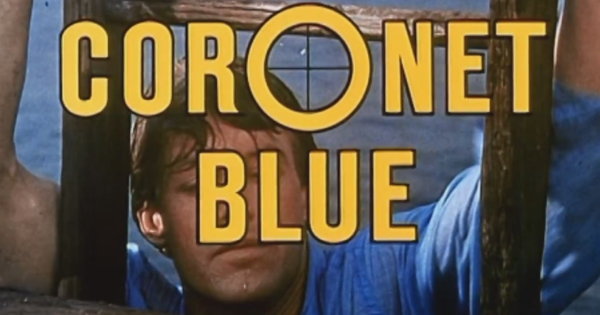
CBS ordered 22 episodes of Coronet Blue in January 1965, planning to air the show during the 1966-1967 season. The network later cut the episode order to 13 and then shelved it until the summer of 1967. Frank Converse stars as an amnesiac who remembers the phrase “coronet blue” and nothing else. The show ended without any conclusion, leaving viewers wondering what it all meant.
A Lengthy Journey to Television
It’s not often one of the TV networks will go to the trouble of producing a number of episodes of a TV show and then not air them. Pilot episodes are filmed and cast aside in the hundreds every season. But 13 episodes? That’s a lot of money to write off. So, when CBS shelved 13 episodes of a drama called Coronet Blue in 1965, it was an unusual occurrence. The network, in an attempt to recoup some of the cost of producing the episodes, scheduled them for a summer run beginning in June 1967.
The story of Coronet Blue actually begins almost three years earlier when The New York Times listed it as an hour-long pilot in the running for a spot on the CBS 1965-1966 schedule [1]. In its January 25th, 1965 issue, Broadcasting reported CBS had ordered 22 episodes of Coronet Blue for the upcoming season [2]. The series would “concern the ‘search for identity’ of teenagers just reaching young adulthood” but would feature only one regular character, one with amnesia [3].
According to executive producer Herbert Brodkin, however, the amnesia was an allegory for “more abstract quests for identity to be explored in each episode” [4]. In its February 1965 issue, Television Magazine explained that Coronet Blue would feature a “no-format format” and would “dramatize the search for identity of young Americans” [5]. Brodkin told Television Magazine that because the show would have no other regular characters, the sole main character in Coronet Blue would be “free of boundaries. Therefore, so are the writers” [6].
Herb Brodkin’s Television Empire Crumbles
Plautus Productions, a subsidiary of Paramount Pictures Corporation of which Herbert Brodkin was president, would produce Coronet Blue. As Broadcasting pointed out, that meant Plautus would be in the incredible situation of having five television shows on the air at the same time, all on CBS, if everything worked out. Two Plautus shows–The Doctors & The Nurses and The Defenders–were currently on the air. Mid-season replacement called For the People had a January 31st premiere. The Quest would premiere in the fall alongside Coronet Blue.
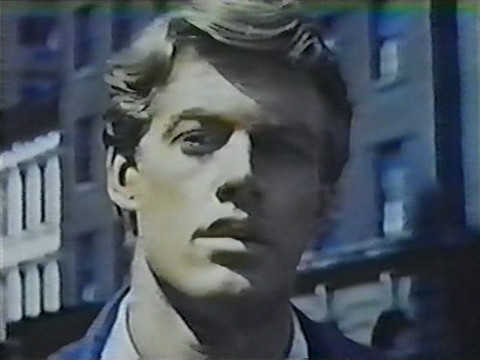
The first, tentative CBS schedule for Fall 1965, released in early February, didn’t include The Quest, placed Coronet Blue on Fridays from 10-11PM, and left out both The Defendersand The Doctors & The Nurses [7]. It looked like Plautus would, at best, have only two shows on CBS during the 1965-1966 season: Coronet Blue and For the People. On March 8th, The New York Times reported that Frank Converse had been given the lead role in the series [8].
And then everything fell apart.
CBS renewed Slattery’s People, the show Coronet Blue would replace on Fridays during the 1965-1966 season, in mid-March [9]. With Slattery’s People back on the schedule there was no room for Coronet Blue. However, Michael Dann, the CBS vice president for programming, asserted that “we have enormous enthusiasm for Coronet Blue and expect it will be in our schedule in 1966″ [10].
Hal Humphrey, in an article for The Los Angeles Times, explained how the abrupt renewal of Slattery’s People was mostly a result of James Aubrey being fired as president of CBS. It was not, as many presumed, because of letters and appeals from fans [11]. After taking over as president, CBS chief Frank Stanton wanted to prove to the public and the TV industry the network was changing without Aubrey. Michael Dann suggested renewing Slattery’s People, a series Aubrey hadn’t supported [12].
The final shoe dropped on March 26th, 1965 when CBS cancelled For the People after just 13 episodes [13]. In the space of less than two months, Herbert Brodkin and Plautus Productions saw three TV shows canceled, another not picked up, and a fifth placed in limbo. It would start the 1965-1966 season without a single show on the air.
Production on Coronet Blue Continues
Although it didn’t have a slot on the CBS schedule, Coronet Blue began filming in New York City in the spring of 1965 [14]. Seven episodes had been completed by mid-July, with production set to wrap at the end of the month [15]. The network cut the show’s order from 22 to 13 episodes, spending over $2 million to produce the series. On July 15th, John Schneider visited Plautus Productions in New York City to watch a finished episode and parts of several others [16].
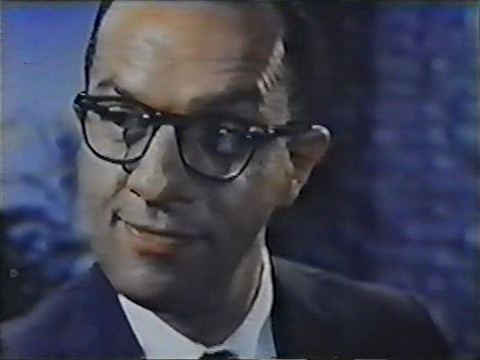
According to Broadcasting, Herbert Brodkin (who was executive producing the series) and Edgar Lansbury (a producer) were hoping that Schneider would include Coronet Blue in the 1966-1967 CBS schedule rather than use it as a mid-season replacement in January 1966 [17]. But Larry Cohen, who created Coronet Blue, was happy just being paid:
Sure, I’m disappointed [about the series being dropped by CBS] but what the hell. They’re committed for 13 episodes which are being filmed now, so I’ll make at least 20 grand, and who knows, maybe it will go in mid-season. Something on CBS is probably going to flop, and they’ll need it. [18]
Cohen came up with Coronet Blue after Herbert Brodkin asked him if he had any ideas for a television show. Cohen had earlier written episodes of Brodkin’s The Defenders. Unlike Brodkin, who saw the show as a “search for identity,” Cohen stated simply that Coronet Blue was “about a man who is nearly murdered, and in each succeeding week’s episode he is chasing his would-be murderer” [19]. Cohen modeled Coronet Blue (and another show he created, Branded) on ABC’s The Fugitive and had to push Brodkin to bring it to CBS [20].
Delayed Debut
Coronet Blue was not used by CBS as a mid-season replacement, as Cohen had suggested. Nor was it included in CBS’s 1966-1967 schedule as Brodkin had hoped. Instead, it simply disappeared. In late February of 1966, in an article discussing television shows about characters on the run Val Adams of The New York Times asked “whatever happened to ‘Coronet Blue’?” [21].
He wouldn’t get his answer until April 1967 CBS finally announced Coronet Blue would be given a slot on its schedule. It would premiere on Monday, May 29th at 10PM, replacing To Tell the Truth and Password [22]. Critics were not kind to the show, with Jack Gould of The New York Times writing that “the program is a dull one in any weather” with “sticky dialogue and corny villains” [23].
Gary Mayfield, writing for The Los Angeles Times, was harsher:
Filled with everything but drama, the premiere episode was a study in confusion — from acting to script. With sequence after sequence of erratic and hardly relatable scenes, cliches tumbled forth without force or meaning, backed by a musical score out of a daytime soap opera. [24]
Mayfield suggested that, if later episodes were as bad as the pilot, “the only answer to Michael Alden’s query of ‘what’s out there for me?’ will be empty living rooms” [25]. Clay Gowran of The Chicago Tribune called Coronet Blue a “tired takeoff” of shows like The Fugitive (which was successful) and A Man Called Shenandoah (which wasn’t) [26]. According to Gowran, “network publicity proclaimed that seven writers had worked on Coronet Blue. If so, they must have been suffering an off day when they concocted the opener, because some of the dialogue was almost unbelievable” [27].
The only “bright spot” Gowran could see concerning Coronet Blue was that only 13 episodes existed [28].
Who Is Michael Alden?
In the premiere episode, the unnamed character played by Frank Converse is attacked aboard a luxury liner and tossed overboard. He barely survives. Pulled out of the water, he’s brought to Alden General Hospital. Although he regains consciousness, the attack leaves him with amnesia. He can’t remember his name or anything about his identity. The one thing he can recall? The phrase “coronet blue” but not, of course, its meaning.
(Alden General Hospital was also the name of the hospital in the prime time drama The Nurse/The Doctors & The Nurses and its daytime spin-off, also called The Nurses. Plautus Productions produced both shows.)
The man decided to call himself Michael Alden, after the name of the doctor treating him and the hospital, and set out to learn the truth about who he was. He began by trying to figure out what “coronet blue” meant. Alden got a job at The Searching i, a diner/coffee shop owned by Max Spier (played by Joe Silver), and the two became friends.
Alden would also befriend a monk named Brother Anthony (played by Brian Bedford). Alden met Brother Anthony after being shot while walking through the streets of New York City. Wounded, he passes out and when he weakes up he discovers he is in a monestary, where Brother Anthony lived. In the monestary’s chapel was a stained glass window that appeared to show Alden’s face surrounded by a dozen demons.
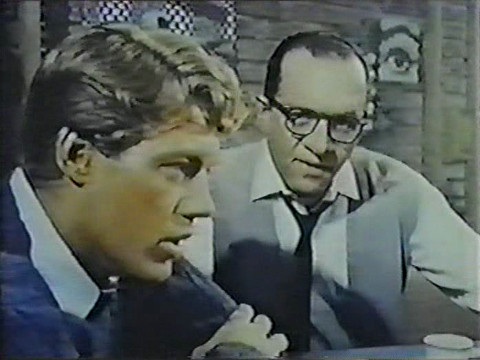
Converse was the only regular cast member. Silver and Bedford had recurring roles and each appeared in only a handful of episodes. Every week, Michael Alden would attempt to uncover his past and learn who he was.
What Does “Coronet Blue” Mean?
Alden’s investigations often leads to dangerous situations. In one episode, he believes he’s meeting someone in Central Park who can tell him who he is. Instead, he’s attacked. He escapes by hiding in a cave where he meets a young boy who recently lost his father. In another episode, while attending a magic show Alden thinks the sapphire crown worn by the magician’s assistant is a clue. But the magician’s wife threatens him.
Several episodes featured clues that ultimately went nowhere. A newspaper brings Alden him to a couple who claim they’re his parents and a woman who says he’s her fiance. There’s even a picture of him in the couple’s house. But all is not what it seems. Likewise, after spotting himself in a picture, Alden visits a small New England town looking for answers. Instead, he learns the picture is from the funeral of a murder victim. Was he the killer?
Other episodes involved Alden traveling to Ohio to consult a memory expert, getting a job at a college and finding himself in the midst of a campus rebellion; coming to the aid of a pedestrian who took a bullet meant for him; drawn into a complex trap starting with a matchbook; participating in a simulated mission to Mars; and connecting song lyrics to his missing past.
The Mystery of Coronet Blue
CBS broadcast episodes out of order. The network pre-empted Coronet Blue the week after it premiered (June 5th). It was pre-empted again on June 26th. Thus, in its first six weeks on the air, CBS aired four episodes of Coronet Blue. Football pre-empted the series for two weeks in late August. The 11th episode aired on September 4th. CBS opted not to broadcast the final two episodes.
On July 15th, The New York Times reported that Coronet Blue would end its summer run without any sort of conclusion. The popularity of the show with viewers surprised CBS executives and critics alike [29]. According to a CBS spokesman, “I certainly don’t know how it would have ended. I doubt if the author does” [30]. But creator Larry Cohen did know:
I’ve never been associated with a show like this one. I know how it ends, but I can’t tell you. I’m negotiating with TV Guide to do an article on how it would have ended, but even that depends on whether or not someone decides to revive the series. With all this attention, it could happen. I can say this: All of the clues to Michael Alden’s identity are contained in the first episode.” [31]
Cohen also revealed his goal with Coronet Blue was to craft a “search program,” that the role of Michael Alden had originally been planned for an older actor, not 27-year-old Frank Converse, and that Brodkin “changed the original conception because he wanted something more than suspense. He felt it should have social consciousness because that had been responsible for the success of his earlier series, The Defenders [32].
Had CBS wanted to continue Coronet Blue–which it didn’t–it couldn’t. Frank Converse had a new lead role in ABC’s N.Y.P.D. series that premiered on Tuesday, September 5th, the day after Coronet Blue went off the air. When asked by Linda Crawford of The Chicago Tribune in August 1967 if “it was true the phrase Coronet Blue meant nothing,” Converse had this to say:
Absolutely. Nothing at all. It was just a taking-off point, a story gimmick, one I think would offend any adult watching the show. The Fugitive was much more sophisticated in that respect, in its premise, in filling in background. We had no premise–just amnesia, period. The show was so general it’s almost impossible to talk about.” [33]
N.Y.P.D. survived for two seasons, with its last first-run episode airing in March 1969. Converse later co-starred in Movin’ On on NBC from 1974 to 1976, and made dozens of guest appearances throughout the 1970s. But he found it difficult to move past Coronet Blue, despite never finding out what the title meant. He explained in February 1981 that “the words were just a story hook” and “the history of the show was as much of a mystery as the content of the show” [34].
In March 2001, Converse told The Hartford Courant that people were still telling him how much they loved Coronet Blue. He even went to an audition once only to learn there wasn’t a role for him. People just wanted to talk to him about the show [35].
Theme Song
Lenny Welch performed the theme song to Coronet Blue. Here are the lyrics:
Opening Theme Song Lyrics
Coronet Blue
Coronet Blue
Deep down inside my brain
I keep hearing that wild refrain
Coronet Blue
No other clue
I know that this must be
The thing that can set me free
For I was born just yesterday
Lonely as a misty river
Always a’ moving like a river
If I linger, I will die
And so I go my lonely way
Every journey filled with danger
Even to myself a stranger
Wondering who am I.
Coronet Blue.
The Identity Of Michel Alden Revealed
Even if the phrase “coronet blue” meant nothing, there was an answer to the mystery of Michael Alden’s identity. Larry Cohen knew it. In 2003, Elvis Mitchell revealed in an article about Cohen for The New York Times that Coronet Blue “was to culminate with the Converse character’s discovery that he was a Russian sleeper agent on a destructive secret mission” [36].
Availability
TV Land aired several episodes of Coronet Blue in the 1990s but otherwise the show has not been seen on TV since it went off the air. Prints of all 13 episodes, including the two unaired by CBS, have been part of the collection at the Library of Congress since 1992. The UCLA Film & Television Archive has two episodes of the show; The Paley Center for Media has six.
In July 2017, Kino Larbor released Coronet Blue on DVD, allowing fans the opportunity to rediscover the show and finally watch the unaired episodes. The 4-disc set contains all 13 episodes plus an interview with creator Larry Cohen.
Works Cited:
2 “Plautus May Have Five Shows on CBS-TV.” Broadcasting. 25 Jan. 1965: 74.
3 Ibid.
4 Ibid.
5 “The Month.” Television Magazine. Feb. 1965: 7-9.
6 Ibid.
7 Adams, Val. “C.B.S. Fall Slate Omits 14 Shows.” New York Times. 4 Feb. 1965: 63.
8 Gardner, Paul. “A.C.L.U. Lifts Bars to Pay-Television.” New York Times. 8 Mar. 1965: 59.
9 “Networks Report Sales for Next Season.” Broadcasting. 22 Mar. 1965: 62.
10 Ibid.
11 Humphrey, Hal. “Slattery Thrown Lead Life Ring.” Los Angeles Times. 29 Mar. 1965: C22.
12 Ibid.
13 Adams, Val. “C.B.S. Will Drop ‘For the People’.” New York Times. 26 Mar. 1965: 71.
14 An April 8th, 1965 article in The New York Times by Val Adams stated that filming would begin “soon” in New York City (“A.B.C. Prepares Innovations For Its Venture Into Baseball,” Page 79).
15 “A Slot on the Network May Be Hard to Get.” Broadcasting. 19 Jul. 1965: 29.
16 Ibid.
17 Ibid.
18 Humphrey, Hal. “Larry’s a Young Man in a Hurry.” Los Angeles Times. 12 Apr. 1965: D22.
19 Ibid.
20 Ibid.
21 Adams, Val. “TV Heroes on the Run.” New York Times. 27 Feb. 1966: X23.
22 “Coronet Blue Set for Summer Slot.” Los Angeles Times. 17 Apr. 1967: D33.
23 Gould, Jack. “TV: Crisis in Middle East Is Given Full Coverage.” New York Times. 30 May 1967: 43.
24 Mayfield, Gary. “Coronet Blue Series Better Left Forgotten.” Los Angeles Times. 30 May 1967: F12.
25 Ibid.
26 Gowran, Clay. “New Mystery Series Has a Dubious Start.” Chicago Tribune. 30 May 1967: B2.
27 Ibid.
28 Ibid.
29 George Gent wrote in The New York Times that “Few expected it to be anything more than [a summer replacement]. The critical reception was generally unenthusiastic. Despite this, the series has had good ratings, and its hero, played by Frank Converse, has become a darling of the teen-agers.” (“TV Show to Take Secret to Grave,” Page 23).
30 Ibid.
31 Ibid.
32 Ibid.
33 Crawford, Linda. “N.Y.P.D. Is No Dragnet: Converse.” Chicago Tribune. 20 Aug. 1967: F14.
34 Reich, Steve. “Frank converse metes out.” Herald Statesman [Yonkers, NY]. TV/Radio & Cable Week sec. 1 Feb. 1981: 25.
35 Seremet, Pat. “Father Figure Frank Converse, At 62, Moves Into the Next Stage of His Acting Career.” Hartford Courant. 13 Mar. 2001: D1.
36 Mitchell, Elvis. “Larry Cohen’s Art of Paranoia.” New York Times. 27 Apr. 2003: 2.13.
Originally Published December 29th, 2008
Last Updated May 1st, 2018


I had a chance to watch the pilot episode recently and after seeing it and knowing the nature of what it all meant thanks to Cohen’s 2003 revelation, there really isn’t any reason IMO to watch any more episodes. If it’s indeed true that “Coronet Blue” became more anthology oriented in that it never really gave any forward momentum to the matter of who “Michael Alden” then there really wasn’t any point to watching. “The Fugitive” could get away with being an anthology show in which the focus did not have to be on Dr. Kimble trying to clear himself, but this whole premise is the sort of thing that just sounds better for a miniseries or movie, not a regular TV show.
I follow your point, and you present it masterfully, but listen. When I was a kid, we moved around from place to place and we didn’t always have a TV. In 67 we were living in a motels and moving around. Anyway, 50 years ago, when I was 7 years old, I was sitting on a bed watching TV. I don’t remember much from back then, but I remember Coronet Blue, and caring about what happened to him. Life moved on and I never found out.
My take on this is that the true success of a show is best measured way down the road. Maybe like impression it makes on a 7 year old.
I just finished watching the 13 episode run (11 broadcast episodes and two unaired work-prints. Coronet Blue had, with the exception of a couple of episodes, very good writing with great dialogue — so much so that you have to pay attention not to miss something said. The show also had wonderful guest stars — Dick Clark, Susan Hampshire, Alan Alda, John Voight, David Carradine, Candace Bergen, Richard Kiley (the last four in one episode!) and others. Also the semi-regulars, Joe Silver as Max and Brian Bedford as Anthony, are very good, and have great acting chemistry with star Frank Converse, who puts in a moving performance.
The series plays with how memory and reality don’t always match, and also with the larger questions of identity and what does makes us who we are? There are word plays such as the club Max owns is called “The Searching I” — which is exactly what Alden is doing — searching for his I(dentity) — it also taken from “the Hungry I” – a legendary 1960s club in San Francisco. By the way, the New York locations are fun, east side, central park, hofstra university, and others. I believe I saw a handful of episodes in 1967 as a ten year old, the same summer that The Prisoner — another series about identity — came out.
It is interesting to watch Coronet Blue and then see Unknown White Male (2003), a documentary about a man in New York who completely lost his memory/identity and found himself on a subway.
Some people write Coronet Blue off because we never discover who Michael Alden (Converse) realy is. After watching the series, I can say that it really doesn’t matter that we don’t find out. The stories are about Michael Alden finding himself through the journey, not the destination. In the 13th and final episode Alden says that he learned that he finds who he really is within himself, not through information from other people. Although the series didn’t know it was ending, this last episode ends with Michael Alden sounding more at peace with himself than he ever had been. In that sense, it seems to me that it ended in a complete way.
Where did you find the Episodes. I have been searching but no luck. is therre a site or are they available on VHS or DVD?
I can help you out if you are still looking to trackdown some episodes.
Looking for the movie “Coronet Blue” Episode #11 – The Rebels
Any help will be appreciated.
Eddie Diaz
[email protected]
Man I was 14 years old when the show came out. Hormones where poppin’ and I wanted to be cool just like Frank Converse so I could get me some females. I even combed my hair like him. The show ended abruptly and I was dissapointed, but I stayed cool and met me a lotta young babes.
Watched an episode (don’t know which one, not our first) with mom. When over, I thought it was a very good one. Mom said, “I didn’t like that one, did you”? Being 14 or 15 and wishing I was cool, I agreed. Went to my room and heard 2 friends outside, opened my window and said, ” hey, did you guys just see Coronet Blue? Wasn’t it great”? They both said “yeah, really good”. Maybe you had to be a teen (or close) to like it. Bob W.
I still have my Coronet Blue tab-collar windbreaker: “Sir Rain” by “Sir Jack”. For a 17 year old girl, I guess that made me a fan. I still binge on the show. At least every 3 hours for all my undergraduate years, I thought the CB theme. There was a balance and a unity and an effin’ BEAUTY to that show. Finally being able to watch all the episodes is Important to me. It allows me to, when the time comes, lay down my life without a feeling of “NO, WAIT…!”. Not all by itself, but I don’t feel I must visit NYC, it’s enough just to watch. Surely, that means TV shows qualify as Art. Mine was the first TV generation, so sue me.
Yes?
Please?
Theoni
A very popular pastime during the restroom cigarette breaks in my grade school back then was a guy would climb on top the toilet in the stall,press the flush lever with his foot and perform the Frank Converse opening scene.
OK, so why was there a go-go girl in the intro? That was my favorite part of the show, but I wondered at the time, and still do, why she was in there. Most of the intro shots are of the hero, or his friends or enemies, and then there’s her, with no apparent connection to the rest of the characters. And she’s not just shown once or twice, but seven times. Unlike Michael Alden’s secret, the mystery of the go-go girl will, apparently, never be solved.
@Eric Paddon; for a guy like you, Coronet Blue means nothing after a couple of episodes, but many of us think that it was much better planned and written show than the one that you’re an obsessive fan of, the over-rated Battlestar Galactica: TOS! A tragedy that it went on for two years and not Coronet Blue-which actually worked.
If you’ve got nothing better than a snarky post dragging in unrelated matters from another place to offer in response, that says something about the lack of substance to your remarks. But if you want to play that game, all I’ll say is that Galactica at least bothered to maintain some forward momentum in regards to it concept which this show never did. And having then had to endure the obnoxiously pretentious Candice Bergen episode I got a nice reminder of how glad I was that Cohen was kept at arms-length from “The Invaders”.
And incidentally, if you actually knew anything about the real Galactica, you would know it did not last two years. Don’t try to lump Galactica: 1980 into that show.
Thanx for the amazing job you’ve done reviving the memory of Coronet Blue. It was wonderful to hear the theme song and see the opening scene and the scene in the blue coronet bar. i’ve read a great deal about this show but this is the very first time i’ve really gotten a feel for how special it is. Fantastic work thanx again.
Coronet Blue Was On TV Land They Should Have A Cable Channel That Will Launch January 1,2013 Called Old TV Randolph Mantooth,Kevin Tighe,David Cassidy And Bobby Sherman Will Be The Morning Hosts From 6 AM Eastern To 10 AM Eastern. Robert Vaughn And Dawn Wells Will Be From 10 AM To 12 Noon Faye Dunaway And James Garner Will Be From 12 Noon Thru 8 PM Eastern Patrick Labryotaux And Karri Turner Will Be From 8 PM Eastern Thru 12 Midnight
When I was 14 my girlfriend and I used to babysit neighbor kids and were hooked on Frank Converse, trying to see who could kiss the screen first whenever he came on. Then——-gone. We were crushed, heartbroken, empty shells of the little girls we used to be. I hope to watch ALL the episodes and see how it looks 45 (yikes!) years later.
Another great, though short lived, show with Frank Converse was DOLPHIN COVE, where he played a scientist and father studying dolphins in Australia.
If anybody could help me track-down some of the episodes, it would be great. I saw one on youtube, but that was it and the pilot — which the creator said “All of the clues to Michael Alden’s identity are contained in the first episode.” — would be great to see.
> [email protected] <
Growing up as a teen I thought Coronet Blue was as cool as cool could get.
Too bad the jerks in HOLLYWEIRD did not continue this excellent t.v. show.
According to an article on another website (http://wesclark.com/webnoir/coronet_blue.html) he was a Russian agent who belonged to the spy unit called Coronet Blue but turned.
Lately I have seen sites advertising DVD sets of Coronet Blue. This was my dream show in summer of mid 60s, and I would love to get it. But are these legit? I heard there were no dvd sets available.
They are not legit. Any DVD sets you see advertised online are bootlegs. There is no official release, unfortunately.
Well that just upset my apple cart! I was getting so jazzed at finally getting to see the show again. Oh well. Thanks for the reply.
All 13 episodes are on YouTube. I did a random search in December 2016 and there they were! Grab ’em while they last before some bozo decides they deserve some back-pay or something–just like the Jimi Hendrix’ Royal Albert Hall performance video kept on a dusty shelf somewhere until whoever owns the rights to it can squeeze every possible penny from Jimi’s sister. Arrgh!
YouTube’s Coronet Blue picture quality is below average, so they are presumably from someone’s private collection, otherwise it is a pleasure to see them again plus the 2 originally-pre-empted episodes.
Converse is excellent. A shame this series wasn’t continued further, thus leaving viewers flat with no resolution–which is the main reason it has attained cult status.
Unsolved mysteries tend to linger in one’s memory until, or if, they are resolved, after all.
They are no longer there. Just checked. Only the intro.
I wonder if the episodes disappearing from YouTube has anything to do with a rumor that the series is coming to DVD.
Lenny Welch’s recording of “Coronet Blue” was released as a single when the show premiered in 1967, but I don’t think it even made the top-40 charts.
My guess is that producer Herbert Brodkin wanted a pop/rock theme song for “Coronet Blue” for the same reason the producers of the British import ‘Secret Agent” did—-to become a hit record which in turn could help promote the series.
Folks, it’s happening. Coronet Blue is coming to DVD courtesy of Kino Larber. No release date has been announced yet but a new interview with creator Larry Cohen will be included.
heck yeah. I can’t wait! I assume this will really be legitimate!
Larry Cohen claim that Michael was actually a Russian spy doesn’t make any sense. Wouldn’t Michael speak read and write Russian? Russian would be his first language and English his second. Why would he remember only English and not Russian? And he would remember Russian culture and life. He obviously remembered how to drive a car, dress himself, live day to day, so his amnesia wasn’t complete. They should have done a TV movie in the 70’s to resolve the mystery.
This is a very good point that I also thought of after listening to the Cohen extra on the DVD. Not only that but would the KGB be so inept that they couldn’t capture or assassinate him? They shot at him constantly and always missed. It became laughable.
Traumatic amnesia is almost as rare and unpredictablle as, well….PARTIAL amnesia…almost. Most real “amnesia” stories are really just “concussion” stories, anyhoo. The memories can never come back, since those brain cells are destroyed before the patient can sleep and distribute the day’s experiences into the hologram memories. I like the stories, and when I get a migraine, I often get the aura so Broca’s area is missing blood,and I can’t remember words. But I’ve hummed the theme, esp., the version which was played as the episode faded to credits each week. That music worked into my brain and I was still humming it…heck, I’m still humming it. The show had something.
I’m so glad I got to see all the episodes:).
Not beyond credibility. His training may have been a kind of brainwashing, convincing him he was an American to such a degree that he “should” not know Russian. Even if there’s been no actual case like that, it was a common trope of intrigue drama, and there are documented cases of brain damage that’ve been at least as weird — like the lady who suffered a stroke while being served dinner in a restaurant and could say only “horseradish” forever after. Another use of that trope was in “The Adventures of Superman” (an episode so good it was remade — badly — in “Lois and Clark”) when he forgot he was Superman, just knew he was Clark Kent, until he tried on the Super Suit he accidentally found.
The revealed solution was approximately what I, and probably many other viewers, guessed when I watched at the time. Besides, we don’t know that he would not have understood Russian had someone tried talking to him in it.
“Coronet Blue” caught my eye because I recognized an exterior shot as having been done at Horace Mann School, which I had recently started attending. Horace Mann was a popular place to record for TV and even radio. Apparently they shot that scene the spring before I started going to first form (7th grade) there.
I once read that “Coronet Blue” became a smash hit in the summer of 1967.
While Frank Converse was tied-up with “N.Y.P.D>” in the 1967-068 season, certainly the show’s producers could have convinced CBS to produce a finale as a TV-movie during an “N.Y.P.D.” production hiatus (so Converse could be ion it) which would have tied-up the loose ends.
I’m thinking that since these shows were filmed in the spring of 1965, by 1967 when it aired everyone involved had moved on to other projects.
I have the set. Just a thought. Just because Alden was trained as a sleeper agent doesn’t mean that he was originally a Russian national. He could have been an abandoned child seized by the KGB.
Just for added reference: the June 5, 1967 and June 26, 1967 episodes of Coronet Blue would have been preempted by CBS News special programing on the Middle East and on the JFK assassination, respectively.
June 5 was the start of the Arab-Israeli War; and June 26 was Part 2 of a special 4-part series which the network was airing that week titled “A CBS News Inquiry: The Warren Report” (with Walter Cronkite)