Article Database
Alphabetical * Date Published * Television Programs
Articles are listed alphabetically; use the above link to browse our article database by date published. There is also a list only of our articles focusing on specific television programs.
Originally Published January 1st, 2004
Television programs fail for countless reasons. A bad time slot, for example, means most viewers are watching other networks. Bad writing, acting or directing can all turn off viewers. But really, the success of any television series rides on what the series is about. Even a show with a great timeslot and great acting can still fail if its premise isn't appealing. And there have been an unimaginable number of shows with absurd premises. Most of them nobody remembers.
Originally Published November 5th, 2007
The television industry is heavily unionized. Nearly every person involved with the production of a television program is part of a union, including writers. When broadcast television first began in the late 1940s, it was little more than a combination of radio and theater performed in front of a camera. As the medium grew in popularity, the stories became more intricate and in order to gain the recognition they rightly deserved, television writers began to unionize. It was a long and drawn-out battle, one that took over a decade and even then had to be fought each time a contract was up for renegotiation.
Originally Published October 24th, 2004
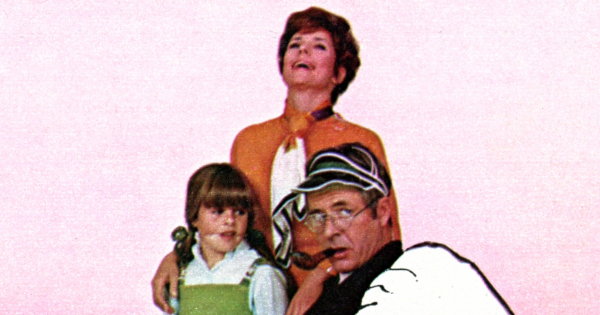
This was Jerry Van Dyke's first television series post-
My Mother the Car. Despite being more mainstream it only lasted a few months. Sadly, the series tried too hard to combine comedy with drama, often at the expensive of both. But while the humor was usually low-key, occasional glimpses of realistic writing elevates Accidental Family above most other obscure sitcoms.
Originally Published July 16th, 2003
Prior to the series premiering in 1999, Joss Whedon's
Angel was presented to television critics and insiders with this six-minute presentation "reel," filled with clips from the series itself and it's predecesser,
Buffy, The Vampire Slayer. The entire presentation is included for your viewing pleasure.
Originally Published June 11th, 2003
This sitcom aired for a single twenty-six episode season during the 1964-1965 season. Paul Ford starred as Sam Bailey, a widowed curmudgeon who a charter boat service around the affluent community of Balboa. His everyman attitude flew in the face of the primarily aristocratic population and he had frequent clashes with his neighbors.
Originally Published June 11th, 2003
In 1968, the producers of
Batman wanted to introduce a new character, Batgirl. This six-minute "mini-episode" was produced to convince ABC executives that adding the new character would work and was not a pilot for a proposed spin-off. Includes the entire short.
Originally Published July 16th, 2003
Two versions of Chic Young's classic comic strip have aired on television. The first, broadcast in black & white in 1957 starred Arthur Lake (who had starred in a series of films based on the strip) and Pamela Britton. The second, this one in glorious color, was aired in 1968 and starred Patricia Harty and Will Hutchins. The first lasted an entire season, the other half a season.
Originally Published January 1st, 2004
This subdued sitcom, like countless other sitcoms broadcast in the 1960s, ran for a total of twenty-six episodes. Set at summer camp for boys, this series focused more on the adults than the kiddies. Opposite
The Wild, Wild West on CBS, Camp Runamuck never stood a chance. Although beloved by some younger viewers, the humor was stilted and the storylines benign. Still, there are some who enjoyed the series and would love to see it again.
Originally Published August 20th, 2003
The CBS network premiered eight shows in the fall of 1972, including
The Waltons,
M*A*S*H and
Maude. Several other programs are far less memorable, including
The Sandy Duncan Show and
The New Bill Cosby Show. Several full-length fall previews are included here.
Originally Published May 20th, 2007
It was NBC that, in 1976, started the trend of airing lavish specials in honor of the "big" anniversaries of the broadcast networks. ABC soon followed with its own special in early 1978. But it was CBS and its week-long celebration of fifty years that set the standard for all future anniversary specials. Hosted by Walter Cronkite and Mary Tyler Moore, "CBS: On The Air - A Celebration of 50 Years" ran for an astounding nine-and-a-half-hours during the evenings of Sunday, March 26th, 1978 through Saturday, April 1st, 1978.
Originally Published February 15th, 2005
During the 1979 midseason NBC premiered an unusual hour-long series consisting of a trio of of twenty-minute serials. Each serial, broadcast in "chapters," ended in a cliffhanger that was resolved in the following week's episode. NBC had high hopes for the series, which was heavily promoted by the network.
Stop Susan Willams starred Susan Anton as an investigative photographer on the trail of her brother's killers.
Originally Published February 15th, 2005
During the 1979 midseason NBC premiered an unusual hour-long series consisting of a trio of of twenty-minute serials. Each serial, broadcast in "chapters," ended in a cliffhanger that was resolved in the following week's episode. NBC had high hopes for the series, which was heavily promoted by the network.
The Secret Empire is best remembered for switching between black & white (or sepia tone, really) and color; it dealt with an advanced alien society living below the desert.
Originally Published February 15th, 2005
During the 1979 midseason NBC premiered an unusual hour-long series consisting of a trio of of twenty-minute serials. Each serial, broadcast in "chapters," ended in a cliffhanger that was resolved in the following week's episode. NBC had high hopes for the series, which was heavily promoted by the network. Michael Nouri starred in
The Curse of Dracula, a dark, gothic tale about the dark prince and the college students attempting kill him.
Originally Published February 15th, 2005
Although research into the development of color television dates back to the 1940s and assorted programming was broadcast in color during the early days of the medium, network television did not completely make the switch until the mid-1960s. Watch an assortment of promos for television during this era.
Originally Published August 20th & October 14th, 2003
ABC premiered ten new shows in the fall of 1974, including Nakia, The Sonny Comedy Revue, Paper Moon and Night Stalker (which was recently revived by ABC for the 2005-2006 season only to be cancelled again). Of those ten new programs only two returned as part of the 1975-1976 season: Get Christie Love! and Harry-O. Two ABC programs, The Texas Wheelers and Kodiak, were the first cancellations of the season.
Originally Published August 20th & October 14th, 2003
Nine of the top ten shows for the 1973-1974 season were broadcast on CBS (and fourteen of the top twenty). Thus, CBS was in great shape going into the 1974-1975 season, which explains why the network only premiered five new shows in the fall. With programs like All in the Family, The Waltons, M*A*S*H and The Mary Tyler Moore Show, CBS had little need for new hits. Of those five new programs only one, a spin-off of The Mary Tyler Moore Show, was retained for the following season.
Originally Published August 20th & October 14th, 2003
The year 1974 was a big one for NBC, at least in terms of new show retainment. Of the nine shows that NBC premiered in the fall of 1974 all but three returned in 1975. Two of those shows would last until at least 1980, whilst another two would reach 1978 before cancellation. NBC was also the only network to premiere a full night's worth of new shows.
Originally Published March 21st, 2004
Although most viewers consider commercials to be the bane of network television, there is a lot of interest in commercials featuring celebrities. We've collected dozens of these commercials, including some from Farrah Fawcett, Denise Richards, Don Adams, Jay Leno and many, many more.
Originally Published January 1st, 2004
A television spin-off of the classic film starring Matthew Broderick. Starring Charlie Schaltter as Ferris, Ami Dolenz as Sloan Peterson, and a pre-
Friends Jennifer Aniston as Jeannie Bueller, the series lasted only a dozen episodes in 1990 on NBC before it was cancelled. A thirteenth episode was aired a year later.
Originally Published April 26th, 2006
Although only nineteen episodes were aired, It's A Man's World is highly regarded by just about everyone who watched it. Many of those who watched the series in the 1960s were in grammer school and found the idea of living on a houseboat appealing. Today, some forty years later, those same viewers look back on the series with tender memories of watching the series and bitter recollections of its cancellation.
Originally Published August 26th, 2004
Although it's probably the most recent program on our website, Freedom is nevertheless an interesting study in short-lived television. First, the original (and unaired) pilot episode was actually promoted by UPN before the series actually began. And second, although only a total of twelve episodes were produced, the series has a cult following internationally.
Originally Published July 16th, 2003
Just before the two-hour premiere of, The WB aired this introductory trailer to bring viewers up to speed on the background of Joss Whedon's vampire mythos. It was aired once again in the summer during a repeat of the premiere and has never been seen since.
Originally Published September 1st, 2006
It's hard to talk about television without talking about the Star Trek franchise. When production on the original pilot episode began in 1964, who could have imagined what the future held for Gene Roddenberry's "Wagon Train to the stars?" When NBC cancelled the series after three seasons in 1969, it should have been the end. But instead,
Star Trek became a syndicated sensation and became a bonafide franchise, with a Saturday morning animated adaptation, feature films and several television spin-offs. Join Television Obscurities in celebrating forty years of Star Trek. And remember, live long and prosper.
Originally Published September 8th, 2006
The story of Star Trek may begin in September of 1966, but it wasn't until the late 1980s that the franchise really saw its star begin to rise. With the premiere of Star Trek: The Next Generation in 1987 and its ratings success, the Star Trek franchise was no longer simply a popular series from the 1960s and a handful of successful feature films. It was a television phenomenon in its own right, with piles of merchandising, spin-off after spin-off, and eighteen consecutive television seasons on the air.
Originally Published October 14th, 2003
Stefanie Powers starred in this spin-off of the classic Robert Vaughn & David McCallum series. Only one season was produced and aired on NBC before the series was cancelled due to low ratings. Leo G. Carroll appeared on both shows simultaneously as U.N.C.L.E. head Alexander Waverly. Unlike
The Man From U.N.C.L.E., the spin-off was too campy for its own good.
Originally Published October 14th, 2003
Only a year after the end of
Gilligan's Island, Bob Denver starred in this low-key, two-season sitcom as Rufus Butterworth, a taxi driver. Herb Edelman also starred as Bert Gramus, who owned a diner called Bert's Place. During the second season Bert gave up the taxi and joined Bert in running the diner. The series was never syndicated after its initial run.
Originally Published August 28th, 2006
After five years playing the always-flustered Tony Nelson on
I Dream of Jeannie and eight years before his lengthy turn as the conniving J.R. Ewing on
Dallas, Larry Hagman somehow found the time to star in this short-lived sitcoms. He appeared alongside Donna Mills (who would later co-star in
Knots Landing, a spin-off of
Dallas) as a married couple who decide to chase the good life.
Originally Published March 21st, 2004
In the television business nothing is more important than promotion. Massive campaigns pushing the premieres of new fall programs has become a ritual every September. Lavish fall preview specials featuring celebrities and short previews were common place back in the day; more low-key previews are occasionally aired by the networks today.
Originally Published May 8th, 2004
In March of 1993 ABC premiered this new sitcom, starring Matthew Perry as twentysomething Matt Bailey, a small time reporter who still lives with his mother. When his older sister and her children move in Matt's easy-going life is changed considerably. Sounds like a real winner, right? Only a dozen episodes were aired, which gave Matthew Perry the chance to move on to NBC's Friends.
Originally Published October 10th, 2007
Based on the classic Johann David Wyss novel, Swiss Family Robinson was Irwin Allen's second-to-last television series (Code Red in 1981 was his last). Unlike the successful science-fiction shows he produced in the 1960s (Lost in Space, Voyage to the Bottom of the Sea), Swiss Family Robinson was poorly recieved by viewers and barely lasted a season. Mostly forgotten today, it is occasionally mentioned in relation to Helen Hunt, as one of her early television roles.
Originally Published May 8th, 2004
The themesong to this show is infinitely more memorable the show itself. Originally, the show followed the adventures of two modern-day astronauts thrown back into the stone age. When the ratings were almost as pre-historic as the setting the show was retooled and a family of cavemen were brought to the present. The ratings didn't improve and the show was cancelled after a single season.
Originally Published September 3rd, 2007
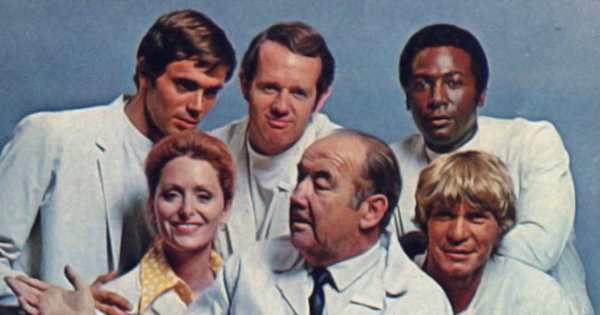
This syndicated, half-hour drama starred Ella Raines as a recently discharged Army nurse who traveled the country filling in at hospitals wherever and whenever she was needed. But Janet Dean wasn't just a nurse; she was a problem solver with a kind soul, trying to do more than heal her patients' physical ills. The series ran for a single season from 1954-1955 and was probably the first television show to have a nurse as the main character.
Originally Published May 8th, 2004
Dan Haggerty's famous role of Grizzly Adams originated on the big screen in 1974, followed by this mid-season replacement on NBC in 1977. After the series was cancelled in 1978, a pair of follow-up made-for-tv movies were produced.
Originally Published February 1st, 2004
Usually, network fall preview specials are simply a collection of promo spots for new programs, along with recaps of returning shows, news, sports and movies. Most of the time one of the network's famous faces will host the special. But in 1977, ABC decided to do something a little different: a magic show and fall preview special all in one, hosted by none other than David Copperfield, who would have a slew of television specials in the decades that followed.
Originally Published March 21st, 2004
Although it ranked in the top twenty-five for the 1959-1960 season this series was nevertheless cancelled after only one season. John Vivyian and Ross Martin starred a pair of wheelers and dealers who ran a gambling establishment aboard a ship anchored in international water -- at least until the sponsors got worried and forced the network to stop referencing gambling.
Originally Published June 11th, 2003
This promotional packet is the source for the infamous airbrushed photographs of
Star Trek's Mr. Spock, played by Leonard Nimoy. It also contains quite a few interesting tidbits about the roles various characters played on the starship Enterprise, including an "efficient dispenser of instant coffee!"
Originally Published April 26th, 2006
During the 1984-1985 season NBC had a lot of trouble with its Saturday night line-up. Two new hour-long dramas premiered as part of the new fall season and both were gone within a few months. Despite attempting to plug holes in the Saturday schedule with both new shows and relocated shows, Saturday was a low spot in an otherwise stellar season for the network.
Originally Published June 11th, 2003
In 1969 ABC tried something new, two forty-five minute shows airing back-to-back from 7:30PM to 9:00PM.
The New People was one of those shows. Cancelled after only seventeen episodes, the series has seen something of a resurgance in popularity recently due to ABC's current hit series
Lost, which has a similiar premise. Broadcast from September 1969 to January 1970 the series followed a group of college students as they fought to survive after being stranded on an island.
Originally Published February 1st, 2004
This quality drama unfortunately only produced thirteen episodes in the early 1990s. Broadcast on Sunday evenings by FOX, the series was a continuation of the 1983 film which, in turn, was based on the 1967 novel by S.E. Hinton. The show followed the trials and tribulations of three brothers stuck living on their own in a tough world.
Originally Published February 1st, 2004
Call 'em what you will, but outtakes, bloopers and goofs are hilarious reminders that even the most consumate actor is only human. Actors and actresses blow their lines during filming all the time. Most of these mistakes are never kept posterity. But when they are, the resulting footage is often revealing and always hilarious.
Originally Published October 14th, 2003
Nick Adams, who died under unusual circumstances in 1968, starred in this Western that aired for an amazing 76 episodes between 1959 and 1961. He played the one and only character in the series, the wandering Johnny Yuma, who moved from town to town, episode after episode, meeting interesting people and helping out folks in need. Johnny Cash sang the themesong, "The Ballad of Johnny Yuma."
Originally Published July 6th, 2006
This British series crossed the Atlantic and came very close to joining NBC's fall line-up in 1992. But the pilot -- a close translation of the original British premiere -- wasn't up to snuff. A second "pilot" was put together, little more than a montage of clips from the British series with some additional footage from the American pilot and a few new scenes. And again, the network passed on the series, leaving fans of the cult series wondering what might have been.
Originally Published June 11th, 2003
When Battlestar Galactica was cancelled in 1979 despite ranking in the top twenty-five, fans were understandably upset. The following year when ABC premiered Galactica 1980, a spin-off/continuation of Battlestar Galactica, fans were even more upset. The new series was a pale imitation of the original, with few of the original characters and horrible storylines. Only one episode is worth watching, the series finale that saw Dirk Benedict return as Starbuck.
Originally Published October 10th, 2004
Premiering in the fall of 1974 on CBS, this dramatic series was set in the 1950s and followed a pair of high school students as they tried to deal with life and love. Only nine episodes were broadcast before the series was cancelled due to low ratings -- surprisingly several episodes were lated edited into late-night cable telefilms. Gary Frank and Glynnis O'Connor starred.
Originally Published December 26th, 2003
When most people think about Star Wars, they understandably think about the big screen, not the small one. But the Star Wars franchise has branched out to television many times, beginning only months after the first film was released in theaters in May of 1977. Since then, an oft-maligned holiday special, two animated series and two made-for-TV movies have been shown on network television, plus the films themselves. Recently, Star Wars has returned to television on cable, and additional television shows are expected in the coming years. This article, however, is about the history of Star Wars on broadcast television.
Originally Published February 1st, 2004
In the late 1980s as FOX burst onto the scene and snatched up dozens of independent television stations, there was still an impressive amount of programming produced for the syndicated television market. Although most of the shows that premiered in 1987 have largely been forgotten, one series has withstood the test of time:
Star Trek: The Next Generation.
Originally Published December 14th, 2004
Teen heartthrob Tab Hunter was given a starring role in this 1960 sitcom. He played Paul Morgan, creator of a popular comic strip not-so-loosely based on his own life. As a womanizing bachelor, Paul travelled all over the world chasing skirts and having flings, and then turned his own experiences into stories for the comic strip.
Originally Published April 26th, 2006
Before cable television was a reality several companies were pursuing systems to bring special programming into the home on a pay-per-view basis. The Telemeter system was one of the most interesting, due to the fact that it involved a coin-operated box attached to the television.
Originally Published January 1st, 2004
In the television business, nothing is more important the promotion. Promotion means viewers and viewers mean advertising revenue. And advertising revenue makes the world go 'round. Over two dozen promos are included here, ranging from network image campaigns to classic shows airing in syndication.
Originally Published June 17th, 2004
This series had its beginnings in an episode of
The Brady Bunch aired in 1974. When the show premiered in 1986 it starred Elliot Gould as the patriarch of a multi-racial family with two adopted children and two biological children. After only a handful of broadcasts the series was pulled and retooled. When it returned, Gould was gone and the series had a new title: "Together We Stand."
Originally Published August 20th, 2003
TV Guide has long been standard reading for the television fan. Today, more than fifty years after it was first published, the magazine has revamped its image in an attempt to compete with online listings. Relive the glory days of the formerly digest size magazine with promotional television spots broadcast on local stations in the 1970s and 1980s.
Originally Published August 20th, 2003
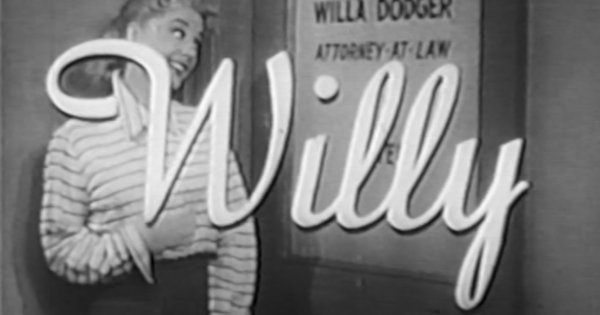
This 1960s comedy has achieved a modicum of noteriety for its premise. A poor American working for a talent agency meets a beautiful British actress and, after posing as a female model for his brother, travels to England and is forced to pretend to be a woman. Cross-dressing at its best? Perhaps not. But the themesong is memorable and the sheer inanity of the series keep it alive almost forty years after it came and went.
Originally Published June 11th, 2003
A new take on the Superman mythos, this drama saw Clark Kent as a teenager growing up in Kansas, trying to deal with his emerging powers and his raging hormones. Prior to its debut on The WB in October of 2001 portions of the pilot were reshot after the original actress playing Martha Kent was replaced. Scenes with the original Martha have never been broadcast.
Originally Published July 6th, 2004
Gary Burghoff continued his role of Walter "Radar" O'Reilly in this pilot for a potential series. Although no longer using his
M*A*S*H nickname, Walter was still aware of things befere they happened. As a rookie cop, Walter had to deal with a variety of problems as he learned the ropes. The half-hour pilot only aired on the East Coast.
Originally Published February 1st, 2004
After a decade trying to attract young woman The WB tried branching out and abandoned its mascot in the process. Michigan J. Frog, who has been with the network since it premiered in 1995, was put out to pasture. In the midst of ratings struggles it had not faced since its launch the network tried to rebrand itself as a network open to all ages, not just teens. But then the network announced it was merging with UPN and the whole issue was moot.
Originally Published July 16th, 2003
Years before Lynda Carter donned the red, white and blue garb of Wonder Woman this four minute "pre-pilot" was produced. Starring Ellie Wood Walker as Diana Prince and Linda Harrison as Wonder Woman, the short film was presented as a comedy, with slapstick humor and not much else. The entire pre-pilot presentation film is included.
Originally Published March 21st, 2004
As the Revolutionary War raged on around them, a group of young people in the colonies did their best to help bring about independence while maintaining a publically neutral facade. The series was part of a wave of relevant, youth-oriented programs that the networks premiered in the fall of 1970. Only fifteen episodes were broadcast.
Last Updated March 19th, 2008